
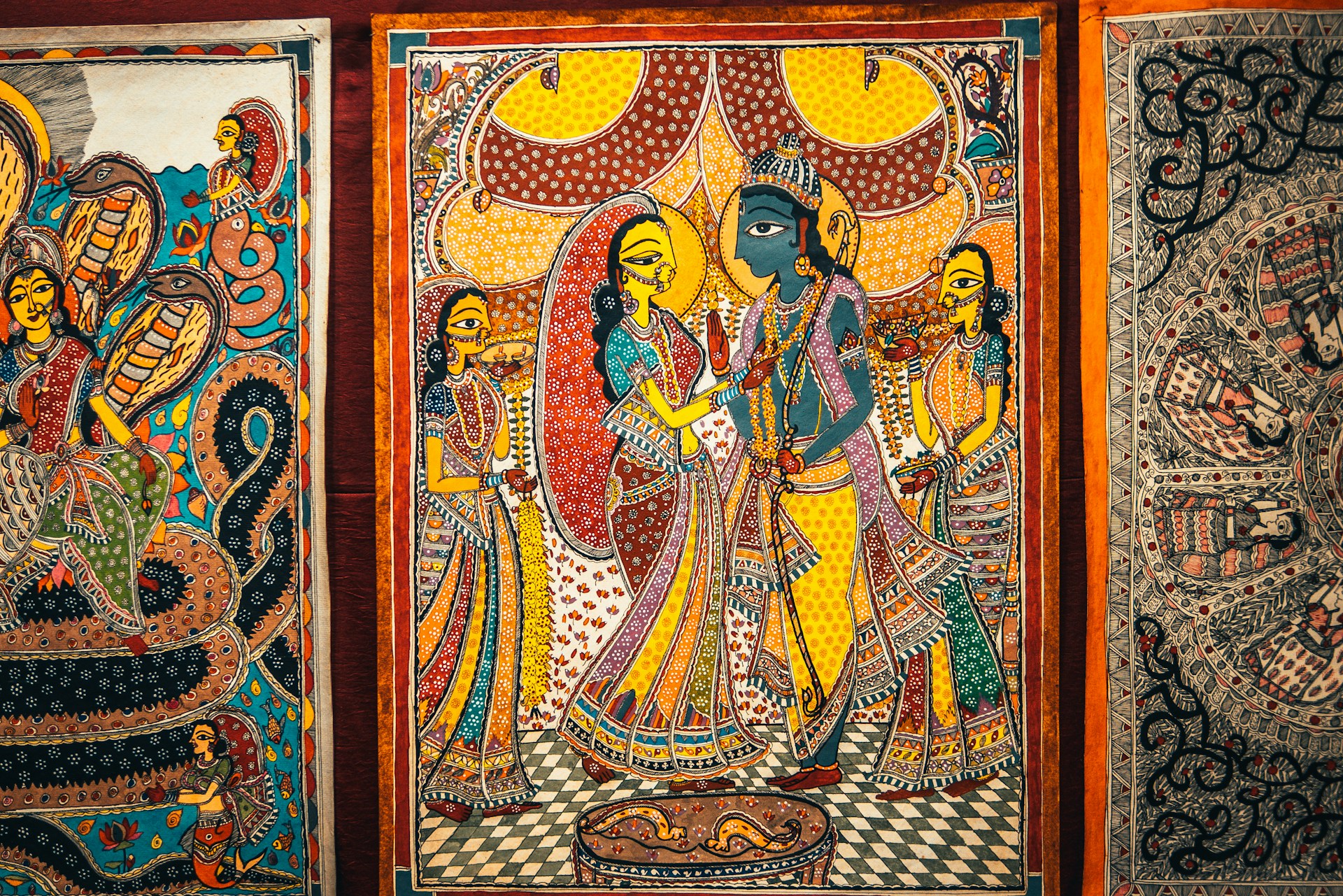

Indian culture includes folk art that tells colorful tales of life, spirituality, community, and history. Spanning centuries and various regions, Indian folk art and crafts convey personal stories, depict natural surroundings, and emphasize traditional values. Their different forms keep evolving while staying connected to Indian culture and history.

Welcome to United Tribes
Where Indian Culture Comes Alive
Join Your Tribe
Connect with your people
Discover Events
Watch parties & festivals
Find Indian Businesses
Restaurants, markets & more
Earn Crown Credits
Get rewarded for engaging
For today’s blog post, we’ll highlight some of the unique Indian folk art styles developed across India’s central regions. We’ll also look at the materials used for these incredible works, the stories behind them, and their importance to Indian culture.
Indian Folk Art at a Glance
Indian folk art comes in many different forms: pottery, painting, paper art, weaving, sculpting, and more. Each work is done in a wide range of styles, using unique techniques that vary by region, community, and purpose.
Moreover, Indian folk art pieces and the materials and techniques used by their creators carry deep symbolism. Other works can be decorative, like creative Diwali home decor ideas, or functional. India’s nomadic tribes and ethnic groups have expressed themselves through Indian folk art. Its different styles were used to depict these people’s migratory and changing lifestyles.
Unlike classical Indian art, folk art gets its themes from an artist’s surroundings. Every ethnic group is inspired by emotionally powerful objects and occasions, adding a distinct charm to each piece. Hence, Indian folk art honors joy, festivities, and ceremonies while condemning obscenity. It doesn’t express the human flesh; instead, it’s based on rituals, myths, legends, and daily life.
6 Unique Indian Folk Art Styles to Discover
To show you how diverse Indian folk art is, we’ve listed 6 of its distinct forms below.
1. The Madhubani Painting from Bihar
Geometric patterns, contrasting colors, and line drawings characterize the Madhubani or Mithila painting. Its patterns have been highlighted in city murals for several years, portraying some rituals related to weddings, childbirth, and celebrations.
For the most part, Madhubani artists create two-dimensional paintings without empty spaces. They add flowers, animals, birds, and other geometric designs to those areas. Each work is traditionally painted on freshly plastered walls or floors of huts, although newer artists use handmade paper, cloth, and canvas.
Furthermore, Madhubani paintings are made with natural dyes and pigments, with the traditional paste containing powdered rice. Various tools are used for these pieces as well.
2. The Warli Folk Painting from Maharashtra
Artists from the North Sahyadri Range use one of the oldest Indian folk art styles. Warli paintings come from the Warli tribe, one of India’s biggest tribes. While the tribe lives outside of Mumbai, it reveres Mother Nature. That’s why Warli paintings highlight the different elements of nature.
Besides nature, you’ll see the Tarpa dance captured in many Warli paintings. Male participants take turns playing this trumpet-like instrument, with dancing duos around them. The pairs of dancers follow the tarpa player urgently, and the man can’t turn his back on them because they’ll always surround him.
Like cave painters, Warli artists create on their clay huts. Their works use basic shapes, namely the circle, triangle, and square. Each shape symbolizes a different element found in nature. The circle symbolizes the sun and the moon, while the triangle represents mountains and pointed trees.
Despite its simplicity, Warli paintings are a powerful example of Indian tribal art and crafts that show how connected we are to nature.
3. The Pattachitra Painting from Odisha & Bengal
One of the most popular Indian folk art styles is depicted through cloth-based paintings and features Hindu deities.
Originating from Odisha, Pattachitra has existed for centuries. From being used in rituals and made into mementos sent to pilgrims, this folk art style now appears on walls, boxes of sweets, and more. Pattachitra paintings can be seen on nearly any surface in Odisha, with some extremely intriguing pieces painted on the pillars outside.
The Pattachitra style is also used in West Bengal, where it’s dubbed as the Maha Pattachitra. The region’s version of Pattachitra paintings has been used since ancient times and is divided into various forms. Bengal Pattachitra paintings usually focus on religion, myths, folk stories, and social themes.
4. The Gond Painting from Madhya Pradesh
The Gond tribe’s painting style can feature dots and dashes or short lines. Any of the three is included in the intricate patterns of Gond paintings.
Gond painters create murals on walls and floors during festivals. Additionally, they color their pieces with natural pigments from vegetables, flowers, cow dung, mud, or other natural elements. The result is paintings that combine living creatures with nature, making them look interconnected.
5. The Kalamkari Painting from Andhra Pradesh & Telangana
It’s believed that the next Indian folk art style on our short list got its name from two Persian words. “Kalam” translates to pen, and “Kari” means craftsmanship. These meanings suit Kalamkari paintings, described as the hand-painted or block-printed works originally made in Kalamkari. Today, they’re also created in the Iranian city of Isfahan, Andhra, and Telangana.
Kalamkari paintings are created with natural dyes and in 23 steps. Plus, painters can use one of two styles for their pieces: the Srikalahasti style and the Machilipatnam style. As for themes, Kalamkari paintings mostly feature epics like the Mahabharata and the Ramayana. Newer artists incorporate musical instruments, small animals, flowers, Buddha, and more into their paintings using digital tools.
6. The Bhil Painting from Madhya Pradesh
Bhil paintings are created by the community’s members and folk artists. It’s considered the oldest surviving Indian painting style and said to have been used by artists for over two millennia.
Bhil artists express stories, prayers, memories, and traditions on bare backdrops through colorful dots. Most of them learned the craft before moving on to other basics. Dots of the same size and style form consistent patterns and colors, giving Bhil paintings their unique identity. Also, they carry multi-faceted symbolism and are inspired by the kernels of maize, known as the Bhil community’s go-to food and crop.
Bhil paintings were made on the walls of the tribe’s huts, typically focusing on Mother Nature. With a specific pattern of dots featured in these works, you’ll find that they resemble Australian Aboriginal art. Painters depict everything connected to the Bhil life in their pieces, from the sun to their deities.
The Materials & Techniques Used for Indian Folk Art
India’s various ethnic groups made traditional folk art to satisfy their needs in ancient times. They used materials that they could find around them: clay, straw, wood, natural dyes, handmade paper, and more.
Moreover, as the prehistoric world gave artists many colors, they learned to extract colors from vegetables, fruits, flowers, and stones. One can get red ochre from grinding clay and mixing it with animal fat, white from rice or seashells, and yellow from a stone named “hardital.” These sustainable practices demonstrate the creativity of Indian artists and their connection to nature.
When it comes to folk art techniques, elders in many regions teach younger artists how to use them. Painters, sculptors, potters, and other artists use simple tools to make detailed, fine, and deeply symbolic pieces.
Tracing the Rise of Contemporary Indian Folk Art
While Indian folk art and crafts are made with traditional techniques, they’re not frozen in time. Today’s artists are putting a modern twist on these creative works. Warli murals in urban cafés, Gond motifs on fashion accessories, and Madhubani designs in digital prints show that Indian folk art styles are evolving without straying from tradition.
More importantly, India’s social enterprises and non-governmental organizations (NGOs) have helped new and seasoned artists reach global markets. Their assistance introduces their work to international audiences while sustaining livelihoods.
How Important is Folk Art to Indian Culture?
Besides impressing visitors and art lovers, folk art depicts Indian culture. Each well-crafted piece tells us something about festivals, divine beings, legends, or politics.
Some artists have even responded to social and environmental issues or tried to bring everyone together through Indian folk art and crafts. Or, in villages, certain pieces are made to celebrate significant life events and thank Mother Nature for her presence. Regardless of their hidden meanings and purposes, Indian artworks and crafts invite us to uncover the values and beliefs upheld by Indian communities.
The Challenges of Preserving Indian Folk Art
50+ traditional folk and tribal art styles have been developed in India and passed down to newer generations for over 3,000 years. Nevertheless, many of these traditions can disappear at any time. But there’s hope: several Indian families have committed themselves to preserving their craft in our modern world.
Indian folk art is gradually vanishing for various reasons. For instance, Westernization has changed the cultural identity of Indian folk artists, buyers, and their principles. It’s affected finished pieces, available resources, and the different art styles used for these works.
Other threats to Indian folk art’s existence include poverty, technology, globalization, and urbanization. They’ve made earning by creating more difficult for traditional artists and pushed younger generations to look at other things.
Still, there’s hope. The Indian government and local organizations are striving to preserve India’s artistic heritage by:
- Discussing important artworks in schools
- Displaying selected pieces at Indian museums
- Connecting local and international artists
- Introducing Indian folk art to young Internet users
Check Out Indian Tribal Art & Crafts Today
Indian folk art is as diverse as India’s people. Each of its styles expresses a distinct way of life, worldview, and artistic vision. By discovering and appreciating these art forms, we help Indian artists preserve their heritage and encourage them to create more incredible masterpieces.
For more about Indian culture, visit the United Tribes blog or our India community page today.
Make United Tribes Your Preferred Source
Add United Tribes on Google to get the latest stories, cultural updates, and community events directly in your Google Search and Top Stories.


