
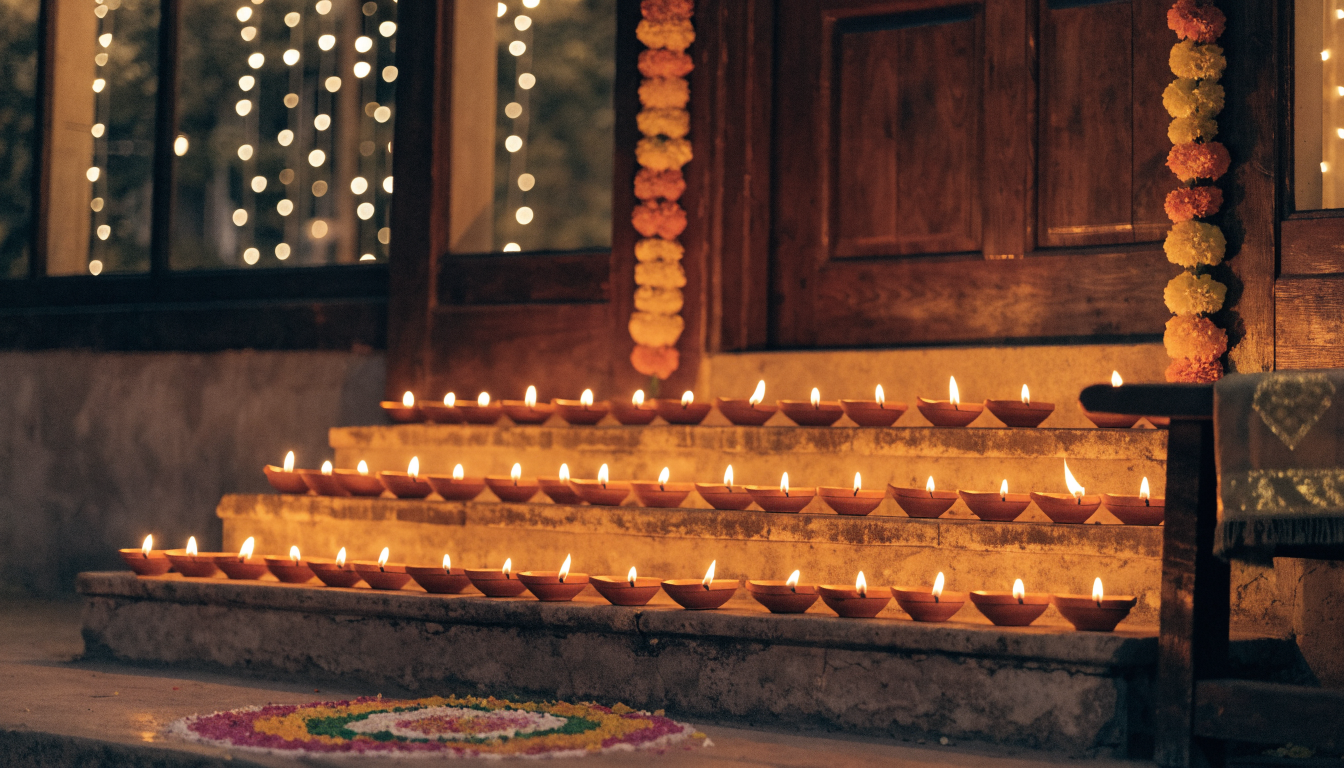

Diwali, the Festival of Lights, celebrates light over darkness, good over evil and knowledge over ignorance. Families clean and decorate their homes, light rows of diyas (oil lamps), draw rangoli at the door, pray to Lakshmi for prosperity, share mithai (sweets) and gifts, and gather for big meals. In 2026 the main night, Lakshmi Puja, falls on Sunday, November 8.
Diwali is celebrated by more than a billion people, and by Indian, Nepali, Guyanese, Trinidadian, Fijian and other diaspora communities across the United States. Hindus, Jains and Sikhs each mark the season with their own meaning.

Welcome to United Tribes
Where Indian Culture Comes Alive
Join Your Tribe
Connect with your people
Discover Events
Watch parties & festivals
Find Indian Businesses
Restaurants, markets & more
Earn Crown Credits
Get rewarded for engaging
The five days of Diwali
Diwali usually spans five days. Exact dates can shift by a day depending on the region and the local calendar.
- Dhanteras. Homes and shops are cleaned and decorated, and many families buy something new, often gold, silver or kitchen utensils, as a sign of good fortune for the year ahead.
- Naraka Chaturdashi (Choti Diwali). "Little Diwali" remembers Krishna's victory over the demon Narakasura. Families light the first lamps, prepare sweets and get ready for the main night.
- Lakshmi Puja (Diwali). The biggest night. Families pray to Lakshmi, the goddess of wealth and prosperity, light diyas in every window and doorway, wear their finest clothes, share a feast and, where allowed, set off fireworks.
- Govardhan Puja / Annakut. Honors Krishna lifting Govardhan hill to shelter villagers from a storm. Many temples prepare an "annakut," a mountain of food offered and then shared with everyone. In parts of India, including Gujarat, this day also marks the new year.
- Bhai Dooj. Celebrates brothers and sisters. Sisters pray for their brothers' long life, and brothers give gifts in return.
The stories behind Diwali
- Rama's return: in North India, Diwali celebrates Lord Rama coming home to Ayodhya with Sita and Lakshmana after defeating Ravana. People lit lamps to light his way, which is why lamps fill every home.
- Lakshmi: Diwali is the night Lakshmi is believed to visit homes that are clean, bright and welcoming.
- Krishna and Narakasura: in many regions, especially in the South, the festival marks Krishna's victory over Narakasura.
- Jains mark Diwali as the day Lord Mahavira attained nirvana.
- Sikhs celebrate Bandi Chhor Divas, the release of Guru Hargobind from imprisonment.
The traditions and what they mean
Diyas and lights. Small clay oil lamps line windows, doorsteps and balconies. Light is the center of Diwali: it pushes back darkness and welcomes Lakshmi.
Rangoli. Colorful patterns at the entrance greet guests and the goddess. Read what the designs mean in our rangoli guide.
Cleaning and new clothes. A fresh home and new clothes stand for a fresh start.
Mithai and gifts. Families exchange boxes of sweets such as kaju katli, ladoo, barfi, gulab jamun and jalebi, along with dry fruits and small gifts.
Lakshmi Puja. The evening prayer, often with a small altar of Lakshmi and Ganesha, coins, flowers and sweets.
Fireworks. Sparklers and fireworks are a classic part of the night. In US cities, check local rules; many families go to community fireworks shows instead.
Celebrating Diwali in the US
You don't need to do everything. Light a few diyas or candles, draw a small rangoli, pick up a box of mithai from an Indian sweet shop and invite friends over. Many cities host Diwali melas (fairs) with food stalls, dance performances and fireworks, and temples hold Lakshmi Puja services that welcome visitors.
Frequently asked questions
When is Diwali in 2026?
The main night of Diwali, Lakshmi Puja, is on Sunday, November 8, 2026. The five-day festival runs around it, from Dhanteras to Bhai Dooj.
What do you say to someone on Diwali?
"Happy Diwali" or "Shubh Deepavali" are both welcome. Many people also say "Diwali ki shubhkamnayein" (best wishes for Diwali).
Why do people light diyas on Diwali?
Diyas stand for light winning over darkness. They also recall the lamps lit to welcome Lord Rama home to Ayodhya, and they invite Lakshmi into the home.
Celebrate Diwali with your community
Make United Tribes Your Preferred Source
Add United Tribes on Google to get the latest stories, cultural updates, and community events directly in your Google Search and Top Stories.