

Key Takeaways
- El Salvador was Central America's leading indigo producer. By the mid-16th century, El Salvador supplied roughly 91% of the region's processed indigo, making añil its most valuable colonial export.
- The Maya used indigo long before Spanish colonization. Indigenous communities cultivated Indigofera suffruticosa, known as xiquilite, for textiles, ceramics, medicine, and ritual purposes centuries before European contact.

Welcome to United Tribes
Where Salvadoran Culture Comes Alive
Join Your Tribe
Connect with your people
Discover Events
Watch parties & festivals
Find Salvadoran Businesses
Restaurants, markets & more
Earn Crown Credits
Get rewarded for engaging
- Indigo production carried a severe human cost. Colonial labor systems displaced indigenous communities and imposed forced labor, prompting multiple royal prohibitions—in 1546, 1581, and 1601—that were frequently ignored.
- Synthetic dyes and coffee nearly erased the añil tradition. The rise of synthetic dyes in the mid-19th century, combined with El Salvador's coffee boom, pushed natural indigo production into steep decline.
- A new generation of artisans is bringing añil back. From Suchitoto cooperatives to MUNA workshops, Salvadoran craftspeople are reviving indigo dyeing using traditional and contemporary techniques.
Few colors carry as much history as the deep, luminous blue produced from El Salvador's indigo plant. For centuries, añil shaped the country's economy, culture, and landscape—funding colonial fortunes while drawing on indigenous knowledge that stretched back generations. Today, that same rich hue is at the center of a quiet but powerful cultural revival, as Salvadoran artisans reclaim indigo dyeing as both living craft and national heritage.
What is the history of añil in El Salvador?
Añil, the Salvadoran term for natural indigo, is one of the oldest and most historically significant dyes in the Americas, and El Salvador was once its most prolific source. Long before Spanish colonizers arrived, the Maya cultivated the indigo-bearing plant xiquilite—known botanically as Indigofera suffruticosa—for textile dyeing, ceramic decoration, medicinal use, and ritual purposes. When European colonists recognized the plant's commercial potential, they transformed a living indigenous tradition into a massive industrial enterprise.
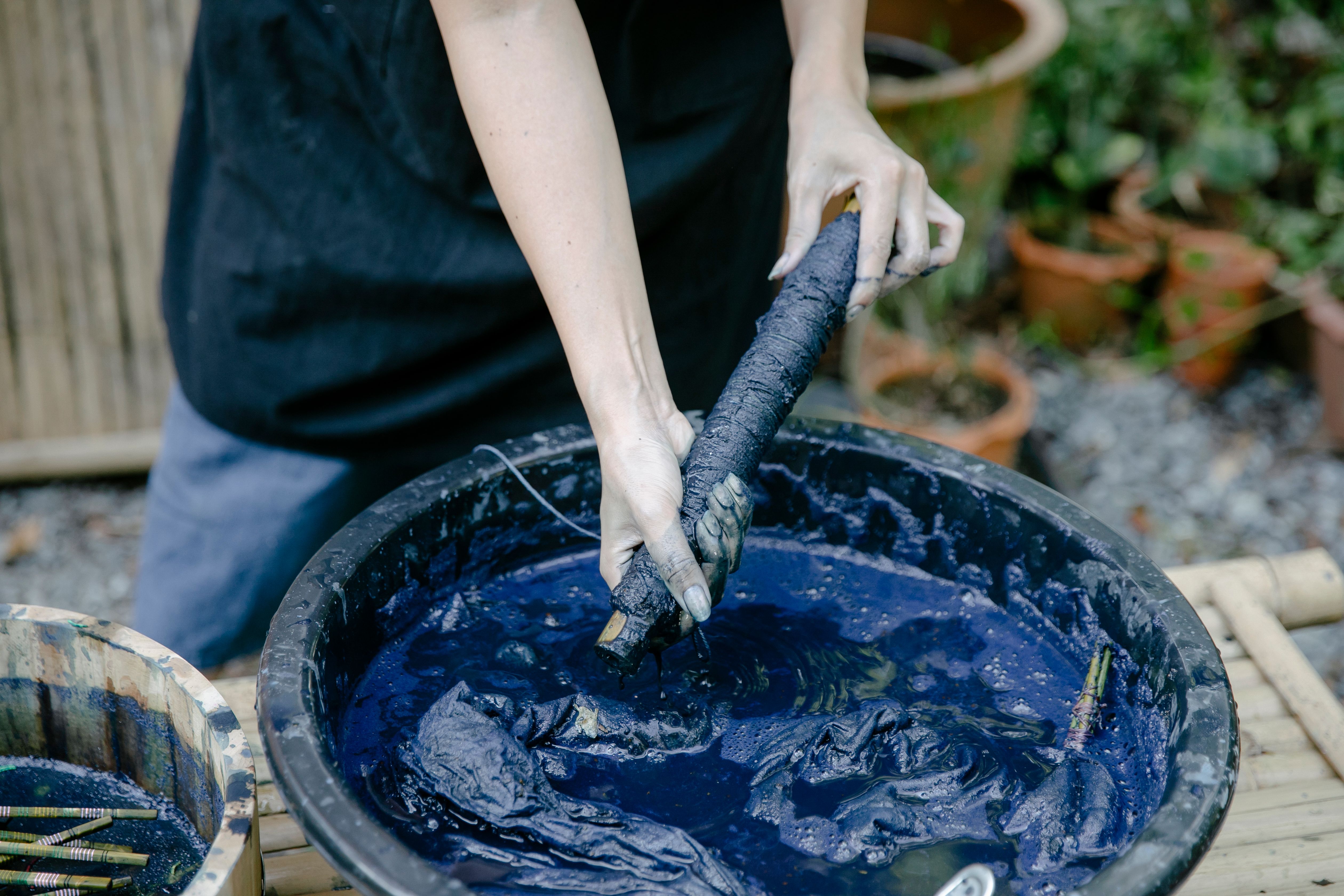
By the mid-16th century, El Salvador had emerged as the dominant indigo producer in all of Central America, responsible for roughly 91% of the region's processed output. The Spanish introduced the obraje system—industrial processing facilities where they fermented harvested xiquilite leaves in large vats, then oxygenated, sedimented, and filtered them to extract the vivid blue pigment. The result was compressed cakes of what colonial traders called "blue gold," exported across the Atlantic to dye Europe's fashionable fabrics.
In 1855, indigo still accounted for 86% of El Salvador's exports, reflecting how completely the country's colonial-era economy had been built around this single crop. Vast haciendas de añil spread across the country's eastern regions, and the dye's global reputation rested on Salvadoran quality.
The Human Cost of Colonial Indigo Production
Colonial indigo production in El Salvador was built on exploitation. The labor demands of cultivating and processing xiquilite were relentless, and indigenous communities bore the heaviest burden. Displacement from traditional lands, forced labor arrangements, and the toxic conditions inside obraje processing sites created profound suffering across generations of workers.
The Spanish Crown acknowledged this harm, issuing royal prohibitions on using indigenous labor in indigo processing in 1546, 1581, and 1601. Each prohibition was largely ignored by colonial landowners who depended on that labor to sustain their profits. Sharecropping arrangements replaced outright forced labor in some periods, but rarely improved conditions meaningfully. The story of Salvadoran añil is inseparable from this history of coercion and resistance—a reality that contemporary artisans and educators increasingly acknowledge when presenting the craft's revival.
The Rise of Synthetic Dyes and the Decline of Añil
Natural indigo's commercial dominance collapsed in the latter half of the 19th century. The industrial synthesis of indigo dye, developed in Europe during the 1870s and made widely available by the 1890s, undercut the price and convenience of plant-based indigo almost overnight. At the same time, El Salvador's agricultural economy pivoted sharply toward coffee, which offered stronger and more reliable export revenues. Haciendas that had once cultivated xiquilite were converted or abandoned, and the knowledge required to grow, harvest, and process the plant began to fade from common practice.
Within a few decades, añil had shifted from the economic engine of an entire nation to a near-forgotten craft, surviving only in isolated communities where families passed the tradition down rather than through institutional structures.
The Modern Revival of Salvadoran Indigo Craft
The revival of añil in El Salvador began in earnest after the 1992 peace accords, which ended the country's long civil conflict and opened space for cultural reconstruction. Suchitoto, a colonial-era town northwest of San Salvador, became one of the earliest and most visible centers of this renewal. Every year on the first weekend of July, large indigo-dyed banners are unveiled from the façade of the Iglesia Santa Lucía, making the tradition visible to the entire community and drawing visitors from across the country.
Artisan Irma Guadrón has been among the most dedicated voices in this movement. Since 2003, she has worked to refine artisanal indigo dyeing techniques rooted in her family's Suchitoto heritage, drawing on training she received through JICA—the Japan International Cooperation Agency—to blend traditional Salvadoran approaches with international natural dyeing methods. Her advocacy has helped frame añil not merely as a craft product but as Salvadoran cultural heritage that deserves institutional recognition and ongoing protection.
In San Luis Los Ranchos, the women's cooperative Vivaz began working with añil in 2005. With targeted support and training in dyeing, sewing, and design, the cooperative's members developed a line of indigo fashion items that reach both local and international markets. Their work demonstrates how traditional natural indigo textiles can sustain livelihoods while connecting Salvadoran women to a cultural practice their grandmothers might have recognized.
Where Visitors and Students Can Experience Añil Today
Several dedicated spaces in El Salvador now offer hands-on access to the indigo tradition, making the craft available to both locals and international visitors.
|
Location |
Type of Experience |
Notable Feature |
|
MUNA, San Salvador |
Añil Ancestral workshops |
Techniques include shibori and batik using xiquilite |
|
Suchitoto |
Annual community unveiling |
Añil-dyed banners displayed at Iglesia Santa Lucía each July |
|
Casa Blanca, Chalchuapa |
Visitor dyeing workshop |
Full hands-on process from plant to finished textile |
|
Vivaz Cooperative, San Luis Los Ranchos |
Artisan production |
Indigo fashion items by trained women artisans |
The Museo Nacional de Antropología Dr. David J. Guzmán in San Salvador—commonly known as MUNA—offers "Añil Ancestral" workshops led by educator Salvador Nieto. These sessions teach participants dyeing techniques such as shibori resist-dyeing and batik using locally grown xiquilite, grounding modern creative methods in the plant's deep Salvadoran roots.
The Casa Blanca archaeological site in Chalchuapa offers one of the most immersive experiences, allowing visitors to follow the entire process from raw plant material through fermentation, pigment extraction, and fabric dyeing. This kind of experiential education is essential for passing the craft to younger generations who have not inherited the knowledge through family practice.
Añil as Cultural Identity and Creative Innovation
Contemporary Salvadoran artisans are not simply preserving añil as a museum piece—they are evolving it. Today, indigo dyeing traditions intersect with fashion design, textile art, and sustainable production practices that align with growing global interest in natural dyes and ethical manufacturing. The distinctive blue of Salvadoran indigo textiles carries a visual identity that is immediately recognizable and deeply connected to the country's pre-colonial and colonial history.
For members of the Salvadoran diaspora in the United States, añil-dyed goods mean more than aesthetics. A piece of indigo fabric carries the weight of centuries—oaya ingenuity, oolonial-era suffering, oost-war resilience, and ohe artisans who refused to let the knowledge disappear. As Salvadoran communities across the U.S. look for ways to stay connected to their roots, crafts like añil dyeing offer a tangible, living link to a homeland whose creative traditions remain very much alive.
Añil's Living Legacy in Salvadoran Heritage
El Salvador's añil tradition spans more than five centuries, from the Maya communities who first cultivated xiquilite to the colonial haciendas that exported blue gold to Europe, and on through the cooperatives and cultural institutions working today to ensure the craft survives. The story is not simple—it carries the weight of forced labor and ecological disruption alongside extraordinary creativity and resilience. Understanding añil means understanding a significant piece of what El Salvador is and has always been.
For Salvadorans in the United States, engaging with this tradition honors that full history. Whether through purchasing indigo-dyed textiles from Salvadoran artisans, participating in cultural workshops, or simply sharing the story of añil with the next generation, reviving natural indigo dyeing is as much a communal act as an artistic one. The craft connects diaspora members to a homeland whose cultural depth often goes unrecognized in mainstream American spaces.
Looking to connect with the broader Salvadoran community and discover the artisans, businesses, and events keeping traditions like añil alive? Explore the Salvadoran community on United Tribes and tap into a network built around cultural pride and heritage visibility.
Frequently Asked Questions
What plant is used to make natural indigo dye in El Salvador?
Natural indigo dye in El Salvador is made from xiquilite, the local name for Indigofera suffruticosa. They harvest the leaves, ferment them in water vats, and then oxygenate them to precipitate the blue pigment, which they dry into cakes or paste for dyeing textiles.
How does the shibori technique relate to Salvadoran indigo dyeing?
Shibori is a Japanese resist-dyeing method that creates patterns by folding, twisting, or binding fabric before it is submerged in dye. Salvadoran workshops, including the Añil Ancestral program at MUNA, have incorporated shibori alongside traditional dyeing methods, demonstrating how indigo craft can blend global techniques with local materials.
Why did El Salvador lose its position as a major indigo producer?
El Salvador's indigo industry declined sharply in the late 19th century due to two converging forces: the industrial synthesis of synthetic indigo dye in Europe, which was cheaper and more consistent, and the domestic shift toward coffee cultivation, which offered more profitable export revenues and replaced xiquilite on many former hacienda lands.
Is Salvadoran añil production environmentally sustainable today?
Modern añil revival efforts in El Salvador generally emphasize natural, low-impact production using the xiquilite plant without synthetic chemicals. Natural indigo dyeing avoids the toxic byproducts associated with synthetic dye manufacturing, making it a more environmentally responsible option, though water use in the fermentation process still requires thoughtful management.
Can visitors outside El Salvador purchase añil-dyed textiles from Salvadoran artisans?
Some Salvadoran cooperatives and artisans, including groups like the Vivaz cooperative, have developed indigo textile lines that reach beyond local markets. Members of the Salvadoran diaspora in the United States may find añil products through cultural markets, diaspora community events, or artisan networks connected to Salvadoran cultural organizations.
How long does the natural indigo dyeing process take from plant to finished fabric?
The full process from harvested xiquilite leaves to finished dyed fabric typically takes several days. Leaf fermentation alone requires roughly 12 to 24 hours, followed by oxygenation, sedimentation, and drying of the pigment before it can be used. Dyers then apply multiple dye baths to build color depth, with drying time between each immersion.
Find your community: Salvadoran businesses near you on United Tribes.
Make United Tribes Your Preferred Source
Add United Tribes on Google to get the latest stories, cultural updates, and community events directly in your Google Search and Top Stories.