
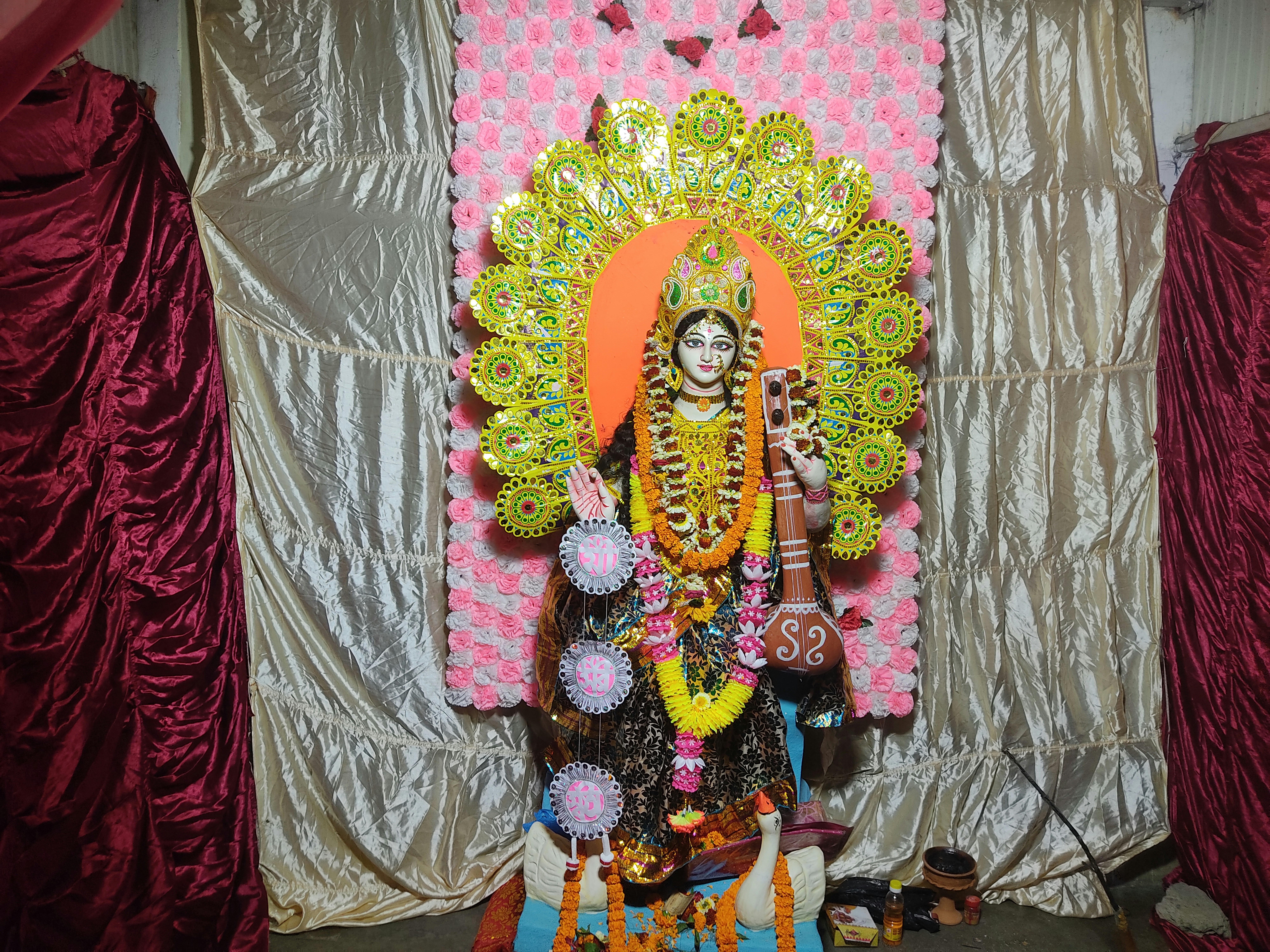

The celebration of knowledge and learning holds a sacred place in Indian culture, with festivals dedicated to wisdom, education, and intellectual growth forming an integral part of the community's spiritual calendar. As Indian-American communities continue to flourish across the United States, these Saraswati Puja celebrations have evolved into vibrant cultural gatherings that not only honor ancient traditions but also strengthen community bonds while passing down invaluable heritage to younger generations.
Saraswati Puja embodies the Indian philosophy that places learning and wisdom at the pinnacle of human achievement. In temples, community centers, and homes from California to New York, Indian Americans gather each year to celebrate Goddess Saraswati, the divine embodiment of knowledge, music, the arts, and learning.

Welcome to United Tribes
Where Indian Culture Comes Alive
Join Your Tribe
Connect with your people
Discover Events
Watch parties & festivals
Find Indian Businesses
Restaurants, markets & more
Earn Crown Credits
Get rewarded for engaging
The Sacred Significance of Saraswati Puja
Saraswati Puja traditionally falls on Vasant Panchami, marking the arrival of spring and symbolizing new beginnings in learning and creativity. Goddess Saraswati, depicted as a graceful figure in white attire seated on a lotus, holds a veena (musical instrument), books, and prayer beads, representing the perfect harmony between knowledge, arts, and spirituality.
Indian-American traditions surrounding this festival emphasize several key aspects that resonate deeply within diaspora communities. Students place their books, musical instruments, and learning materials before the goddess's image, seeking blessings for academic success and intellectual growth. This practice has adapted beautifully in American settings, where children bring their school supplies, computers, and even sports equipment, recognizing that all forms of learning and skill development deserve divine blessing.
The ritual of Akshar Abhyasam, also known as Vidyarambham, often accompanies Saraswati Puja celebrations, where young children are formally introduced to the art of writing and learning. Community elders guide little hands to trace letters in rice or sand, marking their first steps into the world of education. This ceremony has gained particular significance among Indian-American families who view it as a bridge connecting their children to ancestral wisdom while embracing American educational opportunities.
Traditional Observances in Modern America
Indian-American communities have creatively adapted traditional Saraswati Puja observances to fit their American lifestyle while preserving essential spiritual elements. Morning prayers begin with the Saraswati Vandana, followed by offerings of yellow flowers, fruits, and sweets—particularly prasadam, which is prepared with jaggery and rice.
Many families coordinate their celebrations with local Indian cultural organizations, creating larger community gatherings that strengthen social bonds. These events often feature classical music performances, dance presentations by children learning Bharatanatyam or Kathak, and scholarly discussions that honor the intellectual aspects of the celebration.
Knowledge Festivals Beyond Saraswati Puja
While Saraswati Puja remains the most widely recognized festival of knowledge, it encompasses several other celebrations that Indian-American communities observe with equal devotion and cultural pride.
Guru Purnima Celebrations
Guru Purnima, observed on the full moon day in July, honors teachers and spiritual guides who illuminate the path of knowledge. Indian-American communities organize elaborate programs where students express gratitude to their teachers, both academic and spiritual. These celebrations often feature performances showcasing various aspects of Indian music and film culture's impact in the U.S., demonstrating how artistic expression serves as a vehicle for cultural transmission.
Community centers and temples across America host Guru Purnima events where accomplished scholars, artists, and spiritual leaders share their wisdom with younger generations. These gatherings reinforce the Indian tradition of guru-shishya parampara (teacher-student tradition) while adapting to contemporary American educational contexts.
Akshaya Tritiya and Educational Beginnings
Akshaya Tritiya, considered an auspicious day for new ventures, marks the beginning of many Indian-American families' children's formal education or the start of new learning endeavors. Parents often choose this day to enroll children in classical music lessons, dance classes, or Sanskrit studies, maintaining connections to their cultural roots.
Regional Knowledge Traditions
Different Indian regions contribute unique knowledge-celebrating traditions to the American diaspora experience. Bengali communities, in particular, emphasize Saraswati Puja with elaborate pandals and cultural programs, while South Indian communities often combine knowledge celebrations with classical arts performances. Gujarati and Maharashtrian families incorporate their regional customs, creating a rich tapestry of knowledge-honoring traditions across American Indian communities.
Community Organization and Cultural Preservation
Indian-American traditions surrounding knowledge festivals demonstrate remarkable organizational skills and community cooperation. Local temples serve as primary coordination centers, but community associations, cultural organizations, and even professional groups contribute to these celebrations.
Educational Institution Involvement
Many American universities with significant Indian student populations organize Saraswati Puja celebrations on campus, creating inclusive environments where international students can maintain their cultural practices. These events often attract diverse audiences, promoting cross-cultural understanding and appreciation for Indian educational values.
Professional associations of Indian-American doctors, engineers, and academics frequently sponsor knowledge festivals, emphasizing the connection between traditional wisdom and contemporary professional achievements. These gatherings reinforce the cultural value placed on education and intellectual pursuits that drive many Indian families' immigration stories.
Youth Engagement and Cultural Transmission
Saraswati Puja celebrations prioritize youth engagement through various interactive programs. Children participate in essay competitions, classical music performances, and art contests that celebrate learning and creativity. Many communities organize Bal Vihar programs where children learn Sanskrit shlokas, stories from Indian scriptures, and traditional values associated with education and respect for knowledge.
Youth leadership opportunities emerge during these festivals, with teenagers taking responsibility for organizing cultural programs, managing decorations, and coordinating community service activities. These experiences develop leadership skills while deepening cultural connections.
Culinary Traditions and Festive Foods
Food plays an essential role in knowledge festival celebrations, with specific dishes prepared to honor educational achievements and cultural traditions. Saraswati Puja features yellow-themed foods that symbolize prosperity and knowledge, including saffron rice, yellow dal, and sweets such as kesari and basundi.
Community potluck celebrations enable families to share traditional Indian recipes that hold cultural significance, fostering opportunities for cultural exchange among different regional Indian communities in America. These shared meals strengthen community bonds while introducing children to diverse Indian culinary traditions.
Prasadam Distribution and Community Service
The distribution of prasadam (blessed food) extends beyond immediate family circles to include broader community members, neighbors, and friends from different cultural backgrounds. This practice demonstrates Indian values of sharing knowledge and blessings with others, creating opportunities for cultural dialogue and mutual understanding.
Many communities combine knowledge festival celebrations with educational charity initiatives, such as donating books to local libraries, fundraising scholarships for deserving students, or organizing educational supply drives for underprivileged schools. These activities reflect the Indian belief that knowledge should be accessible to all.
Artistic Expression and Cultural Programming
These Indian celebrations showcase the deep connection between learning and artistic expression through various cultural programs. Classical dance performances, particularly during Saraswati Puja, honor the goddess who presides over both knowledge and the arts. Students wearing traditional Indian attire perform Bharatanatyam, Kathak, or Odissi dances that tell stories of learning, wisdom, and spiritual growth.
Music programs feature classical ragas associated with learning and meditation, with community members of all ages participating in group singing of devotional songs. These musical expressions serve multiple purposes: honoring the divine, preserving cultural traditions, and creating shared experiences that strengthen community identity.
Literary and Scholarly Activities
Knowledge festivals often incorporate literary competitions, poetry recitations, and scholarly presentations that celebrate intellectual achievement and excellence. Children and adults participate in Sanskrit recitation contests, essay writing competitions on topics related to Indian culture and values, and storytelling sessions featuring tales from Indian scriptures and folklore.
Book exhibitions featuring Indian literature, spiritual texts, and contemporary works by Indian-American authors provide opportunities for community members to explore their literary heritage while discovering new voices and perspectives within their diaspora experience.
Modern Adaptations and Technology Integration
Contemporary Saraswati Puja celebrations illustrate how traditional festivals evolve to accommodate modern American life while preserving their essential cultural elements. Online streaming of prayers and cultural programs allows extended family members in India and other locations to participate virtually, creating global connections that transcend geographical boundaries.
Social media platforms enable communities to share celebration highlights, coordinate volunteer activities, and document cultural traditions for future generations. Many communities create digital archives of their knowledge festival celebrations, preserving important cultural memories and creating resources for educational purposes.
Educational Technology Blessings
Modern adaptations include seeking blessings for computers, tablets, and other educational technology tools that contemporary students rely upon for learning. This evolution reflects the practical wisdom of adapting ancient traditions to current realities while maintaining core spiritual and cultural values.
Professional development and continuing education pursuits receive recognition during these festivals, acknowledging that learning is a lifelong process and deserves spiritual support and community encouragement.
Building Bridges Between Tradition and Innovation
Indian-American traditions surrounding knowledge festivals create meaningful bridges between ancestral wisdom and contemporary American educational experiences. Parents often coordinate celebrations with their children's school schedules, creating opportunities to share Indian cultural values with teachers and classmates from diverse backgrounds.
These festivals provide platforms for intergenerational dialogue, where grandparents share traditional stories and values while learning about their grandchildren's American educational experiences. Such exchanges enrich both traditional understanding and contemporary application of knowledge-honoring practices.
The emphasis on continuous learning and intellectual growth resonates strongly with American educational values, creating natural alignment between Indian cultural traditions and American academic pursuits. This compatibility enables second- and third-generation Indian Americans to maintain cultural connections while fully embracing their American identity and the opportunities it presents.
Community celebrations often feature success stories of Indian-American students and professionals, demonstrating how traditional values of education and hard work contribute to achievement in American society. These narratives inspire younger community members while celebrating the successful integration of Indian cultural values with American opportunities and aspirations.
Preserving Knowledge Through Celebration
The celebration of Saraswati Puja and other Indian festivals across the United States embodies the enduring Indian commitment to learning, wisdom, and cultural preservation. Through temple ceremonies, community programs, and family traditions, these Indian-American traditions continue to honor the sacred relationship between knowledge and spiritual growth while adapting to contemporary American life.
These knowledge festivals serve as powerful vehicles for cultural transmission, community building, and intergenerational connection. They create spaces where ancient wisdom meets modern innovation, where traditional values guide contemporary choices, and where diverse Indian regional traditions contribute to a rich tapestry of American multicultural celebration.
Visit United Tribes today and discover more about the rich Indian culture and community celebrations that foster cultural identity while embracing American opportunities and values.
Make United Tribes Your Preferred Source
Add United Tribes on Google to get the latest stories, cultural updates, and community events directly in your Google Search and Top Stories.