
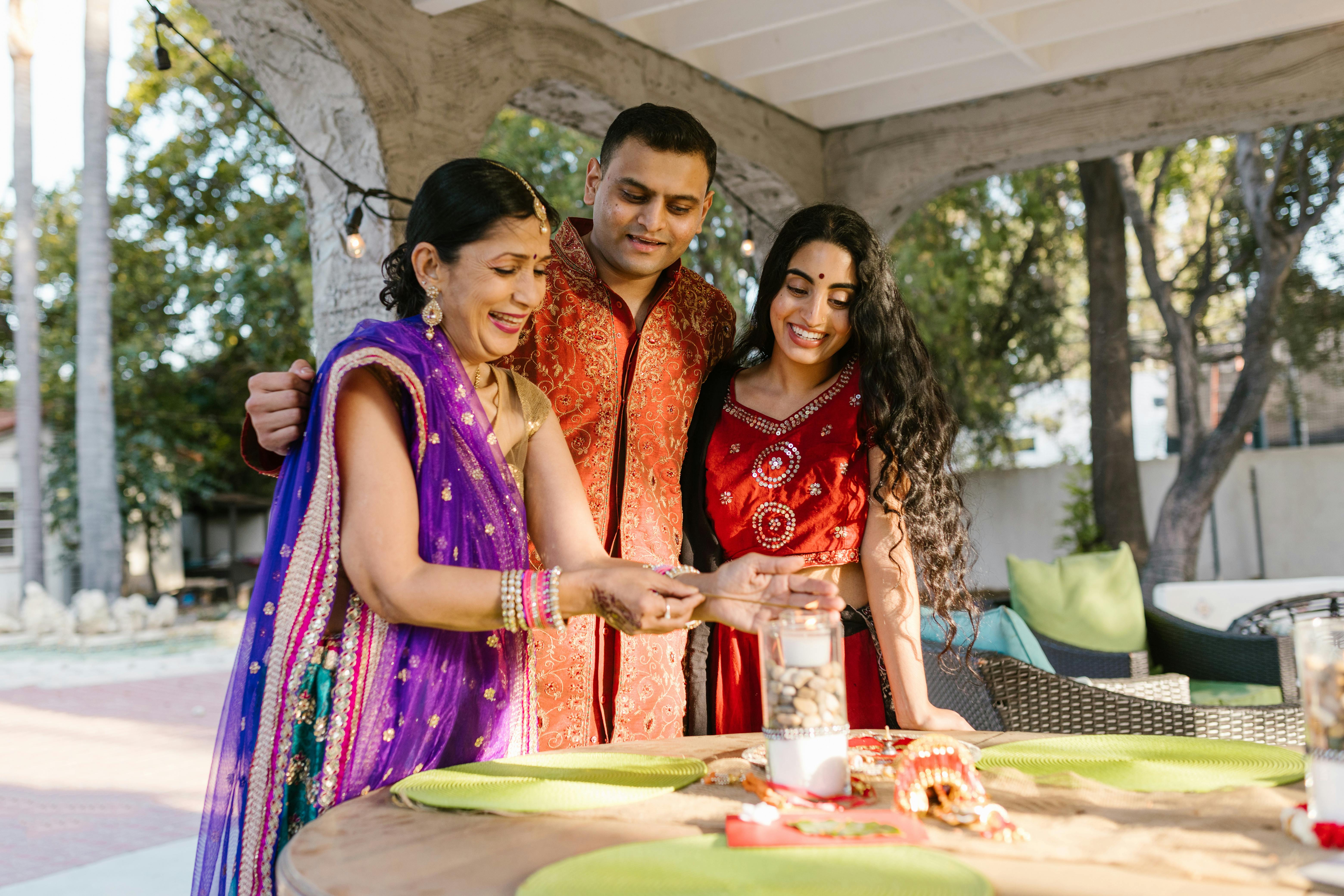

Raising children as an Indian parent in America presents a beautiful yet complex journey of cultural navigation. Indian families face the daily challenge of honoring ancestral traditions while embracing the opportunities and freedoms offered by American society. This delicate balance shapes not only family dynamics but also the identity formation of second-generation Indian Americans, who must learn to walk confidently and proudly between two worlds.
The experience of Indian family values in American contexts creates unique parenting approaches that differ significantly from both traditional Indian households and typical American families. Indian parents in the United States often find themselves creating entirely new frameworks that honor their heritage while preparing their children for success in American society.

Welcome to United Tribes
Where Indian Culture Comes Alive
Join Your Tribe
Connect with your people
Discover Events
Watch parties & festivals
Find Indian Businesses
Restaurants, markets & more
Earn Crown Credits
Get rewarded for engaging
Traditional Indian Values in American Households
Indian family values remain deeply rooted in concepts of respect, education, family unity, and spiritual awareness. Indian parents in America typically maintain these core principles while adapting their expression to fit American social contexts. The emphasis on academic excellence remains paramount, with education viewed not just as personal advancement but also as a family honor and responsibility.
Respect for elders remains a cornerstone value, though its practice may look different in American settings. Indian parents teach their children to address adults with proper titles, seek their grandparents' blessings, and understand hierarchical family structures. However, they also encourage their children to speak up for themselves and express opinions in ways that traditional Indian households might not always welcome.
Family-centric decision-making continues to influence major life choices, from career paths to marriage considerations. Indian parents in America often involve extended family members in important decisions while also teaching their children to value individual autonomy and personal responsibility.
The concept of dharma, or righteous living, gets translated into American contexts through emphasis on community service, ethical behavior, and social responsibility. Indian parents teach their children to contribute to both their local American communities and their cultural heritage communities.
Navigating American Social Norms
Cultural balance becomes most apparent when Indian families interact with broader American society. Indian parents must help their children understand social expectations in American schools, friendship dynamics, and extracurricular activities while maintaining cultural identity.
Dating and relationships present particularly complex navigation points. Many Indian parents in America adopt more flexible approaches than their counterparts in India, allowing supervised dating or group activities while still emphasizing the importance of finding partners who respect Indian culture and values.
Independence versus family obligation creates ongoing conversations in Indian American households. Parents encourage their children to pursue individual dreams and career goals while also maintaining strong family connections and fulfilling cultural responsibilities.
Social celebration participation requires careful balance as well. Indian parents often encourage their children to participate in American holidays, school events, and community activities while ensuring they also engage deeply with Indian festivals, cultural celebrations, and community gatherings.
The integration of traditional Indian cuisine into daily American life becomes a practical expression of cultural balance, with families adapting cooking methods, meal timing, and ingredient availability while preserving authentic flavors and nutritional principles.
Language and Cultural Transmission
Multilingual communication serves as a bridge between cultures in Indian American families. Parents typically speak their regional Indian languages at home while encouraging English proficiency for academic and social success. This bilingual approach helps children connect with grandparents and extended family while fully participating in American society.
Cultural storytelling plays a vital role in transmitting values and identity. Indian parents share epic stories from Ramayana and Mahabharata alongside American historical narratives, helping children understand moral principles from multiple cultural perspectives.
Religious and spiritual practices get adapted for American lifestyles while maintaining their essential meanings. Families might conduct shorter daily prayers, celebrate festivals on weekends rather than exact calendar dates, and find creative ways to observe fasting periods around school and work schedules.
The appreciation of Indian music and film culture becomes a way for families to stay connected to contemporary Indian culture while living in America, with parents using Bollywood films and classical music as educational tools for language learning and cultural understanding.
Educational Approaches and Achievement
Academic excellence expectations remain central to Indian parenting in America. Still, parents often expand their definitions of success to include creative pursuits, athletics, and social leadership that might receive less emphasis in traditional Indian educational systems.
Extracurricular balance becomes crucial as Indian parents learn to value well-rounded development that American colleges and employers seek. They encourage participation in sports, arts, and volunteer work while maintaining focus on academic achievement.
Career guidance has evolved beyond traditional preferences for medicine, engineering, and law to include emerging fields such as technology, business, and the creative industries. Indian parents in America often become more open to unconventional career paths while still emphasizing financial stability and social contribution.
College preparation involves navigating the American higher education system while maintaining cultural connections. Many Indian parents encourage their children to join Indian student associations, participate in cultural organizations, and maintain connections with Indian American professional networks.
Festivals and Cultural Celebrations
Festival celebrations in Indian American households often become more elaborate and educational than they might be in India, as parents deliberately transmit cultural knowledge that children might otherwise absorb naturally in an Indian environment.
Community participation in Diwali, Holi, Navratri, and regional celebrations helps children understand their cultural heritage while building connections with other Indian American families. Parents often coordinate with local Indian communities to ensure authentic celebrations.
Integration with American holidays creates unique family traditions: Thanksgiving might include Indian dishes, Christmas celebrations focus on gift-giving and family time, and the Fourth of July becomes an opportunity to discuss American civic values alongside Indian cultural pride.
The wearing of traditional Indian attire during cultural events helps children connect with their heritage while also teaching them when and how to navigate between cultural presentations in different social contexts.
Building Cultural Bridges
Identity formation support becomes crucial as Indian parents help their children develop confidence in their bicultural identity rather than feeling torn between two worlds. This involves teaching children to see their dual heritage as a strength rather than a source of confusion.
Community engagement extends beyond Indian circles to include active participation in American civic life, school communities, and neighborhood activities. Indian parents model how to contribute to American society while maintaining cultural distinctiveness.
Cultural explanation skills develop as parents teach children to share Indian traditions with non-Indian friends, explain cultural practices in school settings, and represent their heritage positively in diverse environments.
Embracing Bicultural Parenting Success
Indian parenting represents a dynamic evolution of traditional values meeting contemporary realities. Parents who successfully navigate this cultural balance create environments where children can thrive as confident Indian Americans, equipped with strong moral foundations, academic excellence, and the ability to contribute meaningfully to both their heritage community and American society.
These families demonstrate that Indian family values can not only survive but flourish in American contexts when parents approach cultural transmission with intentionality, flexibility, and pride. By maintaining connections to language, traditions, festivals, and community while encouraging full participation in American life, Indian parents create the foundation for children who can serve as bridges between cultures throughout their lives.
Visit United Tribes today to learn more about Indian culture and community connections that support families on their bicultural parenting journey.
Make United Tribes Your Preferred Source
Add United Tribes on Google to get the latest stories, cultural updates, and community events directly in your Google Search and Top Stories.


