
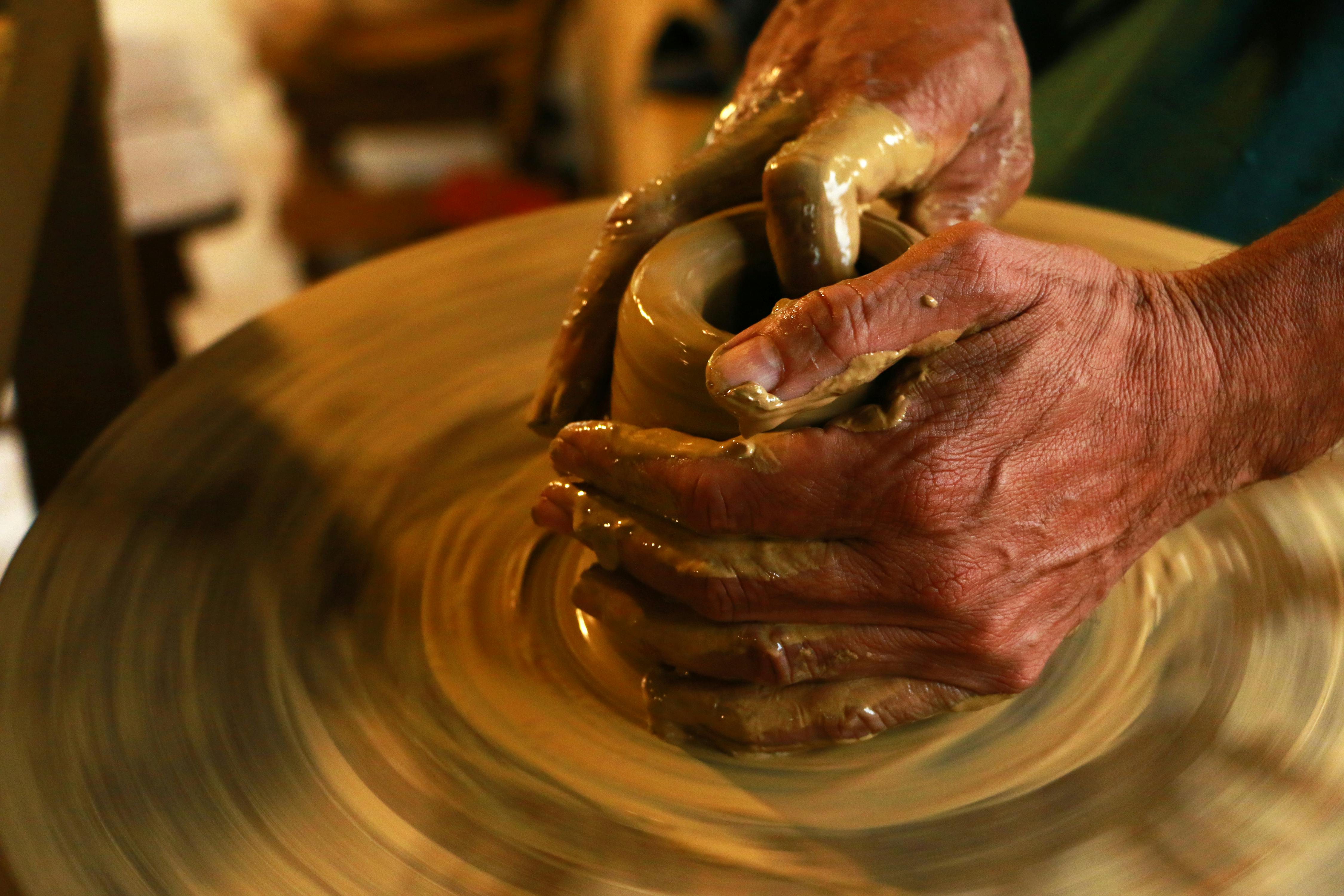

The rich tradition of Persian pottery stretches back over 5,000 years, representing one of humanity's oldest and most sophisticated ceramic arts. From the ancient kilns of Mesopotamia to contemporary studios across the United States, Persian pottery has evolved into a vibrant expression of cultural identity that bridges generations of Iranian artisans. Today, Iranian-American ceramicists continue to honor their ancestral craft while adapting traditional techniques to modern artistic sensibilities, creating pieces that speak to both heritage and innovation.
The art of Iranian ceramics serves as more than mere functional objects or decorative pieces—it embodies the soul of Persian culture, carrying forward stories, symbols, and techniques that have been carefully preserved and passed down through countless generations. Each piece tells a story of resilience, beauty, and the enduring power of artistic expression to connect communities across time and geography.

Welcome to United Tribes
Where Persian Culture Comes Alive
Join Your Tribe
Connect with your people
Discover Events
Watch parties & festivals
Find Persian Businesses
Restaurants, markets & more
Earn Crown Credits
Get rewarded for engaging
Ancient Origins of Persian Pottery
The foundations of Persian ceramic art can be traced back to the prehistoric settlements of the Iranian plateau, where early civilizations discovered the transformative power of fire and clay. Archaeological evidence from sites like Susa and Persepolis reveals sophisticated pottery techniques that were already well-developed by 3000 BCE. These early artisans mastered the art of wheel throwing, glazing, and decorative painting, creating vessels that were both functional and aesthetically remarkable.
Persian art heritage during the ancient period was characterized by distinctive geometric patterns, stylized animal motifs, and intricate calligraphic designs that would become hallmarks of Persian visual culture. The renowned Nishapur ceramics of the 9th and 10th centuries featured bold calligraphy paired with vibrant colors, establishing an aesthetic language that continues to influence contemporary Iranian ceramicists.
The Safavid period (1501-1722) marked a golden age for Persian pottery, with royal patronage elevating the craft to unprecedented heights of artistic achievement. During this era, Persian ceramicists developed the distinctive blue-and-white porcelain style that would become synonymous with Iranian artistic excellence, incorporating motifs inspired by poetry, nature, and spiritual symbolism.
Traditional Techniques and Regional Styles
Persian pottery encompasses numerous regional styles, each reflecting the unique cultural and geological characteristics of different Iranian provinces. The ceramics of Isfahan became renowned for their delicate floral patterns and sophisticated glazing techniques. At the same time, the pottery of Kerman developed a distinctive style characterized by bold geometric designs and rich, earthy tones.
Traditional Persian pottery techniques involve the use of local clays combined with specific minerals, which create unique textures and firing properties. Master potters would often guard their glazing formulas as closely held secrets, passing them down only to trusted apprentices who demonstrated both technical skill and cultural understanding.
The symbolic language embedded in Persian ceramics draws from centuries of cultural tradition, incorporating elements from Zoroastrian, Islamic, and pre-Islamic Persian mythology. Common motifs include the Tree of Life, representing eternal growth and the connection between Earth and Heaven, and the cypress tree, symbolizing immortality and steadfastness. These symbols connect modern practitioners to the same spiritual and cultural meanings that inspired their ancestors.
Persian potters traditionally worked within guild systems that maintained quality standards and preserved technical knowledge. These guilds ensured that the essential techniques of clay preparation, wheel throwing, glazing, and firing were accurately transmitted from master to apprentice, thereby maintaining the integrity of the craft across generations.
Evolution Through the Centuries
The 19th and early 20th centuries witnessed significant changes in Persian pottery, as increased contact with European markets introduced new techniques and aesthetic influences. However, rather than abandoning traditional methods, Persian artisans skillfully integrated selected foreign elements while maintaining their distinctive cultural identity.
The Qajar period (1789-1925) witnessed the emergence of new decorative styles that combined traditional Persian motifs with contemporary influences, resulting in hybrid forms that reflected Iran's evolving cultural landscape. Pottery from this era often featured portraits, architectural scenes, and literary references that appealed to both domestic and international audiences.
During the Pahlavi era (1925-1979), government initiatives promoted Persian crafts as expressions of national identity, resulting in a renewed interest in traditional pottery techniques. Art schools and cultural organizations worked to document and preserve traditional methods while encouraging innovation within established frameworks.
The Islamic Revolution of 1979 and subsequent political changes led to a significant emigration of Iranian artisans to countries, including the United States, where they established new studios and began adapting their traditional skills to the American artistic market. This diaspora period proved crucial in expanding the global reach of Persian pottery and ensuring the continuation of traditional techniques in new cultural contexts.
Modern Iranian-American Artists
Contemporary Iranian-American ceramicists represent a fascinating fusion of ancient traditions and modern artistic expression. These artists navigate the complex territory between honoring their cultural heritage and responding to contemporary American artistic movements, creating work that speaks to both Persian and American audiences.
Contemporary Masters and Their Innovations
Artists like Farhad Moshiri and Shirana Shahbazi have gained international recognition for their contemporary interpretations of traditional Persian ceramic motifs. Their work demonstrates how ancient symbols and techniques can be reimagined for modern contexts while maintaining cultural authenticity and meaning.
Many Iranian-American ceramicists established their studios in cities with significant Persian populations, including Los Angeles, New York, and the San Francisco Bay Area. These artists often serve as cultural bridges, teaching traditional techniques to both Persian-American youth seeking connection with their heritage and non-Persian students interested in learning ancient craft methods.
The incorporation of contemporary themes into traditional Persian pottery forms has created new categories of ceramic art that address issues of immigration, identity, and cultural adaptation. These pieces often feature traditional Persian glazes and forms combined with imagery and symbolism that reflect the immigrant experience in America.
Teaching and Cultural Transmission
Iranian-American pottery masters have established workshops, classes, and mentorship programs designed to ensure the continuation of traditional techniques among younger generations. These educational initiatives often coincide with cultural celebrations and community events, creating connections between craft learning and broader cultural identity formation.
Many of these contemporary artists participate in Persian cultural festivals and celebrations, demonstrating traditional pottery techniques and selling their work to community members seeking authentic cultural artifacts. Nowruz celebrations often feature pottery demonstrations and exhibitions that highlight the connection between ancient craft traditions and contemporary cultural practice.
Symbolism and Cultural Significance
The symbolic vocabulary of Persian pottery draws from multiple sources, including Zoroastrian cosmology, Islamic geometric principles, and pre-Islamic Persian mythology. Understanding these symbolic elements provides insight into the deeper cultural meanings embedded in even the most apparently simple ceramic pieces.
Floral motifs in Persian ceramics often carry specific meanings related to paradise, beauty, and divine grace. The rose, for example, represents both earthly beauty and spiritual love, while the lotus symbolizes purity and rebirth. These symbols connect Persian pottery to broader themes in Persian literature and philosophy, creating resonances that extend far beyond the ceramic medium.
Calligraphic elements in Persian pottery often feature verses from classical Persian poetry, Quranic passages, or traditional blessings and prayers. The integration of text and decorative design reflects the high status of both calligraphy and poetry in Persian culture, creating ceramic pieces that serve as functional objects, decorative art, and literary expressions.
The color symbolism in Persian ceramics carries deep cultural significance, with blue representing infinity and spiritual transcendence, while green symbolizes paradise and renewal. The careful selection and combination of colors in traditional Persian pottery reflects a sophisticated understanding of both aesthetic principles and cultural meaning systems.
Persian ceramics often incorporate architectural motifs that reference famous Iranian buildings and monuments, creating miniature representations of cultural landmarks that serve as powerful identity markers for Iranian communities living abroad.
Persian Pottery in Contemporary America
The presence of Persian pottery in American museums, galleries, and private collections has helped introduce broader American audiences to the sophistication and beauty of Iranian ceramic traditions. Major institutions, including the Metropolitan Museum of Art and the Los Angeles County Museum of Art, maintain significant collections of Persian ceramics that document the evolution of this art form across centuries.
Persian pottery has also found new markets and applications in contemporary American interior design, with many non-Persian Americans appreciating the aesthetic qualities and craftsmanship of traditional Iranian ceramics. This broader appreciation has created new opportunities for Iranian-American ceramicists to reach a wider audience while maintaining cultural authenticity.
The integration of Persian pottery traditions into American craft communities has facilitated valuable cultural exchange, with non-Persian ceramic artists learning traditional Persian techniques. In contrast, Iranian-American artists explore contemporary American ceramic approaches. This cross-cultural dialogue has enriched both traditions, creating new hybrid forms that reflect American multiculturalism.
Persian community organizations across the United States often feature pottery workshops and exhibitions as part of their cultural programming, recognizing the importance of craft traditions in maintaining community identity and connection to heritage. These events serve both educational and social functions, bringing together Persians of different generations around shared cultural practices.
Persian restaurants and cultural centers often feature traditional pottery as part of their interior design, creating environments that evoke Persian cultural aesthetics and provide a context for other cultural experiences, such as traditional food and music. Persian hospitality traditions often involve the ceremonial use of traditional pottery for serving tea and sweets to guests.
Preserving Heritage Through Clay
The journey of Persian pottery from ancient Mesopotamian kilns to contemporary American studios represents a remarkable story of cultural preservation and artistic evolution. Today's Iranian-American ceramicists carry forward a 5,000-year-old tradition while adapting it to new cultural contexts and artistic opportunities. Their work serves as both beautiful functional art and a powerful cultural bridge, connecting Iranian-American communities to their heritage while introducing broader American audiences to the sophistication and meaning of Persian ceramic traditions.
As we celebrate the rich legacy of Persian art and heritage, it becomes clear that pottery embodies the resilience, creativity, and cultural depth that have characterized Persian civilization across millennia. The success of Iranian-American ceramicists in maintaining and evolving these traditions ensures that future generations will continue to benefit from this remarkable artistic heritage. Visit United Tribes today to learn more about Persian culture and community.
Make United Tribes Your Preferred Source
Add United Tribes on Google to get the latest stories, cultural updates, and community events directly in your Google Search and Top Stories.


