
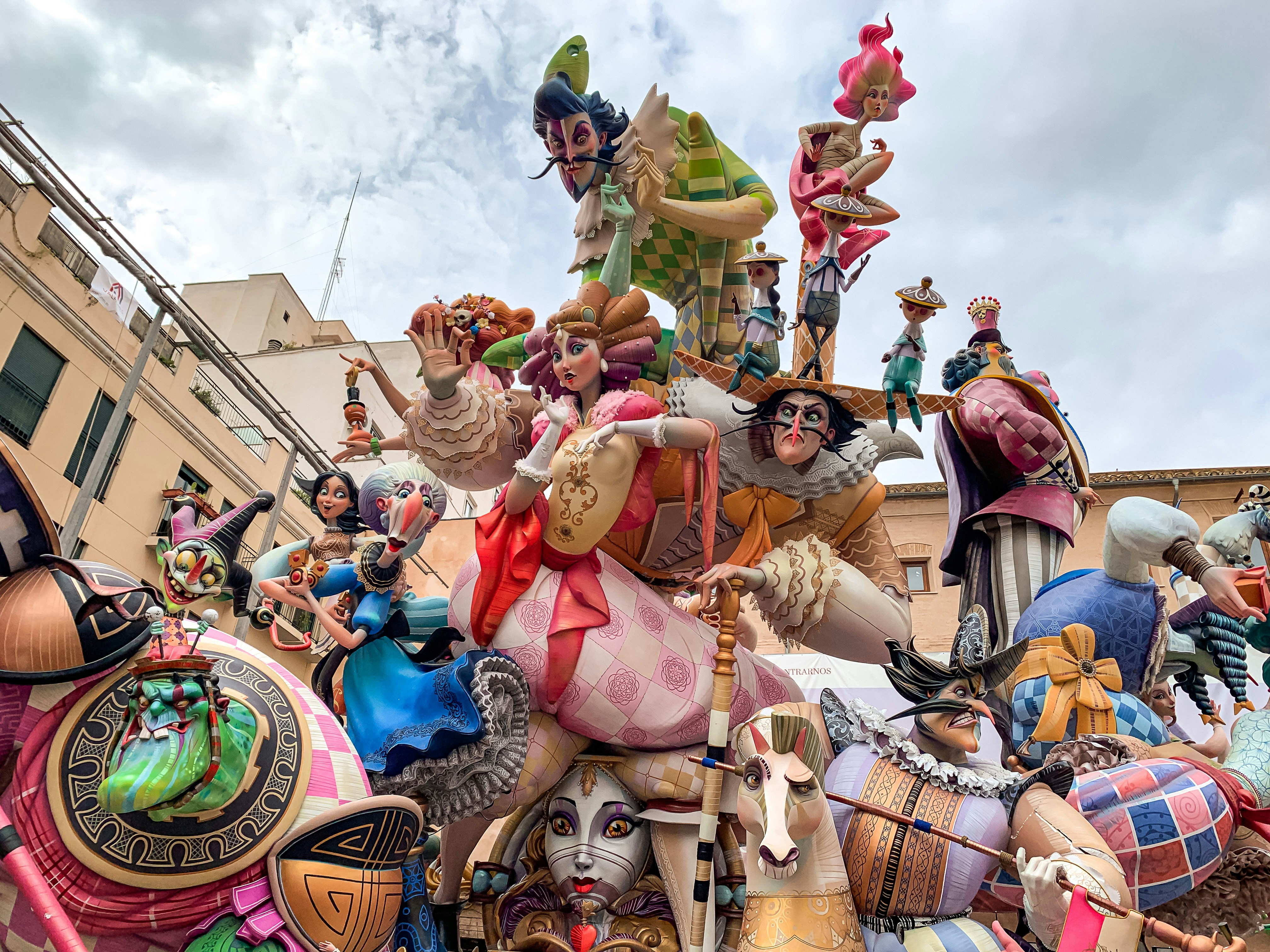

Every March, Valencia transforms into a living canvas of art, satire, and fire as Las Fallas takes over Spain's third-largest city. This UNESCO-recognized festival represents one of the most spectacular celebrations in the Hispanic world, where months of artistic preparation culminate in five days of explosive festivities.

Welcome to United Tribes
Where Mexican Culture Comes Alive
Join Your Tribe
Connect with your people
Discover Events
Watch parties & festivals
Find Mexican Businesses
Restaurants, markets & more
Earn Crown Credits
Get rewarded for engaging
The festival's roots stretch back over 500 years, originating from a carpenter's tradition of burning wood shavings and old materials to celebrate Saint Joseph's Day. What started as a simple clearing of winter debris has evolved into an internationally celebrated event that attracts over three million visitors annually. The name "fallas" itself refers to the massive sculptural displays that dominate Valencia's streets, each one a masterpiece of craftsmanship and social commentary.
The Heart of Las Fallas: Understanding the Ninots
The soul of Las Fallas lies in its ninots, the intricate figurines that make up the larger falla monuments. These decorations are sophisticated works of art that take skilled artisans months to create. Each ninot tells a story, often featuring satirical representations of political figures, celebrities, or social issues that have captured public attention throughout the year.
Fallero artists begin working on these creations immediately after the previous year's festival ends, spending countless hours sculpting, painting, and perfecting every detail. The largest falla monuments can tower over 30 feet high and cost upwards of €300,000 to construct. These temporary masterpieces represent the collaborative effort of entire neighborhoods, with local committees raising funds and commissioning artists to bring their vision to life.
The ninot indultat tradition adds another layer of cultural significance to the festival. Each year, one ninot from each falla is saved from the flames through a popular vote, earning a "pardon" and a permanent place in Valencia's Fallas Museum. This democratic process reflects the community's deep connection to its artistic heritage and ensures that exceptional works survive beyond the festival's fiery conclusion.
Mascletà: The Thunderous Symphony of Spanish Festival Traditions
No Valencia March festival would be complete without explaining the daily mascletà—perhaps the most uniquely Valencian aspect of Las Fallas. Every day at exactly 2 PM, Plaza del Ayuntamiento erupts in a carefully choreographed explosion of sound and smoke that can be heard throughout the city.
Mascletà's meaning extends far beyond simple pyrotechnics. These daytime fireworks displays represent a sophisticated art form where rhythm, intensity, and timing create an almost musical experience. Master pyrotechnicians spend years perfecting their craft, learning to build tension through carefully timed sequences that culminate in the earth-shaking terremoto (earthquake) finale.
The crowd's participation in the mascletà demonstrates the communal nature of Spanish festival traditions in March. Thousands gather daily, creating a shared experience in which strangers become temporary family members, all united in anticipation of the next explosive crescendo.
The Technical Artistry Behind Mascletà
Professional pyrotechnicians approach the creation of mascletà like composers writing a symphony. The performance begins with scattered pops and builds through various phases, each designed to elicit specific emotional responses from the audience. The final terremoto often involves thousands of firecrackers exploding simultaneously, creating a sound so intense that it temporarily silences the crowd before erupting into applause.
Different neighborhoods compete to create the most memorable mascletà, with each day's display varying in style, intensity, and duration. This friendly competition ensures that no two performances are identical, giving festival-goers reason to attend multiple mascletàs throughout the celebration period.
La Cremà: The Spectacular Finale of Renewal
La Cremà represents the philosophical heart of Las Fallas, the beautiful destruction that makes room for rebirth. On the night of March 19th, Saint Joseph's Day, hundreds of falla monuments simultaneously burst into flames across Valencia in a coordinated celebration that transforms the city into a galaxy of bonfires.
La Cremà follows a precise schedule, beginning with children's fallas at 10 PM and building toward the burning of the largest adult monuments. The Falla Municipal in Plaza del Ayuntamiento traditionally burns last, often after midnight, serving as the festival's grand finale. Firefighters stand ready with hoses, not to extinguish the flames, but to protect surrounding buildings from the intense heat.
The symbolism of La Cremà resonates across cultures, embodying themes of renewal, letting go, and the cyclical nature of life. Months of artistic labor disappear in minutes, but this destruction is celebrated as transformation. The ashes clear the way for next year's creativity, ensuring that Las Fallas remains eternally fresh and relevant.
Safety and Spectacle in Perfect Balance
Despite the apparent chaos of hundreds of simultaneous bonfires, La Cremà represents a masterpiece of organization and safety planning. Each falla burning follows strict protocols, with professional crews managing the flames and ensuring public safety. The controlled destruction creates an otherworldly atmosphere where art, fire, and community celebration merge into an unforgettable experience.
Spectators gather in designated areas around each falla, creating intimate community celebrations throughout the city. Local committees often serve traditional foods and drinks during the burning, transforming each La Cremà site into a neighborhood party that extends well into the early morning hours.
Cultural Resonance: How Las Fallas Connects Communities
Las Fallas demonstrates how Hispanic heritage traditions create lasting bonds within communities while welcoming outsiders into their celebrations. The festival's emphasis on satirical commentary reflects a broader Spanish cultural tradition of using humor and art to process social and political realities.
The fallera and fallero roles, festival queens and their male counterparts, showcase traditional Spanish values while adapting to modern sensibilities. These community representatives, chosen from local neighborhoods, spend the year promoting their fallas and participating in cultural events, embodying the festival's community-centered philosophy.
International visitors often discover that Las Fallas offers profound insights into Spanish culture beyond the obvious spectacle. The festival's combination of artistic excellence, community cooperation, and celebratory destruction reflects deeper cultural values about creativity, social engagement, and the importance of shared experiences in building lasting relationships.
Planning Your Las Fallas 2026 Experience
Las Fallas 2026 will run from March 15 to 19, with activities beginning several days earlier as monuments are installed and communities prepare for the celebration. Accommodation in Valencia fills quickly during festival season, making early planning essential for visitors hoping to experience this cultural phenomenon firsthand.
The festival's neighborhood-based structure means visitors can create personalized experiences by focusing on specific districts or trying to see as many fallas as possible. Many international visitors find that staying in Valencia's historic center provides easy access to major monuments while allowing spontaneous exploration of smaller neighborhood celebrations.
Understanding the daily rhythm enhances the Las Fallas experience: morning monument visits, afternoon mascletà attendance, evening parades and cultural events, and late-night street celebrations. This pattern allows visitors to experience the festival's full cultural range while participating in community celebrations that extend far beyond the main events.
Valencia's Cultural Fire Awaits You
The festival's themes of renewal through destruction and community through celebration resonate across cultural boundaries, making Las Fallas a truly universal human experience wrapped in distinctly Spanish traditions. Whether you're drawn by artistic mastery, explosive spectacle, or community spirit, Valencia in March offers an unforgettable cultural journey.
Visit United Tribes today to learn more about Hispanic culture and community celebrations that connect heritage with modern expression.
Make United Tribes Your Preferred Source
Add United Tribes on Google to get the latest stories, cultural updates, and community events directly in your Google Search and Top Stories.


