
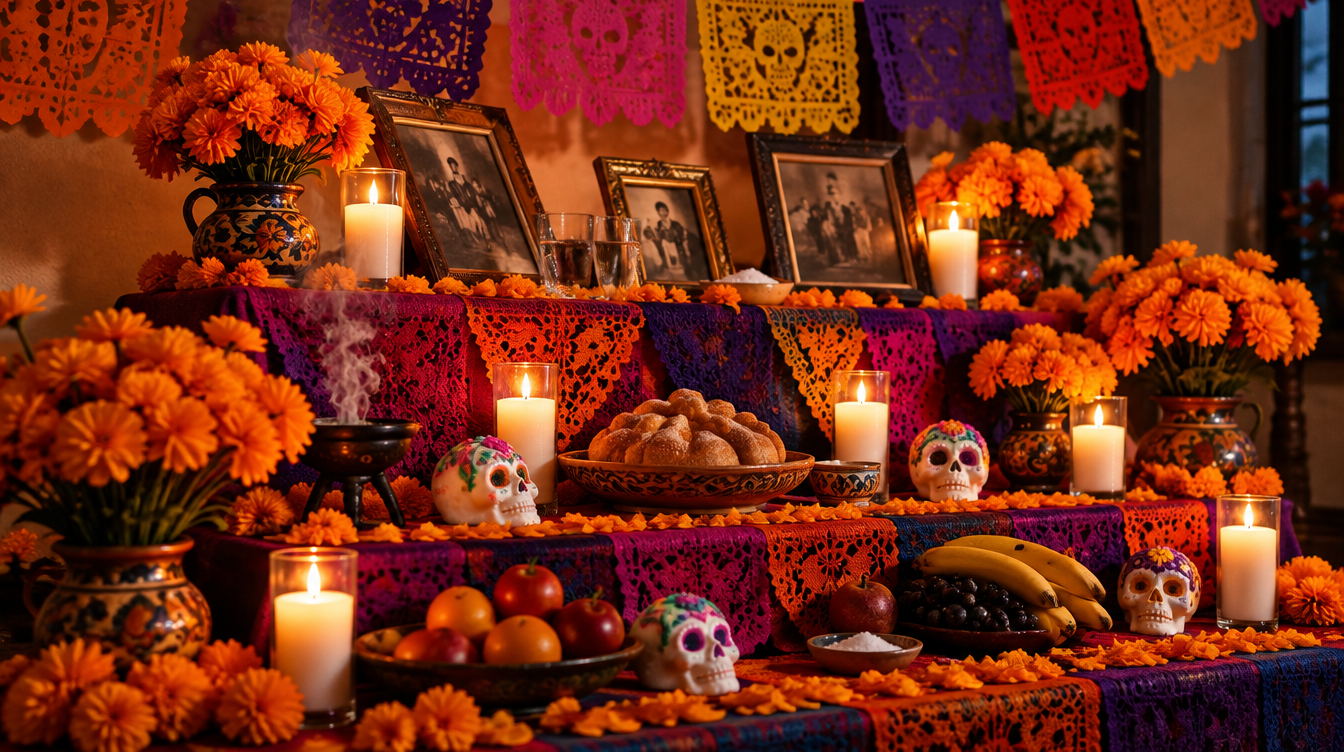

An ofrenda is a home altar built for Día de Muertos to welcome the spirits of loved ones back for one night. Every object on it has a job: the marigolds and candles light the way home, water and food refresh the travelers, and photos and favorite things tell each spirit that this altar is for them.
For Mexican families across the United States, from Los Angeles to Chicago to Houston, building the ofrenda is how grandparents pass the tradition to children who may never have seen a cemetery in Oaxaca lit with candles. Here is what each element means, so you can build one with intention.

Welcome to United Tribes
Where Mexican Culture Comes Alive
Join Your Tribe
Connect with your people
Discover Events
Watch parties & festivals
Find Mexican Businesses
Restaurants, markets & more
Earn Crown Credits
Get rewarded for engaging
When the ofrenda goes up
Most families set up the altar in the last days of October. Tradition holds that the souls of children (los angelitos) return on November 1 and adults on November 2. After the celebration, families share the food with the living; the spirits have already taken its essence. UNESCO recognizes these Indigenous festivities for the dead as Intangible Cultural Heritage of Humanity.
The levels
- Two levels stand for heaven and earth.
- Three levels add the underworld, or in Catholic homes, purgatory.
- Seven levels, the most elaborate, represent the steps a soul climbs to reach rest.
Any size is right. A single shelf built with care is a true ofrenda.
The four elements
Every ofrenda brings together the four elements of nature:
- Water: a glass or jug so the spirits can quench their thirst after the long journey.
- Earth: the food, especially fruit and bread, grown from the land.
- Fire: candles that light the way home.
- Wind: papel picado, the cut-paper banners that move when spirits pass. Read more about the meaning of papel picado.
What each element means
Photographs. A photo of each person being honored, usually on the top level. It tells the spirit this altar is theirs. Photos of the living are left off.
Cempasúchil (Mexican marigolds). The bright orange flowers and their strong scent guide spirits home. Many families lay a path of petals from the door to the altar.
Candles (veladoras). Light for the journey. Some families place one candle for each person they remember, or set four in the shape of a cross to mark the four directions.
Water. Refreshes spirits who have traveled far.
Salt. Purifies the soul and keeps the body from corrupting during the journey. It is usually set in a small dish or in the shape of a cross.
Pan de muerto. The sweet bread decorated with bone-shaped dough represents the cycle of life and death and the generosity of the household. Look for it at your local Mexican panadería in late October.
Copal. This tree-resin incense, used since pre-Hispanic times, cleanses the space and carries prayers upward.
Sugar skulls (calaveritas de azúcar). Colorful skulls, often with a name written on the forehead, playfully remind us that death is part of life. They are a cousin of La Catrina, the elegant skeleton you may know from our La Catrina story.
Favorite food and drink. Mole, tamales, fruit, coffee, atole, a beer or a shot of tequila: whatever the person loved most. This is the most personal part of the altar.
Personal belongings. Glasses, a hat, a favorite song, tools of a trade. For children, toys and candy.
Religious images. A cross, the Virgin of Guadalupe or a favorite saint, reflecting how Catholic and Indigenous traditions blended over centuries.
A Xoloitzcuintli figure. In Aztec belief, this hairless dog helps souls cross the river to the land of the dead. Some families include a small figure of one.
Soap, a towel and a mirror. In some regions, so visiting spirits can freshen up after their journey.
Building your ofrenda in the US
You don't need every element. Start with a photo, a candle, water, flowers and one thing your loved one enjoyed. Mexican bakeries, markets and flower shops carry marigolds, pan de muerto and papel picado in late October, and many cities host community altars at museums, churches and cultural centers.
Frequently asked questions
What is the most important part of an ofrenda?
The photograph of the person you are honoring. Everything else on the altar is there to welcome that person home.
Can I put photos of living people on an ofrenda?
Traditionally no. The ofrenda is only for those who have died, so families keep photos of the living off the altar.
When should I take down my ofrenda?
Most families take it down after November 2 and share the food with the living. Some leave it up a few days longer.
Celebrate Día de Muertos with your community
Make United Tribes Your Preferred Source
Add United Tribes on Google to get the latest stories, cultural updates, and community events directly in your Google Search and Top Stories.