

Key Takeaways
- Otavalo's textile tradition predates the Inca Empire. Kichwa-Otavalo weavers have practiced their craft for centuries, adapting techniques through the Inca and Spanish colonial periods while preserving ancestral knowledge.
- The Plaza de los Ponchos hosts roughly 1,500 vendors daily. This iconic Otavalo market is one of Latin America's largest indigenous craft markets, where handwoven ponchos can sell for up to $600.

Welcome to United Tribes
Where Ecuadorian Culture Comes Alive
Join Your Tribe
Connect with your people
Discover Events
Watch parties & festivals
Find Ecuadorian Businesses
Restaurants, markets & more
Earn Crown Credits
Get rewarded for engaging
- Textile production remains a household-based family enterprise. Men, women, and children participate in every step—from wool washing and dyeing to spinning and weaving—passing skills down through generations.
- Otavalo weavers actively serve global markets. Artisans sell through local shops, Quito boutiques, and international travel, with approximately 10% of the Otavalo community abroad at any given time.
- Cultural symbolism is embedded in every garment. Poncho shapes that echo Andean mountains and the fachalina worn differently by marital status reflect the deep identity encoded in Otavalo textiles.
In the highlands of northern Ecuador, a remarkable tradition has endured wars, colonial exploitation, and the pressures of globalization, remaining vibrantly alive. For centuries, the Kichwa-Otavalo people have woven their identity into every thread, producing textiles that carry cultural memory, economic power, and artistic mastery in equal measure. Their story is not simply one of survival — it is one of extraordinary resilience and creative adaptation.
What is the textile heritage of Otavalo and why does it matter?
Otavalo's textile heritage represents one of the oldest and most culturally significant weaving traditions in the Western Hemisphere, predating both the Inca Empire and Spanish colonization. The Kichwa-Otavalo people built their identity so completely around weaving that colonial authorities recognized their skill and demanded their finest fabrics for the Spanish Crown. Today, that same expertise sustains families, anchors a global commercial network, and continues to define what it means to be Kichwa-Otavalo. Understanding this tradition means understanding a living culture, not a museum artifact.
The earliest Otavalo weavers worked with cotton blankets, laying the foundation for a craft that evolved dramatically over time. During the Inca period, llama wool entered Otavalo artisans' material vocabulary. Spanish colonization then introduced new technology — horizontal looms and spinning wheels — alongside the brutal "obraje" system, which forced indigenous weavers into colonial textile factories. When the obraje system was eventually abolished, weaving did not disappear. Instead, it returned to what it had always been at its core: a family practice, passed from parent to child, carried forward through daily life.
A Living History Encoded in Thread
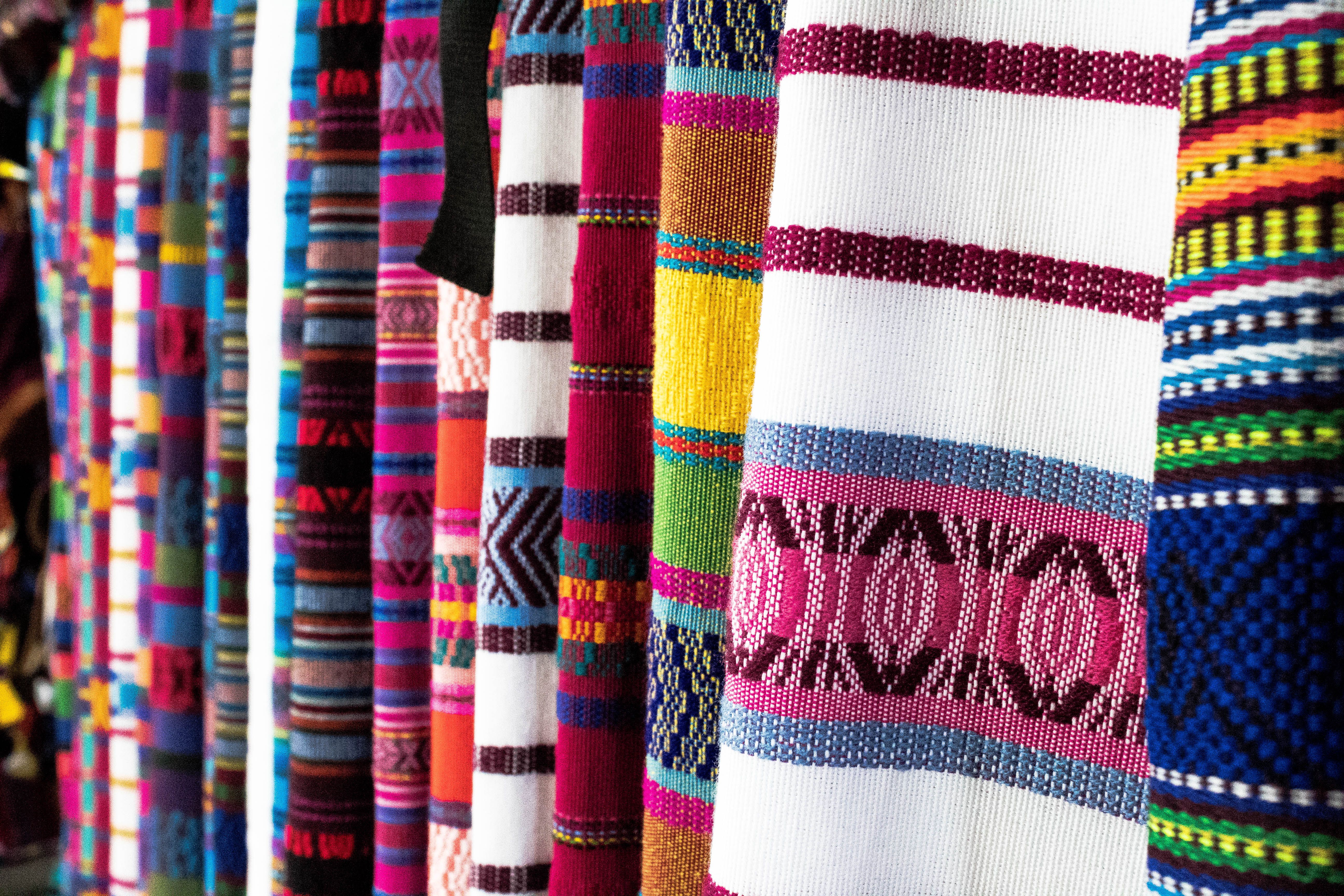
The Kichwa-Otavalo identity as a "weaver people" is inseparable from the symbolism embedded in their garments. Ponchos are not merely outerwear — their shape deliberately evokes the peaks of the Andean mountains that surround Otavalo. The women's fachalina, a traditional shawl, carries social meaning too: the way it is worn signals a woman's marital status, making a simple piece of fabric a form of communication readable to anyone who knows the language.
The guango, a long braid worn by Kichwa men, remains one of the most recognizable external markers of cultural identity. These symbols persist even as globalization creates pressure to assimilate. Migration, contact with international markets, and urban influences have all challenged the persistence of traditional dress and the Kichwa language (runashimi), but many artisan families have chosen to hold firm. The braid, the woven blouse, the handmade poncho — these are acts of cultural declaration as much as personal style.
The Museo Viviente Otavalango, established in 2011 within the former San Pedro obraje, offers a powerful example of how the community reclaims this history. Rather than letting the colonial factory stand as a wound, Kichwa-Otavalo community members have transformed it into a space for rituals, oral histories, and weaving artifacts — reinterpreting exploitation as the foundation for resilience.
The Family Weaving Process: From Fiber to Finished Cloth
Traditional Ecuadorian weaving in Otavalo is not a single act, but a whole sequence of skilled labor, and that sequence belongs to the family. Households typically divide the stages of production among their members, with men, women, and sometimes children each contributing. The process moves through several essential phases:
1. Fiber preparation — wool is washed and cleaned to remove natural oils and debris
2. Carding — fibers are combed to align them before spinning
3. Spinning — raw fiber is twisted into usable thread by hand or with a wheel
4. Dyeing — thread is colored using both natural plant-based dyes and commercial pigments
5. Weaving — finished thread is worked on backstrap or wooden looms into cloth
6. Finishing — edges are secured,d and pieces are trimmed or assembled into garments
In remote highland communities, ancestral backstrap looms still produce woolen ponchos, blankets, and wall hangings using techniques that predate even Inca influence. In family workshops like Artelar Farinango in the community of Quinchuquí, artisans such as Cecilio de la Torre work on wooden looms to produce shawls, scarves, bags, and table runners for tourists and the local market — skills inherited directly from those who came before them.
The Plaza de los Ponchos and the Scale of Otavalo Commerce
The Plaza de los Ponchos is the commercial heartbeat of Otavalo's textile economy, and its scale is genuinely impressive. Established as a formal market site in 1870 and redesigned in 1972, the plaza now draws roughly 1,500 vendors on regular days, swelling further on Wednesdays and Saturdays when artisans from surrounding communities — including Selva Alegre, Taxopamba, Apuela, La Joya, and Quichinche — arrive to sell their work.
The range of goods reflects the full breadth of Otavalo culture and craft. Prices span from $25 for smaller woven pieces to $600 or more for double-sided, handwoven ponchos that represent dozens of hours of skilled labor. Traditional gualcas — glass and gold-plated necklaces — can fetch up to $700. The market is not a tourist attraction mimicking an older tradition; it is a functioning economic ecosystem where families earn a living from centuries-old skills.
|
Textile or Craft Item |
Primary Materials |
Approximate Price Range |
Common Market |
|
Double-sided handwoven poncho |
Wool |
$300–$600 |
Plaza de los Ponchos |
|
Standard woven blanket |
Wool/acrylic |
$25–$80 |
Plaza, home sales |
|
Tapestry/wall hanging |
Wool, cotton |
$40–$150 |
Market, boutiques |
|
Shawl or scarves |
Wool, cotton |
$20–$60 |
Market, tourist shops |
|
Gualca necklace |
Glass, gold-plated |
Up to $700 |
Market stalls |
Navigating Global Markets While Holding Cultural Ground
Otavalo weavers have long refused to be bound by geography. Artisans sell not only in the plaza and through local Otavalo shops but also in Quito boutiques and through direct travel across Latin America, North America, and Europe. Roughly 10% of the Otavalo community is abroad at any given time, maintaining trading relationships that stretch across continents and reflect an entrepreneurial confidence rooted in centuries of commerce.
This global reach comes with a creative challenge: how do you serve international tastes without diluting the cultural identity that makes your work meaningful? Kichwa artisans in Otavalo have navigated this tension by blending traditional designs with contemporary styles and materials, incorporating acrylics alongside wool and cotton, and adapting color palettes to meet market demand. The result is a textile tradition that is neither frozen in the past nor hollowed out by commercialization — it is genuinely alive.
For Ecuadorian communities in the United States, this weaving heritage carries particular resonance. It connects second-generation families to a living craft tradition, not a distant memory. Articles exploring how Ecuadorian communities celebrate and gather in the U.S. show how cultural pride extends well beyond any single tradition — and how that pride finds expression in new contexts and new American cities.
Transmission of Skills and the Role of Community Education
The greatest long-term challenge facing Ecuador's traditional textiles is not global competition — it is ensuring that the next generation chooses to learn. Family-based transmission remains the primary way to keep these skills alive. Children in artisan households grow up watching, then helping, then mastering each stage of production. This apprenticeship model does not happen in a classroom; it happens at the loom beside a parent or grandparent.
Community spaces like the Museo Viviente Otavalango supplement this household transmission by creating collective memory around the craft. By housing weaving artifacts, telling oral histories, and performing cultural rituals in a space that once represented colonial oppression, the museum transforms trauma into pedagogy. The message it sends to young Kichwa-Otavalo people is clear: this skill was valuable enough that outsiders tried to steal it for centuries, and it remains worth protecting today.
For those following Ecuadorian heritage and cultural events in the U.S., the visibility of Otavalo textiles in American cities — sold at cultural markets, worn at festivals, displayed in community centers — is a direct extension of this tradition of transmission. Every poncho or woven bag that crosses a border carries the knowledge of the hands that made it.
Threads That Connect Past and Future
Otavalo's textile tradition is a story of remarkable continuity — from pre-Inca cotton blankets to double-sided ponchos sold at global boutiques, the Kichwa-Otavalo people have adapted without abandoning their core identity. The family workshop, the plaza market, the backstrap loom, and the symbolic garment form a living system that generates both economic livelihood and cultural meaning.
For Ecuadorian communities in the United States, this heritage offers something deeply valuable: a craft tradition they can touch, wear, display, and teach. Whether through a woven textile purchased at a cultural market or a family story about a grandmother's loom, Otavalo textiles serve as tangible connections between generations separated by distance. The artisans of Otavalo have shown that cultural preservation and global participation are not opposing forces — they can reinforce each other when the community holds its identity with confidence.
Explore the Ecuadorian community and discover artisans, cultural businesses, and heritage stories from across the United States by visiting the United Tribes community.
Frequently Asked Questions
What materials do Otavalo weavers use today?
Otavalo artisans work with a range of materials including traditional wool, cotton, and increasingly acrylic fibers to meet contemporary market demand. The choice of material depends on the product type, price point, and the intended market, whether local, tourist, or international.
How long does it take to weave a traditional Otavalo poncho?
A high-quality double-sided handwoven poncho can take many hours or even days to complete depending on the complexity of the design and the fineness of the weave. The labor involved explains why such ponchos can command prices of $300 to $600 at the Plaza de los Ponchos.
Is Otavalo weaving recognized internationally as a cultural heritage?
Otavalo's indigenous textile tradition is widely recognized for its cultural and artistic significance, drawing scholars, buyers, and travelers worldwide. While formal UNESCO designation processes vary, the tradition is broadly acknowledged as one of the most intact and vibrant indigenous craft economies in the Americas.
How do Kichwa-Otavalo weavers sell their goods outside Ecuador?
Kichwa-Otavalo artisans travel extensively, selling textiles directly in markets across Latin America, North America, and Europe. Approximately 10% of the Otavalo community is abroad at any time, sustaining trading networks that have made Otavalo one of the most internationally connected indigenous communities in South America.
What is the significance of the guango hairstyle worn by Kichwa men?
The guango, a long braid, is one of the most visible markers of Kichwa-Otavalo cultural identity for men. Wearing it in public is a deliberate act of cultural expression and pride, especially in contexts where globalization and migration pressure traditional dress and language.
Are there opportunities to learn traditional Otavalo weaving as a visitor or in the diaspora?
Visitors to Otavalo can observe and sometimes participate in weaving demonstrations at family workshops, such as those in the Quinchuquí community. For diaspora communities abroad, cultural organizations and community events occasionally offer weaving workshops as part of broader efforts to transmit Ecuadorian heritage to younger generations.
Find your community: Ecuadorian businesses near you on United Tribes.
Make United Tribes Your Preferred Source
Add United Tribes on Google to get the latest stories, cultural updates, and community events directly in your Google Search and Top Stories.