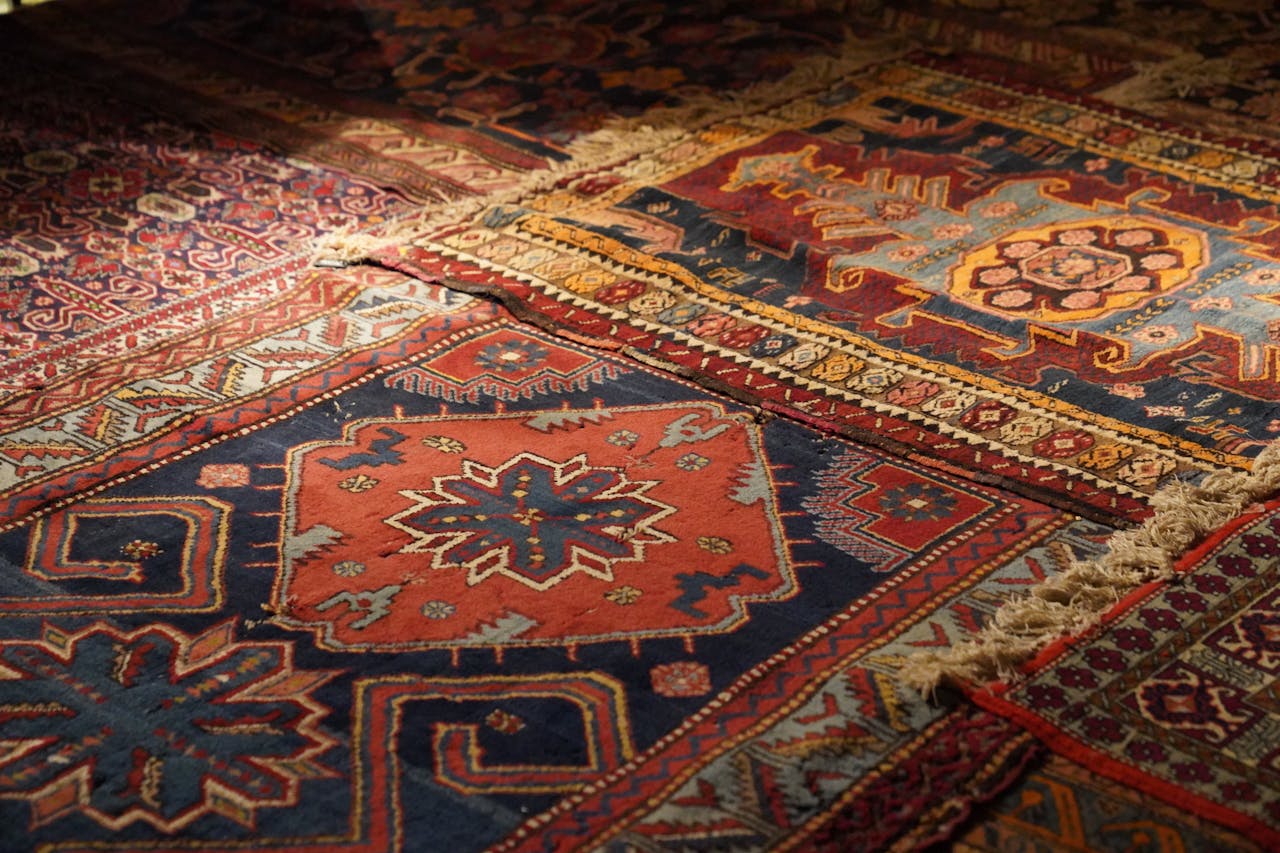

In the bustling neighborhoods of Los Angeles, New York, and Washington D.C., where Iranian-American families have built thriving communities, the ancient art of Persian carpet weaving continues to flourish in living rooms, workshops, and cultural centers. This millennia-old craft represents not just decorative floor coverings but embodies the soul of Iranian heritage that USA communities carry forward, weaving stories of homeland, identity, and artistic mastery into every intricate knot.
The Persian weaving tradition has traveled across continents and generations, finding new expression in American homes where Iranian families blend ancestral knowledge with contemporary life. From grandmothers teaching young hands the delicate art of knotting to modern artisans reinterpreting classical designs, Persian carpet weaving remains a vibrant thread connecting Iranian-Americans to their cultural roots while adapting to their American experience.

Welcome to United Tribes
Where Persian Culture Comes Alive
Join Your Tribe
Connect with your people
Discover Events
Watch parties & festivals
Find Persian Businesses
Restaurants, markets & more
Earn Crown Credits
Get rewarded for engaging
The Cultural Significance of Persian Carpets in Iranian Identity
Persian carpets serve as tangible connections to Iran's rich cultural landscape, carrying within their fibers the essence of Persian civilization that spans over 2,500 years. For Iranian-American families, these handwoven masterpieces represent more than artistic achievement; they embody the Persian carpet's meaning that encompasses spiritual beliefs, regional identity, and family heritage passed down through generations.
Each carpet tells a story rooted in Persian history and mythology. The Tree of Life motif, commonly found in Persian rugs, symbolizes immortality and the connection between earth and heaven, reflecting Zoroastrian beliefs that predate Islam in Iran. Hunting scenes depict the royal courts of ancient Persia, while garden patterns represent paradise as described in Persian poetry and Islamic tradition.
Regional identity plays a crucial role in Persian carpet design, with each area of Iran developing distinctive styles. Tabriz carpets feature bold geometric patterns and rich reds, while Isfahan rugs showcase intricate floral designs with silk highlights. Kerman carpets display pictorial scenes and delicate color palettes, and Heriz rugs present bold medallion designs with angular motifs. Iranian-American families often identify strongly with carpets from their ancestral regions, creating emotional bridges to specific places they may have left behind.
Family heritage becomes woven into these carpets through generations of knowledge transfer. Many Iranian-American women learned weaving techniques from mothers and grandmothers, carrying forward not just the mechanical skills but the cultural stories, songs, and prayers that accompany the weaving process.
Traditional Weaving Techniques Preserved in American Homes
The Persian weaving tradition maintained by Iranian-American families employs time-honored techniques that have remained largely unchanged for centuries. These methods require patience, skill, and a deep understanding of both materials and cultural significance, making each carpet a meditation on heritage and artistry.
The Foundation Process
Traditional Persian carpet weaving begins with preparing the warp threads on a vertical loom. Iranian-American weavers often use cotton warps for durability, though traditional silk or wool warps appear in more precious pieces. The weft threads run horizontally, typically using cotton or wool, and help secure each row of knots while maintaining the carpet's structural integrity.
The knotting process represents the heart of Persian weaving, with two primary techniques dominating the tradition. The Persian knot (Senneh knot) involves wrapping yarn around one warp thread and under the adjacent thread, creating asymmetrical knots that allow for finer detail and higher knot density. The Turkish knot (Ghiordes knot), while less common in Persian carpets, wraps around two warp threads symmetrically and appears in some regional styles.
Materials and Preparation
Wool preparation begins with selecting high-quality fleece, traditionally from highland sheep that produce strong, lustrous fibers. Iranian-American families often source wool from specialized suppliers who understand the requirements for traditional Persian weaving, though some maintain connections with wool importers who bring Iranian or similar-quality materials to the United States.
Natural dyeing remains an essential aspect of authentic Persian carpet making. Traditional colors derive from natural sources: madder root for deep reds, indigo for blues, weld for yellows, and pomegranate skins for lighter reds and oranges. Many Iranian-American weavers maintain small gardens growing dye plants or maintain relationships with suppliers who provide authentic natural materials.
Silk preparation for luxury carpets involves careful selection of silk threads, often imported from regions known for high-quality silk production. The silk adds lustrous highlights to floral motifs and creates carpets with exceptional detail and visual depth.
Motifs and Symbols in Persian Carpet Design
The symbolic language embedded within Persian carpet designs carries profound cultural meaning that Iranian-American families preserve and interpret for new generations. Understanding these motifs provides insight into the Persian worldview, religious beliefs, and artistic traditions that continue influencing contemporary Iranian-American identity.
Sacred and Spiritual Symbols
The Tree of Life appears in countless variations across Persian carpets, representing the axis connecting earthly and divine realms. In Iranian-American homes, carpets featuring this motif often hold places of honor, symbolizing the family's spiritual connection to their heritage while growing roots in American soil. The tree's branches may support birds, flowers, or geometric patterns, each adding layers of meaning related to paradise, fertility, and eternal life.
Prayer arch designs (mihrab) orient the carpet toward Mecca and appear in prayer rugs used by religious Iranian-American families. These arches often feature hanging lamps, flowering vines, or geometric borders that frame the prayer space and create sacred geometry supporting meditation and worship.
Eight-pointed stars represent divine order and appear throughout Persian carpet design, often combined with other geometric elements to create complex medallion patterns. For Iranian-American families, these stars may symbolize guidance and protection in their adopted homeland while maintaining a connection to cosmic principles embedded in Persian culture.
Natural and Garden Motifs
Garden carpets recreate the Persian paradise garden (chahar bagh) with its four rivers, flowing water channels, and abundant vegetation. These designs hold special significance for Iranian-American families who may have left behind physical gardens in Iran, carrying forward the concept of paradise through artistic representation.
Floral patterns, including roses, tulips, carnations, and lotus blossoms, appear in naturalistic and stylized forms. Roses symbolize divine beauty and appear frequently in Isfahan and Kerman carpets, while tulips represent martyrdom and spiritual transformation. Pomegranate motifs signify fertility and abundance, particularly meaningful for families establishing new lives in America.
Animal designs feature prominently in hunting carpets and pictorial rugs. Lions represent strength and royal power, deer symbolize gentleness and natural beauty, and birds often represent the soul's journey toward enlightenment. These motifs connect Iranian-American families to the rich tradition of Persian miniature painting and epic poetry.
Iranian-American Families Keeping the Tradition Alive
Across the United States, Iranian-American families maintain the Persian weaving tradition through dedicated practice, teaching, and cultural preservation efforts that ensure this ancient art form continues thriving in contemporary American contexts. Their stories illuminate how traditional crafts adapt to new environments while maintaining authentic cultural expression.
The Tehrani Family of Los Angeles
Maryam Tehrani, who immigrated to Los Angeles in the 1970s, established a family weaving workshop in her garage that has grown into a respected studio serving the Iranian-American community and collectors throughout Southern California. Her daughter Nasrin learned weaving techniques as a child, initially resisting what seemed like tedious work, but eventually embracing the practice as a meditation and a connection to her grandmother's memory.
The Tehrani workshop specializes in Tabriz-style carpets reflecting the family's regional heritage, featuring bold geometric medallions and rich color palettes. Maryam imports materials directly from traditional suppliers, maintaining relationships established before the 1979 revolution, while adapting designs to incorporate elements reflecting the family's American experience.
Teaching the next generation represents Maryam's primary concern, as she observes fewer young Iranian-Americans learning traditional crafts. She offers weekend workshops for children and teenagers, combining weaving instruction with stories about Persian history, poetry, and cultural traditions that provide context for the artistic techniques.
The Shirazi Cultural Center in Virginia
Ahmad and Golnar Shirazi established a cultural center in Northern Virginia that serves as a gathering place for the Iranian-American community and houses several carpet looms where families work together on collaborative projects. Their approach emphasizes community weaving rather than individual production, creating carpets that incorporate design elements from multiple Iranian regions represented within their local community.
The center's annual carpet exhibition showcases works created by Iranian-American families throughout the year, accompanied by educational displays explaining the cultural significance of various motifs and techniques. Local schools often visit during Persian New Year (Nowruz) celebrations, exposing American children to Persian artistic traditions while providing Iranian-American children with a deeper appreciation for their heritage.
Modern interpretations created at the Shirazi Center include carpets incorporating American symbols alongside traditional Persian motifs, representing the bicultural experience of Iranian-American families. One notable piece features the Statue of Liberty surrounded by Persian garden elements, symbolizing freedom and cultural preservation in the American context.
Modern Interpretations and Contemporary Applications
Contemporary Iranian-American artists and weavers are reimagining the Persian weaving tradition for modern contexts, creating works that honor traditional techniques while addressing contemporary themes and aesthetic preferences. These innovations demonstrate how living traditions evolve while maintaining their essential cultural DNA.
Contemporary Design Innovations
Color palette adaptations reflect modern interior design trends while respecting traditional symbolic meanings. Iranian-American weavers experiment with muted earth tones, contemporary grays and whites, and bold accent colors that complement modern American homes while preserving the essential character of Persian design.
Scale modifications address contemporary living spaces, with many Iranian-American weavers creating smaller pieces suitable for apartments and modern homes rather than the large room-sized carpets traditional in Persian palaces and houses. These pieces maintain design integrity while adapting to practical contemporary needs.
Mixed media approaches incorporate traditional Persian motifs into contemporary art installations, wall hangings, and fashion accessories. Iranian-American artists create pieces that function as cultural bridges, introducing Persian artistic traditions to broader American audiences while providing meaningful cultural expression for Iranian diaspora communities.
Integration with American Interior Design
Persian carpet meaning in contemporary Iranian-American homes often extends beyond floor covering to encompass cultural statement and family heritage display. Families may choose carpets specifically to anchor their American homes in Persian cultural identity while creating comfortable spaces for both Iranian and American guests.
Room design integration requires balancing traditional Persian carpet aesthetics with contemporary American furniture and architectural elements. Many Iranian-American families work with interior designers who understand both cultural traditions, creating spaces that honor Persian artistic heritage while functioning within American lifestyle patterns.
Educational display becomes important for Iranian-American families raising children in American contexts. Carpets serve as teaching tools for explaining Persian history, geography, and cultural values, providing tangible connections to heritage that children can touch, examine, and appreciate within their daily environment.
Weaving Heritage into American Dreams
The Persian weaving tradition continues flourishing in Iranian-American communities across the United States, demonstrating how ancient cultural practices adapt and thrive in new environments while maintaining their essential character and meaning. From the intricate knots that bind individual threads into lasting beauty to the symbolic motifs that carry forward thousands of years of Persian wisdom, these handwoven masterpieces represent far more than decorative objects. They embody living connections between past and future, homeland and adopted country.
As Iranian-American families pass weaving knowledge to new generations, they ensure that the profound Persian carpet meaning continues resonating within American contexts, creating cultural bridges that enrich both Iranian diaspora communities and the broader American artistic landscape. These carpets become testimonies to resilience, creativity, and the enduring power of cultural traditions to provide meaning and connection across time and geography.
The art of Persian carpet weaving in Iranian-American homes represents not just preservation of ancient traditions, but active cultural creation that honors the past while embracing contemporary possibilities. Visit United Tribes today and discover more about Persian culture, community celebrations, events, and artistic traditions that enrich American cultural diversity.
Make United Tribes Your Preferred Source
Add United Tribes on Google to get the latest stories, cultural updates, and community events directly in your Google Search and Top Stories.