
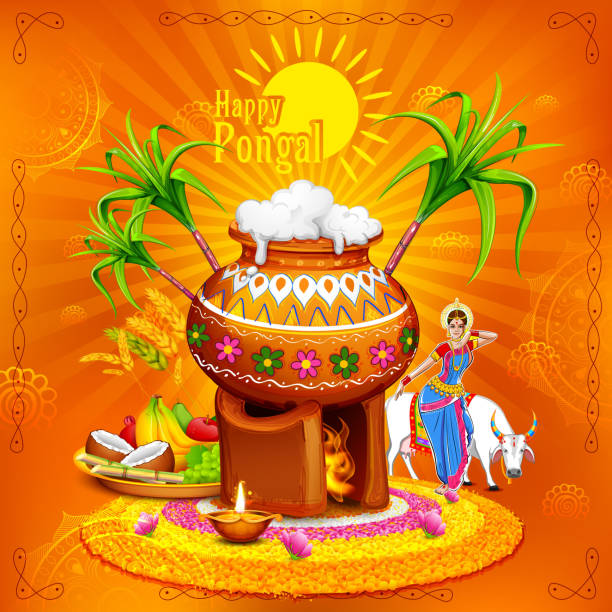


Pongal is one of the most cherished harvest festivals celebrated predominantly in Tamil Nadu. It marks the beginning of the month Thai, symbolizing abundance, prosperity, and new beginnings. Families come together to prepare traditional dishes, decorate their homes with kolams, and offer prayers to nature for a successful harvest.
What is Pongal?
Pongal is a four-day celebration dedicated to thanking the Sun God, cattle, and nature for a bountiful harvest. The word “Pongal” means “to overflow,” representing prosperity.
Four Days of Celebration
1. Bhogi
The first day is dedicated to Lord Indra. People clean their homes and discard old things as a symbol of new beginnings.
2. Thai Pongal
The main festival day where rice is boiled with milk and jaggery until it overflows. This dish is called Sakkarai Pongal, offered to the Sun God.
3. Mattu Pongal
This day honors cattle, especially cows and bulls, which play a vital role in farming. They are decorated with bells, flowers, and painted horns.
4. Kaanum Pongal
Families spend time outdoors, visit relatives, and exchange gifts. It’s a day of socializing and strengthening relationships.
Traditional Pongal Dishes
-
Sakkarai Pongal – Sweet rice with jaggery & ghee
-
Ven Pongal – Savory rice with pepper & cumin
-
Medhu Vada – Crispy lentil fritters
-
Sugarcane – Symbol of sweetness and prosperity
Cultural Activities During Pongal
-
Drawing kolams at the house entrance
-
Decorating cows and cattle
-
Jallikattu (traditional bull-taming sport in some regions)
-
Visiting temples
-
Family gatherings and community celebrations
Pongal Festival Video
Here is a beautiful video that showcases the traditions and celebrations of Pongal:
🎥 Watch Video:
Why Pongal Matters Today
Even in modern times, Pongal reminds us of the importance of nature, agriculture, and gratitude. It celebrates unity, family bonds, and the simple joys of life.


