
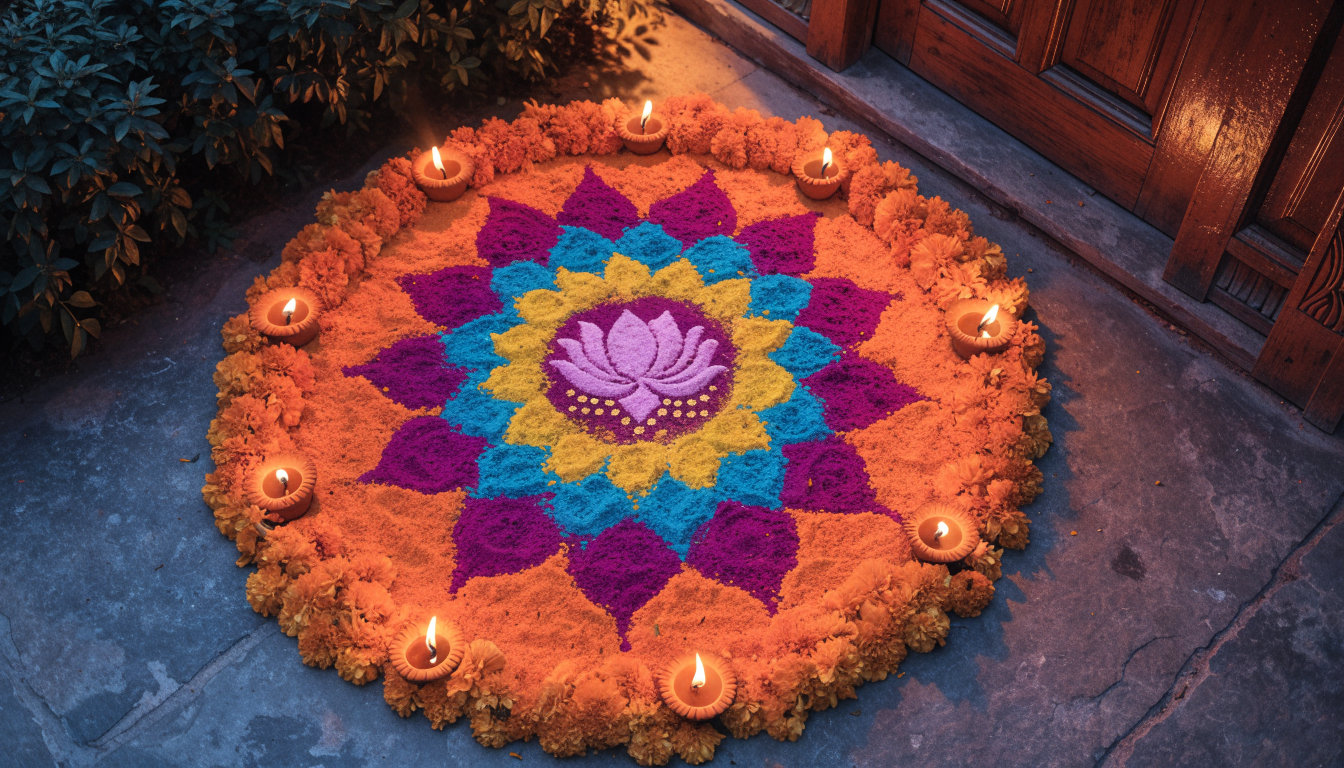

Rangoli is a decorative pattern drawn on the floor, usually at the entrance of a home, with colored powder, rice flour, sand or flower petals. It is a welcome: families draw it to greet guests and, at Diwali, to invite Lakshmi, the goddess of prosperity and good fortune, into the house. Every motif carries a wish, from a lotus for purity to a diya for light over darkness.
For Indian families across the United States, from New Jersey to the Bay Area to Houston, a rangoli at the front door is one of the most visible signs that Diwali has arrived, and one of the easiest traditions to pass on to children.

Welcome to United Tribes
Where Indian Culture Comes Alive
Join Your Tribe
Connect with your people
Discover Events
Watch parties & festivals
Find Indian Businesses
Restaurants, markets & more
Earn Crown Credits
Get rewarded for engaging
Why rangoli is drawn at the doorstep
Traditionally, rangoli is made in the early morning after the entrance has been cleaned. A clean threshold with a fresh design signals a welcoming, cared-for home. During Diwali the designs get bigger and brighter, often with small oil lamps placed around them, so the entrance glows when Lakshmi is believed to visit on the night of Lakshmi Puja.
When rangoli is made with rice flour, some families say it also feeds ants and small creatures, a quiet act of generosity built into the art.
What the common designs mean
Lotus. The lotus grows from muddy water yet blooms clean, so it stands for purity and spiritual growth. It is also closely tied to Lakshmi, who is often shown seated on one.
Peacock. India's national bird represents beauty, grace and joy. Peacock rangolis are popular for festivals and weddings.
Diya (oil lamp). The lamp is the heart of Diwali: light winning over darkness and knowledge over ignorance. Many designs place real diyas in or around the pattern.
Lakshmi's footprints. Small footprints drawn leading into the house invite the goddess of prosperity inside.
Geometric patterns and the circle. Interlocking lines, dots and circles suggest the endless cycle of time and the connection of everything. Circular designs are among the most common.
Mango leaves, fish, swans and flowers. Mango leaves stand for fertility and good beginnings; fish and swans for good fortune; flowers for celebration and welcome.
Rangoli has many names
- Kolam in Tamil Nadu, often drawn in white rice flour around a grid of dots
- Alpana in Bengal, painted with a rice paste
- Muggu in Andhra Pradesh and Telangana
- Mandana in Rajasthan
- Pookkalam in Kerala, made from flower petals, especially for Onam
Colors and materials
Bright colors bring cheer and energy to the home. Traditional materials include rice flour, colored rice, turmeric, vermilion, chalk powder and flower petals; marigolds are a favorite at Diwali. Many families in the US use store-bought rangoli powder, colored sand or even stencils.
Making your own rangoli
Start small: a circle with a lotus or a diya in the center is enough. Sketch the outline with chalk, fill in one color at a time, and add a border of petals or tea lights. Indian grocery stores carry rangoli colors, diyas and marigold garlands in the weeks before Diwali, and many temples and community centers host rangoli workshops and contests.
Rangoli is only one part of the festival. Read Diwali Traditions Explained for the five days of Diwali and what each one means.
Frequently asked questions
What is the meaning of rangoli?
Rangoli is a welcome. It is drawn at the entrance to greet guests and, at Diwali, to invite Lakshmi, the goddess of prosperity, into the home. Each motif adds a wish, such as purity, joy or light.
Why is rangoli made during Diwali?
On Diwali, families believe Lakshmi visits clean, bright, welcoming homes. A rangoli at the door, often surrounded by diyas, is how the home says "you are welcome here."
What is the difference between rangoli and kolam?
Kolam is the South Indian form of rangoli, especially in Tamil Nadu. It is usually drawn in white rice flour around a grid of dots, often every morning, while rangoli elsewhere tends to use more color and is made mostly for festivals.
Celebrate Diwali with your community
Make United Tribes Your Preferred Source
Add United Tribes on Google to get the latest stories, cultural updates, and community events directly in your Google Search and Top Stories.