
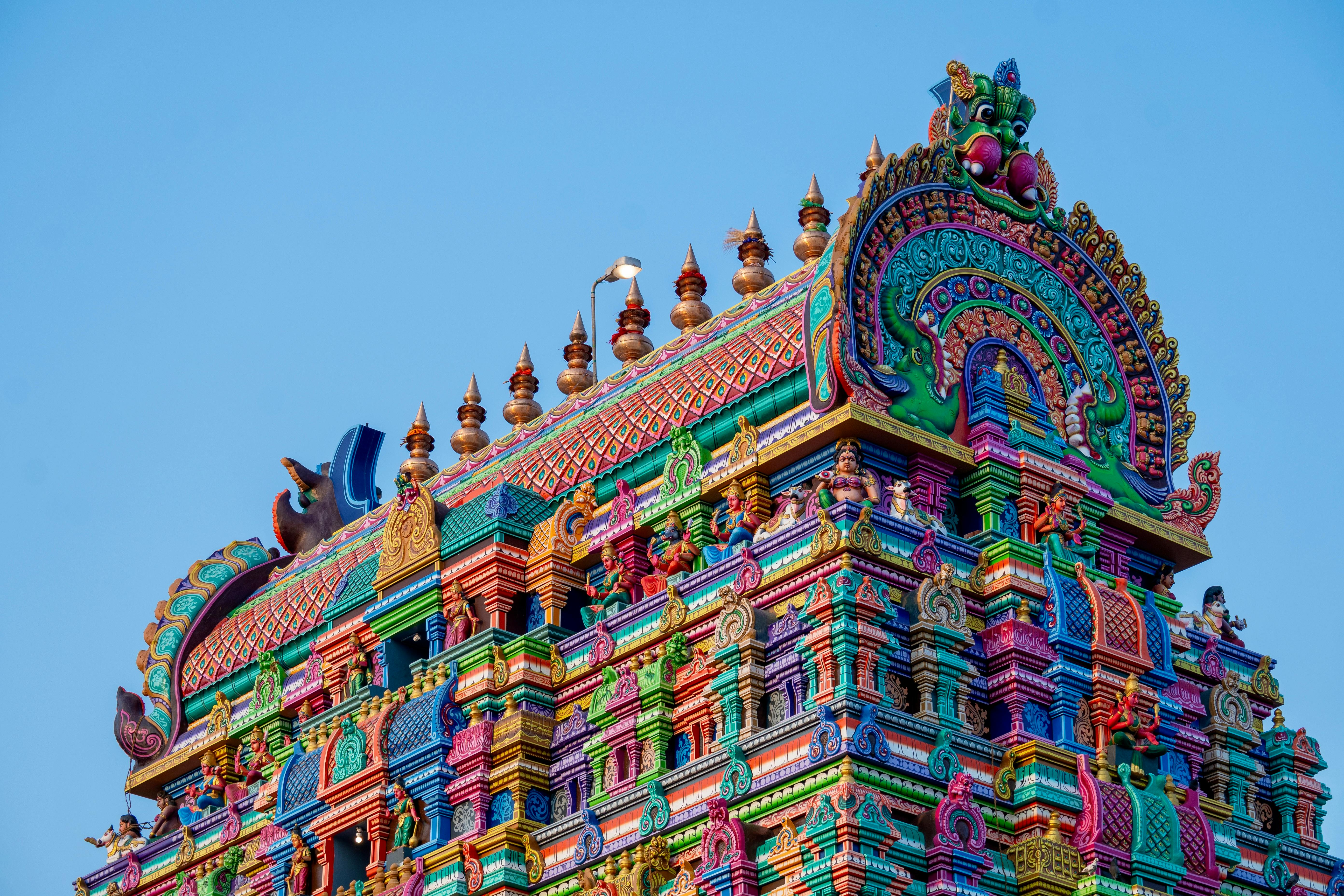

Across the American landscape, from the suburbs of Pittsburgh to the heart of California's Silicon Valley, magnificent South Indian temples have been built and stand as monuments to faith, culture, and architectural mastery. These sacred spaces serve as cultural anchors for the Indian-American faith and communities, meticulously recreating the ancient Dravidian architectural traditions that have defined South Indian spirituality for over a millennium.
The Hindu architecture diaspora movement has transformed how Indian-American communities maintain their spiritual and cultural connections. Unlike simple adaptations, these temples represent authentic reconstructions of traditional South Indian temple design, complete with intricate stone carvings, towering gopurams (temple towers), and sacred geometric principles that have guided temple construction for centuries.

Welcome to United Tribes
Where Indian Culture Comes Alive
Join Your Tribe
Connect with your people
Discover Events
Watch parties & festivals
Find Indian Businesses
Restaurants, markets & more
Earn Crown Credits
Get rewarded for engaging
The Sacred Science of Dravidian Temple Architecture
South Indian temple architecture adheres to the ancient principles of Vastu Shastra and Agama texts, which not only dictate the aesthetic elements but also the spiritual geometry that makes each temple a living embodiment of cosmic order. The Hindu architecture diaspora has maintained these principles with remarkable precision, ensuring that temples built in American cities retain their spiritual authenticity.
The foundational element of any South Indian temple is the garbhagriha (sanctum sanctorum), which houses the primary deity. This innermost chamber follows specific dimensional ratios based on ancient mathematical principles, creating a space designed to concentrate divine energy. Surrounding this core, the antarala (vestibule) and mandapa (hall) expand outward in carefully calculated proportions.
Gopurams serve as the most visually striking elements of South Indian temple architecture. These towering structures, often rising over 100 feet high, feature intricate sculptures depicting various deities, mythological scenes, and spiritual symbols. In the United States, communities have invested millions of dollars and years of planning to ensure these gopurams maintain their traditional proportions and artistic integrity.
The temple walls themselves tell stories through stone, featuring elaborate carvings that serve both decorative and educational purposes. These sculptures preserve ancient narratives, teaching community members about Hindu mythology, philosophy, and moral principles.
Architectural Elements That Define Sacred Space
Temple Layout and Sacred Geometry
Traditional South Indian temples follow a precise geometric layout based on the mandala concept, typically arranged in a square pattern representing the cosmic order. The South Indian temples have maintained this sacred geometry despite the challenges of American building codes and urban planning requirements.
The pradakshina patha (circumambulation path) allows devotees to walk clockwise around the deity, a ritual practice that remains central to Hindu worship. American temple architects have ingeniously adapted these paths to work within rectangular lots and building restrictions while preserving the spiritual significance of the ritual movement.
Sculptural Traditions in American Settings
The creation of authentic temple sculptures presents unique challenges in the American context. Many South Indian temples import master sculptors directly from India to carve deities and other decorative elements in accordance with traditional iconographic rules. These artisans spend months or even years working on-site, training local craftsmen and ensuring that every detail meets ancient specifications.
The shikhara (temple spire) crowning the sanctum requires particular attention to traditional proportions and decorative elements. These structures incorporate the kalasha (a pot-like finial) and various symbolic elements that complete the temple's spiritual architecture, creating a direct connection between the earth and the divine realm.
Regional Variations Across American Communities
Tamil Temple Traditions
Tamil communities across the United States have established temples that reflect the distinct architectural style of Tamil Nadu. The Meenakshi Temple in Houston, Texas, exemplifies this tradition with its colorful gopurams and intricate mandapa designs that mirror the famous Madurai temple complex.
These temples often feature separate shrines for various deities, allowing the community to maintain regional devotional practices. The architectural elements include traditional yali (mythical lion) sculptures, lotus motifs, and geometric patterns that specifically represent Tamil cultural identity within the broader Hindu architecture diaspora.
Telugu and Kannada Influences
Communities from Andhra Pradesh, Telangana, and Karnataka have brought their own architectural interpretations to the construction of temples in the United States. The Venkateswara Temple in Pittsburgh, Pennsylvania, one of the first major South Indian temples built in America, incorporates elements from the famous Tirupati temple while adapting to local building requirements.
These temples often showcase the Vijayanagara architectural style, characterized by distinctive pillared halls with intricate bracket designs and mythological sculptures that reflect the regional artistic traditions of South India's historic kingdoms.
Preservation Challenges and Innovations
The maintenance of authentic South Indian temple architecture in American environments presents numerous challenges that communities have addressed through innovative solutions. South Indian temples must contend with dramatically different climate conditions, building regulations, and material availability while preserving architectural authenticity.
Climate adaptation represents a significant concern, as traditional stone and lime mortar techniques developed for South Indian conditions require modification for American weather patterns. Communities have collaborated with structural engineers to develop solutions that preserve visual authenticity while ensuring structural integrity in environments prone to freeze-thaw cycles, high winds, or seismic activity.
Material sourcing poses another challenge, as traditional building materials, such as specific types of stone, wood, and metals, may not be readily available in American markets. Many communities import materials directly from India, while others work with local suppliers to identify suitable alternatives that maintain the visual and spiritual qualities of traditional materials.
Modern Technology and Ancient Principles
Contemporary South Indian temples increasingly incorporate modern technology while maintaining traditional architectural principles. Advanced structural engineering allows for larger mandapa spaces to accommodate growing communities, while traditional proportions and decorative elements remain unchanged.
Digital modeling and 3D printing have revolutionized the planning process, allowing architects and spiritual advisors to visualize complex geometric relationships before construction begins. These tools help ensure that ancient proportional systems are accurately translated into American construction standards.
Community Impact and Cultural Continuity
South Indian temples function as community centers that preserve and transmit cultural knowledge to new generations. The temples host classical music concerts, dance performances, and educational programs that maintain connections to South Indian cultural traditions alongside spiritual practices.
The architectural spaces themselves support these cultural activities through design elements such as performance stages, classroom areas, and community kitchens, which enable the full range of temple-centered community life. Just as traditional Indian attire connects the diaspora to their heritage, these sacred architectural spaces provide tangible connections to ancestral traditions.
Educational and Spiritual Programs
The temple architecture supports various educational initiatives that help preserve South Indian cultural knowledge. Special architectural tours provide an explanation of the symbolic meaning of sculptural elements, geometric principles, and ritual spaces to community members and visitors.
Many temples include dedicated spaces for teaching classical Indian arts, languages, and philosophical traditions. The architectural design of these educational areas follows traditional principles while incorporating modern amenities, demonstrating how ancient design wisdom can adapt to contemporary needs.
Festivals and Architectural Celebration
The temple architecture comes alive during major South Indian festivals, when the spaces designed centuries ago continue to serve their intended ritual purposes. Brahmotsavam celebrations utilize the pradakshina paths, mandapa spaces, and ceremonial areas exactly as intended by ancient architects, connecting American-born generations to millennia of spiritual tradition.
Festival celebrations often include special architectural illumination that highlights the sculptural details and geometric relationships built into the temple structure. These events demonstrate how Indian Americans use traditional architecture to maintain cultural continuity while creating new traditions that are adapted to American contexts for their communities.
The preparation and sharing of traditional foods during temple festivals create connections between architectural spaces and culinary traditions. Community kitchens, designed according to traditional principles, support the preparation of Indian vegetarian recipes that have been a part of temple worship for generations. In contrast, community dining areas foster the social connections that strengthen cultural identity. Temple architecture provides the foundational spaces where these cultural connections can flourish across generations.
Bridging Ancient Wisdom and Modern Community
The South Indian temples represent extraordinary achievements in cultural preservation, demonstrating how ancient architectural principles can maintain their spiritual and aesthetic integrity while adapting to contemporary American contexts. These sacred spaces serve as living bridges between the rich traditions of South India and the evolving needs of Indian-American communities, ensuring that future generations can experience authentic connections to their ancestral heritage.
The Hindu architecture diaspora movement continues to expand across America, with new temple projects incorporating lessons learned from decades of experience in translating traditional designs to American settings. These architectural achievements stand as a testament to the dedication of Indian-American communities to preserve not only their faith traditions but also the physical and spatial elements that make those traditions meaningful and accessible.
Visit United Tribes today and discover more about the rich Indian culture and community connections that celebrate the magnificent temples' architectural and spiritual heritage.
Make United Tribes Your Preferred Source
Add United Tribes on Google to get the latest stories, cultural updates, and community events directly in your Google Search and Top Stories.


