
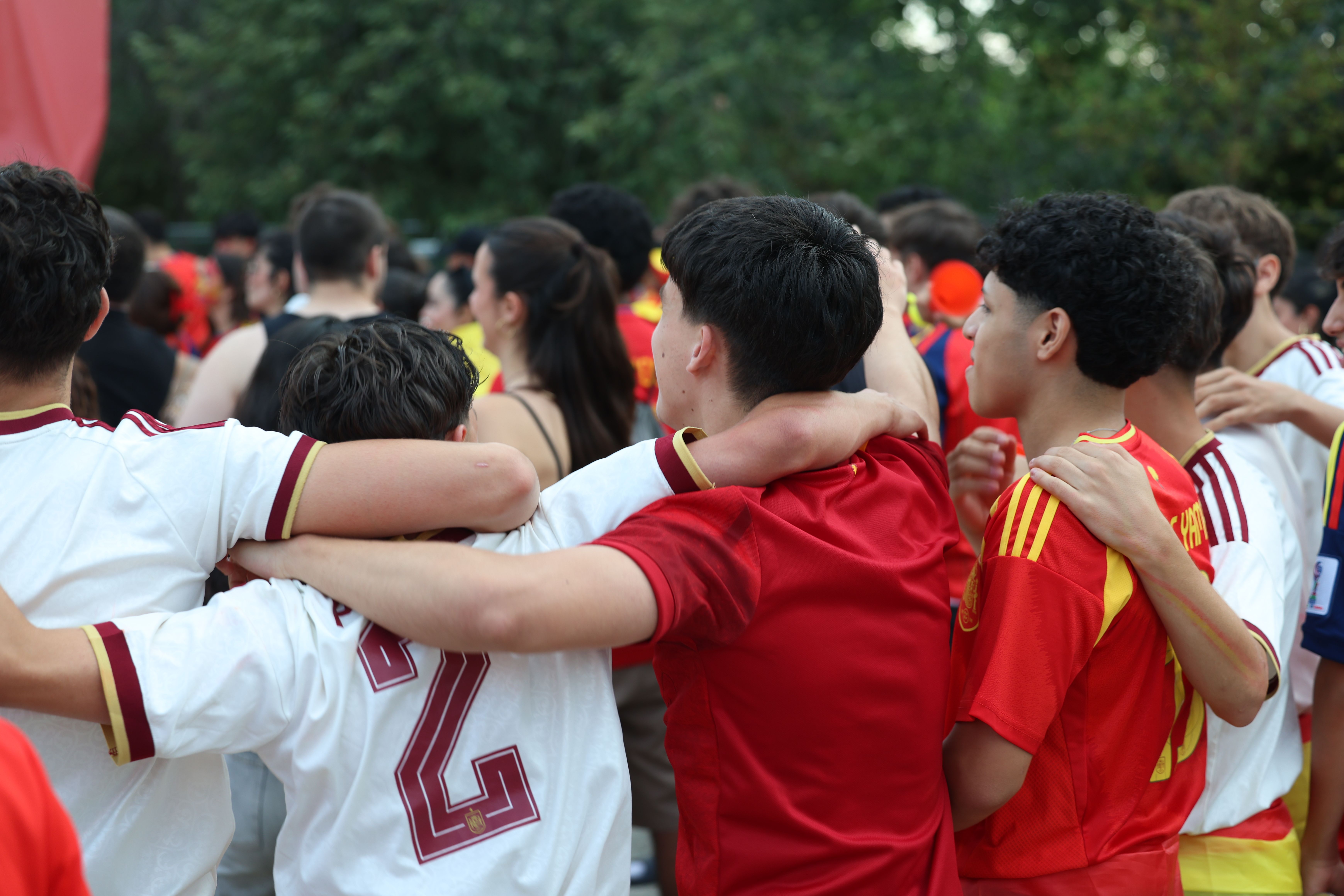

Something shifted in the summer of 2026. Not just on the pitch, but in the stands, on the screens, and in the group chats lighting up from Los Angeles to Madrid. Spain fans at FIFA 2026 watched and lived the tournament, and the generation doing the loudest living was younger, more digitally fluent, and more regionally complex than any La Roja supporter base that came before.
A Generation Raised on Trophies and Social Media
The young Spanish supporters who came of age during FIFA 2026 grew up in the shadow of something extraordinary. The 2008 to 2012 golden era, back-to-back European Championships bookending a World Cup, was their mythology. They'd seen the highlight reels, heard the stories from older siblings and parents, but their emotional entry point into Spanish football identity was different.

Welcome to United Tribes
Where Spanish Culture Comes Alive
Join Your Tribe
Connect with your people
Discover Events
Watch parties & festivals
Find Spanish Businesses
Restaurants, markets & more
Earn Crown Credits
Get rewarded for engaging
For this generation, fandom was built in real time through short-form video, live reaction streams, and player-led social media. La Roja's young supporters didn't just follow the team — they followed Yamal's Instagram, shared tactical breakdowns on YouTube, and argued over formations on Discord servers. The FIFA 2026 tournament became as much a shared digital event as a sporting one, and that changed everything about how support was expressed and felt.
Regional Identity at the Heart of Support
One of the most fascinating undercurrents of fandom around Spain's World Cup generation is how loudly regional identities have reasserted themselves. Spain has never been culturally monolithic. Basque, Catalan, Galician, and Andalusian identities carry enormous weight, and younger supporters are navigating this with more nuance than previous generations.
During FIFA 2026, it wasn't unusual to see supporters waving both the Spanish national flag and the Senyera or the Ikurriña. Social media was full of Catalan fans celebrating La Roja goals while also making it clear that their support was for the players, not necessarily the institution. This complexity is an honest reflection of how Spanish football identity lives alongside, rather than over, regional pride.
For diaspora communities in the U.S., this resonance was particularly real. Spanish-Americans with roots in specific regions often feel that tension acutely: celebrating a national team while holding space for the identity their families actually carried across the Atlantic.
The Digital Fandom Playbook
Spain fans in FIFA 2026 ran a different playbook than any previous generation. Fan content creation exploded before and during the tournament. Match-day edits, meme formats centered on Spanish players, and cross-language fandom moments (particularly bridging Spanish- and English-speaking audiences) gave La Roja a global digital footprint that extended far beyond traditional broadcast reach.
Several key patterns defined this:
- Watch parties organized through Instagram Stories and Discord invitations replaced purely bar-based viewing
- Player parasocial culture — where fans feel a genuine personal connection to athletes through social content — drove emotional investment beyond match results
- Cross-cultural moments where younger U.S.-based Spanish fans found common ground with Mexican, Argentine, and Brazilian football communities online
- Tactically literate content — young fans weren't just cheering; they were analyzing pressing structures and discussing positional play in accessible formats
This digital fluency also meant that disappointments hit differently. Poor performance didn't just generate post-match analysis — it sparked immediate, visceral, and often funny collective grief online, which paradoxically brought the community closer together.
Expectations, Pressure, and the Weight of History
No younger fan of La Roja enters a major tournament without the weight of 2008–2012 hanging in the background. But what's changed is how that weight is carried. For older generations, those years were a standard to be recaptured. For younger supporters, it's more like a founding story: important and revered, but not necessarily the only valid measure of success.
La Roja's young supporters in 2026 appeared more comfortable with a Spain that plays attacking, expressive football and loses than with a defensively cautious Spain that grinds out results. The aesthetic matters. The style of play is part of the identity. This represents a genuine generational shift in what Spanish football success is allowed to look like.
There's also a growing impatience with institutional narratives. Young fans are quicker to criticize federation decisions, more willing to hold coaches and officials accountable publicly, and less deferential to football authority in general. This is an engaged, informed fanbase that expects the sport to reflect their values.
What FIFA 2026 Means for the Spanish Diaspora in America
Spanish cultural identity — distinct from Latin American identity, rooted in the specific regions and traditions of Spain itself — doesn't always get its own space in American multicultural conversations. A World Cup hosted on American soil changed that.
Watch parties, restaurant pop-ups serving jamón and pintxos, and community gatherings across cities with significant Spanish-heritage populations became cultural celebrations as much as sporting events. Younger Spanish-Americans used the tournament as an entry point to reconnect with a heritage they might only partially know: learning about regional foods, dialects, and histories through the lens of football enthusiasm.
La Roja's Next Chapter Starts Now
Younger Spanish fans brought regional complexity, digital fluency, and a refreshed sense of what Spanish football identity can mean, both in Spain and across the diaspora during the World Cup. The mythology of the golden era remains, but this generation is writing its own story.
For Spanish-Americans, that story has particular meaning. Celebrating La Roja while holding onto Basque, Catalan, Galician, or Andalusian roots is a fuller, more honest expression of what it means to carry Spanish heritage in the United States. The 2026 generation modeled that complexity with confidence.
Explore the Spanish community, its businesses, cultural events, and heritage voices by heading over to the Spanish tribe on United Tribes — where the culture behind the football lives year-round.


