
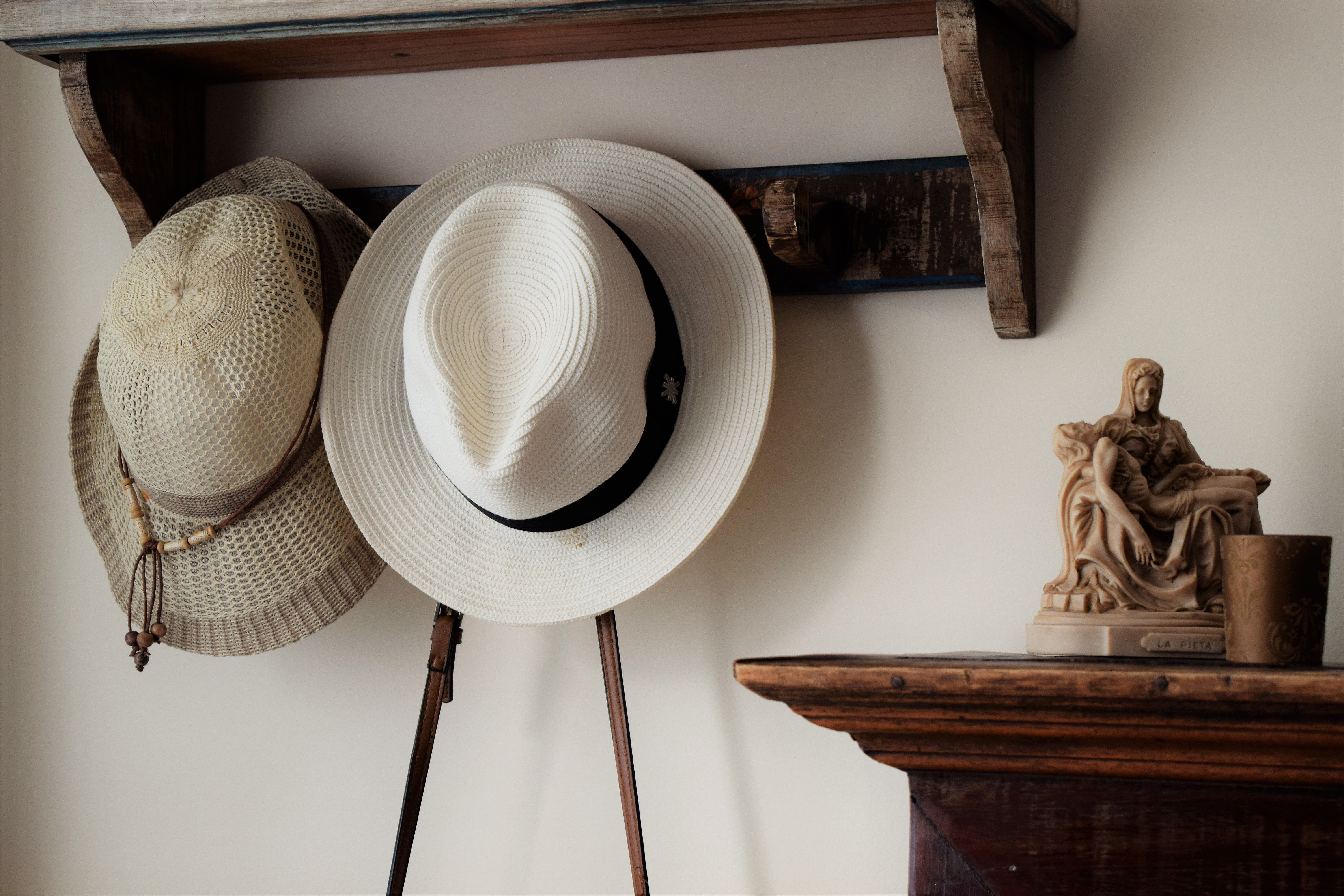

Key Takeaways
- The Panama hat is Ecuadorian, not Panamanian. The toquilla straw hat has been handwoven exclusively in Ecuador for centuries, using fibers from the native Carludovica palmata plant.
- UNESCO recognized toquilla weaving in 2012. The "Traditional Weaving of the Ecuadorian Toquilla Straw Hat" was inscribed on the UNESCO Intangible Cultural Heritage list on December 5, 2012.

Welcome to United Tribes
Where Ecuadorian Culture Comes Alive
Join Your Tribe
Connect with your people
Discover Events
Watch parties & festivals
Find Ecuadorian Businesses
Restaurants, markets & more
Earn Crown Credits
Get rewarded for engaging
- Montecristi hats are the world's finest. Weavers in Montecristi use a double-straw technique, and a single superfino hat can take six months or more to complete.
- The misleading name came from a presidential photo. The global "Panama hat" label stuck after President Theodore Roosevelt was photographed wearing one during his 1906 visit to the Panama Canal.
- The craft is passed down through generations. In towns like Montecristi, Cuenca, Pile, and Jipijapa, families pass on toquilla-weaving knowledge, preserving an ancient Ecuadorian tradition.
A quiet irony is woven into one of the world's most recognizable accessories. The hat called a "Panama" was never made in Panama, designed in Panama, or born from Panamanian hands. It is Ecuadorian — crafted from a coastal plant, shaped by Indigenous knowledge, and refined over centuries by artisans whose families have passed the skill from parent to child for generations. Understanding the real story behind this hat is understanding something essential about Ecuador itself.
Why is the Panama hat actually from Ecuador?
The Panama hat is Ecuadorian because its raw material, its weaving tradition, and its artisan communities all originate exclusively in Ecuador. The hat is woven from the fiber of the Carludovica palmata plant, a species native to Ecuador's coastal cloud forests, and the techniques used to transform that plant into a finished hat developed within Ecuadorian communities long before the product ever crossed a border. The international name is a historical accident — not a reflection of origin.
The craft took root in coastal provinces including Manabí, Guayas, and Santa Elena, where the climate and terrain suited both the plant and the practice. Over time, production spread into Andean regions, particularly Cuenca in Azuay province, which became a major center of export-oriented weaving during the 19th century. The hat became globally known as Ecuadorian communities refined and commercialized their craft, but the name that followed it abroad was borrowed from geography, not heritage.
In Ecuador, the hat is called the sombrero de paja toquilla or simply jipijapa, named after the town on the Manabí coast long associated with its production. These names carry meaning and memory. The international label does not.
From Plant to Hat: The Toquilla Straw Process
Transforming raw plant fiber into a finished toquilla straw hat requires patience, skill, and a precise sequence of preparation steps that artisans have refined across generations. The source material is the Carludovica palmata, which thrives at elevations between roughly 100 and 400 meters above sea level along Ecuador's coast. Young, unopened fronds are harvested before they mature, as younger shoots yield the finest, most pliable fiber.
Once harvested, the straw goes through a careful preparation process:
1. Cleaning — the outer layers and excess material are stripped away to isolate usable fiber.
2. Boiling — the fiber is submerged in boiling water to remove chlorophyll and soften the straw.
3. Sun-drying — the cleaned straw is laid out to dry in natural sunlight.
4. Bleaching — in Cuenca, weavers typically bleach the straw white or treat it to a beige tone using charcoal and sulfur. In Montecristi, artisans often prefer to keep the straw's natural color, which gives the finest hats their characteristic warm, creamy tone.
Only then is the straw ready to be woven. The weaver begins at the crown and works outward, building the hat's structure radially until the brim takes shape. The final step, called the remate or "back weaving," secures the brim by folding and weaving excess straw back toward the crown — a critical mark of authenticity that distinguishes a genuine handwoven hat from a machine-made imitation. Washing, ironing, blocking, and shaping — collectively called compostura — complete the process.
Montecristi and Cuenca: Two Centers, One Tradition
Montecristi and Cuenca are Ecuador's two most prominent weaving centers, each producing toquilla straw hats with distinct characteristics that reflect their regional methods and materials.
|
Feature |
Montecristi Hats |
Cuenca Hats |
|
Weaving technique |
Double-straw |
Single-straw |
|
Straw color |
Natural, warm cream |
Bleached white or beige |
|
Time to complete |
Weeks to 6+ months |
Days to weeks |
|
Quality tier |
Superfino (world's finest) |
Fine to commercial grade |
|
Primary market |
Collectors, luxury export |
Broad export market |
Montecristi, a small town in Manabí province, holds the highest reputation in the Ecuador Panama hat world. Its weavers use a double-straw technique that interlaces two strands simultaneously, producing a tighter, more durable weave. The finest Montecristi hats — called superfinos — have a weave so tight it resembles woven cloth. These hats can take six months or longer to complete and are considered among the most refined handcrafted objects produced anywhere in the world.
Cuenca, Ecuador's third-largest city, became the country's primary export hub for Montecristi hats and other toquilla styles during the 19th century. Cuenca weavers produce high-quality hats using a single-straw method, turning out beautiful work in a fraction of the time Montecristi requires. Cuenca's production volume helped bring Ecuadorian weaving to international markets, but connoisseurs still look to Montecristi for the pinnacle of the craft.
How a Misnomer Became Global
The name "Panama hat" comes from geography, commerce, and one very famous photograph colliding at a pivotal moment in history. Ecuador's handwoven straw hats were exported through Panama's ports during the 19th century, making Panama a transit point for the trade. Laborers working on the Panama Canal were also supplied with the hats, which offered protection against the tropical heat and sun. This association began building a geographic misidentification that would prove remarkably durable.
The moment that cemented the misnomer came in 1906, when President Theodore Roosevelt visited the Panama Canal during its construction and was photographed wearing one of the Ecuadorian straw hats. The image circulated widely, and with it came a firm and incorrect association between the hat and Panama. The world had a name for the hat, and no amount of Ecuadorian craftsmanship could easily reclaim it.
What the name obscures is not merely a geographic detail but an entire living tradition. The toquilla straw hat represents centuries of accumulated knowledge, ecological relationship with a specific plant species, and the artistic identity of entire communities. Ecuador has worked to reclaim that recognition — and in 2012, the international community formally acknowledged it.
UNESCO Recognition and What It Means
The 2012 UNESCO inscription is the clearest international acknowledgment that toquilla straw weaving belongs to Ecuador. On December 5, 2012, UNESCO added "Traditional Weaving of the Ecuadorian Toquilla Straw Hat" to its Representative List of the Intangible Cultural Heritage of Humanity. The designation recognized not just the object but the living tradition surrounding it — the knowledge passed between generations, the regional communities that sustain the craft, and the cultural identity embedded in every weave.
Intangible cultural heritage designations matter because they emphasize practice over product. What UNESCO recognized was the act of weaving, the transmission of technique from elder artisans to younger ones, and the community life built around the craft in towns like Montecristi, Pile, Jipijapa, and neighboring villages in Manabí. This recognition helps protect the tradition from industrial imitation and positions Ecuador's traditional crafts as part of humanity's shared cultural legacy—not a regional curiosity, but a world-class art form deserving preservation.
For Ecuadorian communities in the United States, this inscription is a point of pride. It provides cultural grounding and an authoritative reference point when advocating for the authentic origin of one of the world's most misidentified objects.
The Living Tradition in Ecuadorian Communities
The toquilla weaving tradition is not a relic confined to museums. It lives in the hands of working artisans across Manabí and Azuay provinces, and it continues to be transmitted through family networks in the same towns where it has thrived for generations. In Montecristi, Pile, Jipijapa, and surrounding communities, weaving is woven into daily life — practiced at kitchen tables, in doorways, and in community workshops where experienced artisans mentor younger weavers.
The Ecuadorian weaving tradition also resonates among diaspora communities in the United States, where Ecuadorian Americans carry great pride in the craft's heritage. For many, the Panama hat is more than a fashion object — it is a symbol of artisan excellence and national identity reclaimed from a name that never told the right story. Community events, cultural showcases, and artisan markets across the U.S. increasingly celebrate the authentic origins of Ecuador's traditional crafts, giving the toquilla straw hat its proper name and rightful place.
Honoring the Hands Behind the Hat
The toquilla straw hat is one of Ecuador's most extraordinary contributions to world culture—a product of ecological knowledge, artisan skill, and centuries of tradition that grew from the coastal cloud forests of Manabí into a global icon. That it spent so long carrying the wrong country's name shows how commerce can overshadow craft, and how easily the story behind an object can be separated from the hands that made it. The UNESCO inscription of 2012 restored some of that recognition. Still, it is the weavers themselves — in Montecristi, Cuenca, Pile, and beyond — who have always been the true keepers of the tradition.
For Ecuadorian Americans, the Panama hat is more than fashion history. It is a living argument for the depth and sophistication of Ecuadorian artisanship, and a reminder that cultural identity is worth protecting and naming correctly. Whether passed down through family or rediscovered through community connection, the story of the toquilla straw hat belongs fully to Ecuador.
Head to the Ecuadorian community on United Tribes to discover artisans, cultural events, and businesses that celebrate the richness of Ecuador's traditions across the United States.
Frequently Asked Questions
Can you wash or reshape a genuine toquilla straw hat?
Yes, authentic toquilla straw hats can be carefully reshaped by a skilled hatter using steam and hand-blocking. Because genuine Montecristi and Cuenca hats go through a compostura finishing process, the straw retains some flexibility, allowing minor reshaping at home with cool water and gentle pressure.
How can I tell if a Panama hat is genuinely handwoven from Ecuador?
Authentic Ecuadorian toquilla straw hats feature a spiral weave pattern that originates at the crown's center, a finished remate brim edge where straw is woven back rather than cut, and a softness that machine-made hats lack. Buying from certified Ecuadorian artisans or reputable heritage importers is the most reliable guarantee.
What makes a superfino Montecristi hat so expensive?
A superfino Montecristi hat commands high prices because a single master weaver may spend six months or more completing one piece. The double-straw technique and extremely tight weave—sometimes hundreds of intersections per square inch—require exceptional skill and sustained concentration that cannot be replicated faster without sacrificing quality.
Are toquilla straw hats only available in the classic white or cream color?
No. While the natural cream and bleached white tones are the most traditional, Ecuadorian artisans also produce toquilla straw hats in beige, brown, and dyed colors depending on regional practice and market demand. Cuenca producers in particular have historically offered a wider color range for export markets.
Is the Carludovica palmata plant at risk due to demand for toquilla straw?
Carludovica palmata is a relatively resilient plant that can be harvested sustainably because only young fronds are collected before they fully open. However, as with any natural resource tied to a craft industry, responsible harvesting practices and community stewardship are essential to ensuring the plant remains available for future generations of weavers.
Do Ecuadorian weavers have legal protection for the Panama hat name?
Ecuador has pursued geographic indication status and international recognition to reclaim the hat's authentic origin, and the UNESCO 2012 inscription supports this effort. However, the term "Panama hat" is widely used internationally without consistent legal protection, meaning consumers must rely on labeling, artisan certification, and informed purchasing to ensure they are buying a genuine Ecuadorian product.
Find your community: Ecuadorian businesses near you on United Tribes.
Make United Tribes Your Preferred Source
Add United Tribes on Google to get the latest stories, cultural updates, and community events directly in your Google Search and Top Stories.