
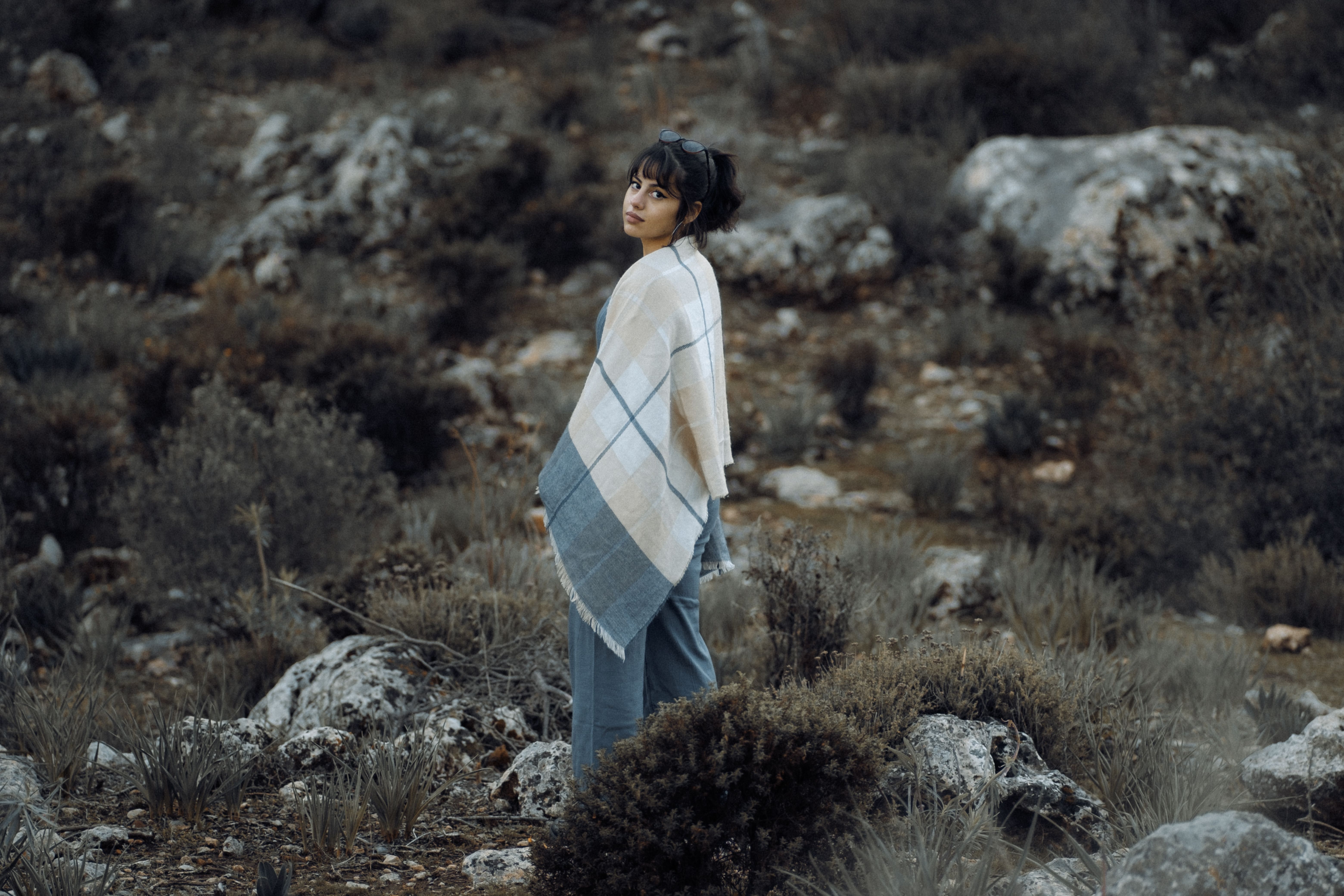

Key Takeaways
- The ruana is rooted in Colombia's Andean highlands. This poncho-style woolen garment is most closely associated with Boyacá, Cundinamarca, and Bogotá, where cold mountain climates made it indispensable.
- Its origins blend indigenous and European traditions. The ruana may fuse Spanish capes with Muisca woolen blankets, or derive from a Muisca term meaning "land of blankets."

Welcome to United Tribes
Where Colombian Culture Comes Alive
Join Your Tribe
Connect with your people
Discover Events
Watch parties & festivals
Find Colombian Businesses
Restaurants, markets & more
Earn Crown Credits
Get rewarded for engaging
- Nobsa, Boyacá, is the global capital of ruana weaving. Recognized since the early 20th century, Nobsa hosts World Ruana Day and an annual national festival celebrating spinning, sheep, and Andean craft.
- The ruana carries complex social history. Bogotá banned it in 1936 amid class tensions, yet the garment has been gifted to world leaders, including Pope John Paul II, as a symbol of Colombian pride.
- Contemporary artisans are keeping the tradition alive. Enterprises like Tejidos Rebancá and Palfrío in Boyacá produce both traditional and modern ruana designs, sustaining cultural heritage and economic opportunity.
Few garments carry the weight of a landscape the way the Colombian ruana does. Born from cold Andean winds and centuries of indigenous and colonial exchange, it is more than a piece of clothing — a living expression of regional memory, rural resilience, and cultural pride that continues to evolve in the hands of skilled artisans today.
What is the Colombian ruana and why does it matter?
The Colombian ruana is a poncho-style woolen garment native to the Andean highlands of Colombia, particularly the department of Boyacá, and it matters because it encodes centuries of indigenous craftsmanship, colonial exchange, and regional identity into a single wearable object. Worn across cold mountain communities in Cundinamarca and Bogotá as well, the ruana is one of the most recognized symbols of Colombian traditional clothing — practical, beautiful, and deeply tied to the people who make and wear it.
The garment's precise origin remains layered with possibility. One theory suggests the ruana emerged from a fusion of Spanish colonial capes with the woolen blankets worn by the indigenous Muisca (Chibcha) people of the altiplano cundiboyacense. Another theory suggests the name comes from cloth imported from Rouen, France. A third, particularly resonant explanation traces "ruana" to a Muisca word meaning "land of blankets"—a name that feels entirely fitting for a highland culture where warmth was both a necessity and an art form.
How is the ruana traditionally made in Boyacá?
The traditional ruana is made entirely from virgin sheep's wool, processed by rural weaving families in Boyacá through a meticulous series of steps that begin with the sheep themselves. This is not factory production — it is a generational craft woven into the daily rhythms of Andean life.
The process moves through distinct stages:
1. Raising and shearing sheep of various natural colors across Boyacá's highland farms
2. Washing and cleaning the raw fleece to remove debris
3. Carding and combing the wool to align fibers for spinning
4. Hand-spinning the wool into yarn — a single sheep yields roughly four pounds of wool, enough for one ruana
5. Weaving on horizontal looms, known locally as *quytty*, often using vegetable dyes that produce unique regional variations in color and texture
An 1856 watercolor depicts a man weaving on a large foot-pedaled loom, confirming how deep these techniques run. The resulting garment — whether a traditional closed style, a collared version, or an open cape — reflects not just skill but identity.
|
Ruana Style |
Key Feature |
Common Region |
|
Traditional closed |
No opening at front |
Rural Boyacá |
|
Collared ruana |
Added neck collar |
Nobsa and surrounds |
|
Open cape |
Front panels left open |
Urban and contemporary |
|
Modern reinterpretation |
Mixed fibers or patterns |
Artisan enterprises |
Where is the ruana most celebrated in Colombia?
Nobsa, a small municipality in Boyacá, has been recognized as the *capital mundial de la ruana* — the world capital of the ruana — since the early 20th century. This is where the garment's ceremonial and commercial significance converges most visibly.
Each year, Nobsa and the nearby city of Paipa host celebrations that draw visitors from across Colombia. World Ruana Day falls in late June to early July. Since 1998, the Festival Nacional de la Ruana in Paipa has featured parades, *hilanderas* (spinners demonstrating traditional techniques), sheep pageants, food fairs, music, and dance. These events do not simply commemorate a garment — they sustain an entire ecosystem of craft, community, and Boyacá culture.
Artisan José Rafael Ladino of Nobsa exemplifies this living tradition. Recognized for preserving horizontal loom weaving techniques across multiple ruana styles, Ladino has showcased his work at major national events including Colombia's Bicentennial parade, demonstrating that Andean textiles remain relevant in the country's national story.
How has the ruana shaped Colombia's national identity?
The ruana has served as both a contested and celebrated symbol of Colombian identity—its history shows how clothing can carry the full complexity of a society's class dynamics and national pride. On one hand, Bogotá banned the ruana (along with *alpargatas*, traditional sandals) in 1936, a moment that exposed deep tensions between urban elites and rural, indigenous-rooted communities. Meanwhile, the garment has been presented as a diplomatic gift to Pope John Paul II, King Juan Carlos of Spain, and Prince Charles—a gesture that reframes it as an emblem of Colombian excellence.
In 2006, the ruana was nominated as a cultural symbol of Colombia in a national contest organized by *Semana* magazine with support from Caracol TV and the Ministry of Culture. A beloved bambuco song, *"La Ruana,"* composed by José de Jesús Mazo and popularized by the duet Garzón y Collazos, further cemented its place in the country's emotional landscape. Alongside the *vueltiao* hat, the ruana stands as one of the most recognized icons of Colombian traditional clothing — its meaning inseparable from the mountain communities that created it.
Just as the arepa connects Colombians to everyday culinary heritage, the ruana connects highland communities to their material and spiritual roots — both are subjects explored on United Tribes as expressions of a culture that refuses to be flattened into a single story.
How are contemporary artisans preserving and reinterpreting the ruana?
Modern artisan enterprises are ensuring the ruana's future by blending tradition with innovation, reaching markets well beyond Boyacá's highland villages. Tejidos Rebancá, founded in 2016 in the municipality of Iza, Boyacá, and Palfrío, based in Pesca, Boyacá, are two examples of enterprises producing both classically crafted ruanas and contemporary variations that speak to younger Colombian consumers and international audiences.
These enterprises have participated in events such as the Winter Games, where the ruana's functionality in cold climates proved an effective platform for cultural storytelling. Their work shows that Andean textiles can drive economic opportunity without sacrificing the craft's integrity. By sustaining demand for hand-spun, vegetable-dyed, loom-woven wool, these businesses also support the sheep farmers, spinners, and dyers whose livelihoods remain intertwined with the garment's survival.
Can a single garment truly carry a culture's identity?
The Colombian ruana answers that question with every thread. From its uncertain but layered origins among the Muisca peoples and Spanish colonial encounters to its role in diplomatic gifts and national song, the ruana has absorbed the full arc of Colombian history—its tensions, its pride, and its remarkable continuity. Boyacá's weaving families, festival communities in Nobsa, and artisan enterprises in Iza and Pesca are not simply preserving a garment; they are maintaining a living system of knowledge, economy, and belonging rooted in the Andean highlands.
For Colombian-Americans and heritage communities in the United States, the ruana represents something more than nostalgia. It is a touchstone—a way of holding onto the cold mountain air, the rhythm of hand-spinning wool, and the cultural specificity of a region that gave Colombia much of its soul. Understanding and celebrating that specificity is what makes Colombian identity so rich in diaspora spaces far from Boyacá's peaks.
Support the artisans, weavers, and cultural entrepreneurs keeping traditions like the ruana alive by connecting with the Colombian community on United Tribes.
Frequently Asked Questions
Where can Colombian ruanas be purchased in the United States?
Colombian ruanas can be found through Latin American import shops, online marketplaces featuring artisan goods, and at cultural festivals celebrating Colombian heritage across major U.S. cities. Some Boyacá-based artisan enterprises like Tejidos Rebancá also sell through online channels, making authentic handwoven ruanas accessible internationally.
What is the difference between a ruana and a poncho?
A ruana is a Colombian-specific garment distinct from the broader poncho tradition — it typically features an open front or a front slit. In contrast, ponchos are usually fully closed with just a head opening. The ruana's cut, wool weight, and weaving techniques reflect Andean highland traditions specific to Boyacá and Cundinamarca.
What colors are traditional Colombian ruanas?
Traditional Colombian ruanas in Boyacá rely on natural sheep wool colors — cream, brown, gray, and black — often enhanced with vegetable dyes that produce earthy, regionally distinctive tones. Because artisans use wool from different sheep and varied dye plants, no two handwoven ruanas are exactly alike in color or texture.
Do men and women in Colombia wear the ruana?
Yes, men and women wear the ruana across Colombia's Andean highland regions, using it as a practical and culturally meaningful garment regardless of gender. Its versatility — used as a wrap, a blanket, or a formal statement piece — has made it adaptable across age groups and social contexts throughout Colombian history.
How long does it take to make a traditional handwoven ruana?
The full process of making a traditional Boyacá ruana — from shearing the sheep to finishing the garment on a horizontal loom — can take several days to weeks depending on the artisan and style. Hand-spinning the wool alone is labor-intensive, as roughly four pounds of wool from a single sheep is needed for one ruana.
Has the ruana influenced fashion outside of Colombia?
The ruana has attracted international attention through cultural diplomacy, artisan trade fairs, and Colombian designers showcasing Andean textiles on global platforms. Its appearance at events like the Winter Games and its role as a diplomatic gift to world leaders have introduced the garment to international audiences, inspiring interest in Colombian traditional clothing among global fashion communities.
Make United Tribes Your Preferred Source
Add United Tribes on Google to get the latest stories, cultural updates, and community events directly in your Google Search and Top Stories.