
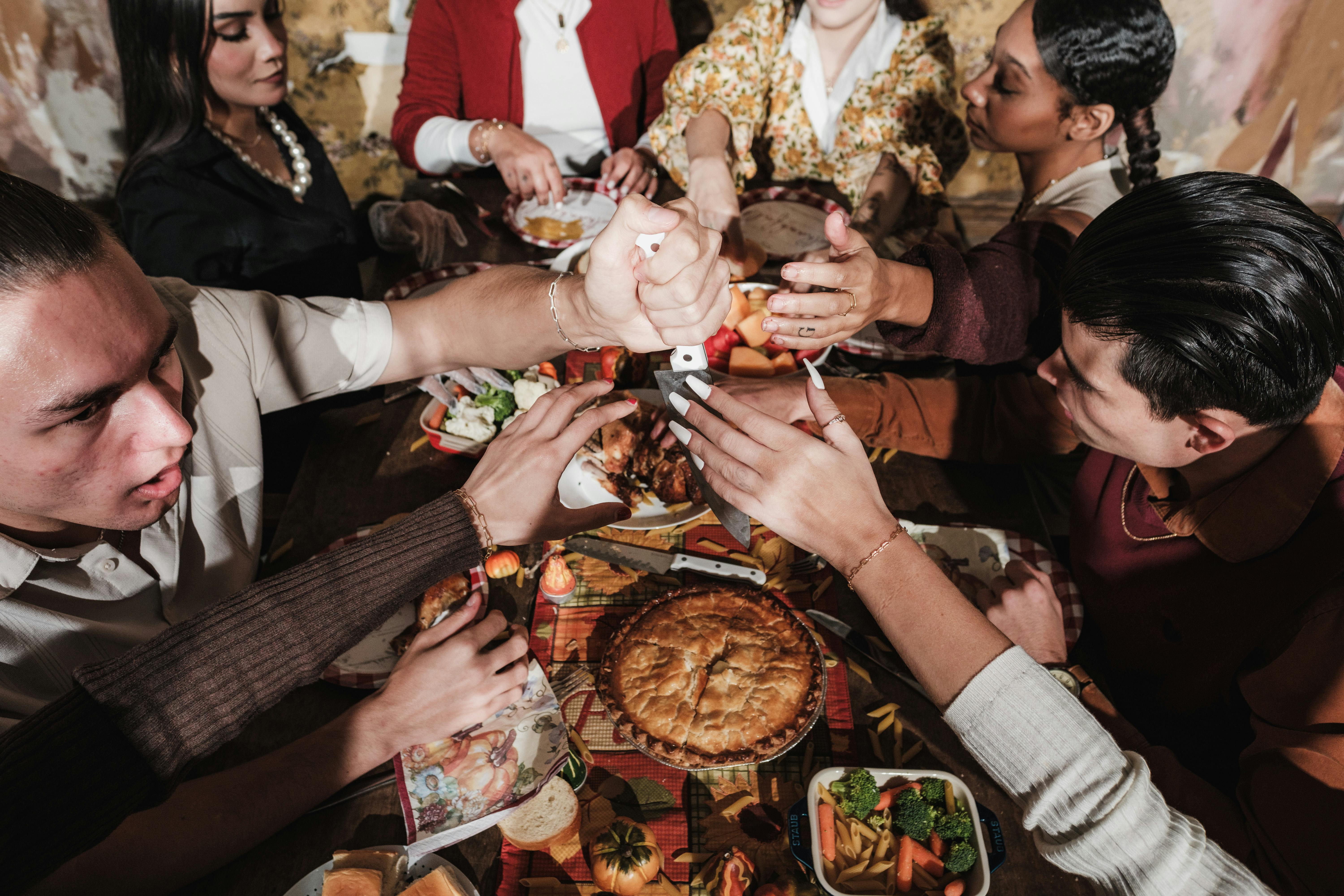

There is something universally understood about arriving somewhere with food in your hands. No translation is needed. Across nearly every culture on earth, bringing a dish to share is a gesture that communicates love, respect, and belonging. Whether it is a covered pot carried into a church hall, a tray of sweets offered at a doorstep, or a slow-cooked family recipe brought to a celebration, food-sharing traditions run deeper than the meal itself. They carry memory, identity, and connection.
Food as a Love Language Without Words
Long before formal hospitality codes existed, communities built their bonds around shared meals. The act of preparing food for others and carrying it somewhere requires time, intention, and care. In many traditions, showing up empty-handed to a gathering is considered disrespectful, not because of the food itself, but because of what bringing something represents.

Welcome to United Tribes
Where Diverse Cultures Come Alive
Join Your Tribe
Connect with your people
Discover Events
Watch parties & festivals
Find Tribe Businesses
Restaurants, markets & more
Earn Crown Credits
Get rewarded for engaging
Potluck culture extends well beyond the casual American office lunch. At its core, a potluck is a declaration: I contribute to this table, and this table is ours together. That concept lives in every culture, even if the format and name differ. Understanding why communities eat together is a window into understanding who they are.
Latin Traditions: The Table Is Never Too Full
In Latin communities, food and gathering are inseparable. Celebrations—whether a quinceañera, a baptism, or a Sunday family visit—center on abundance. Guests are expected to bring something, and hosts are expected to insist you eat more than you planned.
The deep roots of Latin culinary influence in the United States reflect this communal spirit. Dishes travel with families across generations and across borders. A pot of tamales brought to a gathering is labor, tradition, and an unspoken expression of love that may have taken hours or even days to prepare.
Cultural food etiquette in Latin households often means refusing a serving once is polite, but the host will offer again. Accepting, ultimately, is the respectful response. Food moves in a circle of generosity that everyone participates in.
Mexican Heritage: Recipes as Living History
Mexican food culture is deeply tied to community meals and collective preparation. Dishes like mole, pozole, and tamales are rarely made alone—they are cooked in groups, passed down through hands-on learning, and brought to tables where stories are exchanged alongside bites.
Mexico's diverse culinary traditions reveal just how regional and layered this food culture is. Each region brings its own flavors and rituals to the shared table, meaning that food-sharing traditions in Mexico are also an act of representing where you come from—your state, your town, your grandmother's kitchen.
Bringing the right dish to a gathering signals that you know your people. It is cultural fluency expressed through flavor.
Filipino Culture: Hospitality Measured in Servings
In Filipino culture, the phrase *kain na* (let's eat) functions as both an invitation and a form of affection. Food is central to Filipino identity, and bringing dishes to gatherings—especially fiestas and family reunions—is an expression of pride and care.
Filipino comfort food in the U.S. often beautifully reflects this communal tradition. Dishes like pancit, lechon, and kare-kare evoke nostalgia and a sense of identity. When a Filipino family brings these to a gathering, the food they bring is a piece of their home.
Community meals traditions in Filipino culture also carry a sense of duty. Leaving without eating—or leaving your host with too much leftover—can feel like a mild rejection. The table is sacred, and participation is part of the relationship.
Persian Hospitality: The Art of Giving More Than Expected
Persian culture has a refined and deeply meaningful approach to hospitality known as *taarof*, a system of politeness that governs how generosity is offered and received. Bringing food as a guest is expected, and hosts will go to extraordinary lengths to ensure the table feels abundant.
Understanding Persian hospitality through taarof helps explain why cultural food etiquette in Persian culture is so nuanced. Refusing an offer initially is polite. Accepting after gentle insistence is the proper rhythm. This dance of giving and receiving is a form of respect that elevates every shared meal.
Dishes like ghormeh sabzi or saffron rice are prepared with deep attention to detail. Bringing these to a gathering is an act of artistry and honor.
Argentine Rituals: Sharing the Same Cup
Argentina's social rituals around food and drink offer another lens on potluck culture meaning. Yerba mate, the traditional herbal drink shared from a single gourd, represents one of the most literal forms of communal consumption. Passing the gourd is passing trust.
The art of yerba mate as a social ritual highlights how sharing sustenance—whether food or drink—creates a circle of belonging. Argentine asados, where family and friends gather around a grill for hours, operate on the same principle: the meal is secondary to the presence of the people sharing it.
What All These Traditions Share
Across Latin, Filipino, Persian, Argentine, and countless other cultures, the common thread is clear. Food-sharing traditions are about showing up, contributing, and saying *you matter to me* without using those words.
Community meals traditions create rhythm in cultural life. They mark time, honor relationships, and preserve identity across generations and borders. In diaspora communities in particular, bringing a traditional dish to a gathering is an act of cultural preservation.
One Table, Many Traditions
Food has always been the most honest language that communities speak to one another. From the tamales carried to a Mexican family celebration to the mate gourd passed at an Argentine gathering, the meaning behind food-sharing traditions is consistent: we belong to each other, and this meal proves it. Potlucks stretch far beyond convenience. It is a ritual of mutual care that holds cultures together across time and distance.
For diaspora communities across the United States, these traditions take on even greater weight. Sharing a dish from your heritage in a new country is an act of courage, pride, and preservation. Every recipe carried to a communal table keeps a culture alive and visible in a fast-moving world.
Visit United Tribes today and find out more about multicultural culture and community—where every tradition, every dish, and every heritage finds its place at a shared table.


