
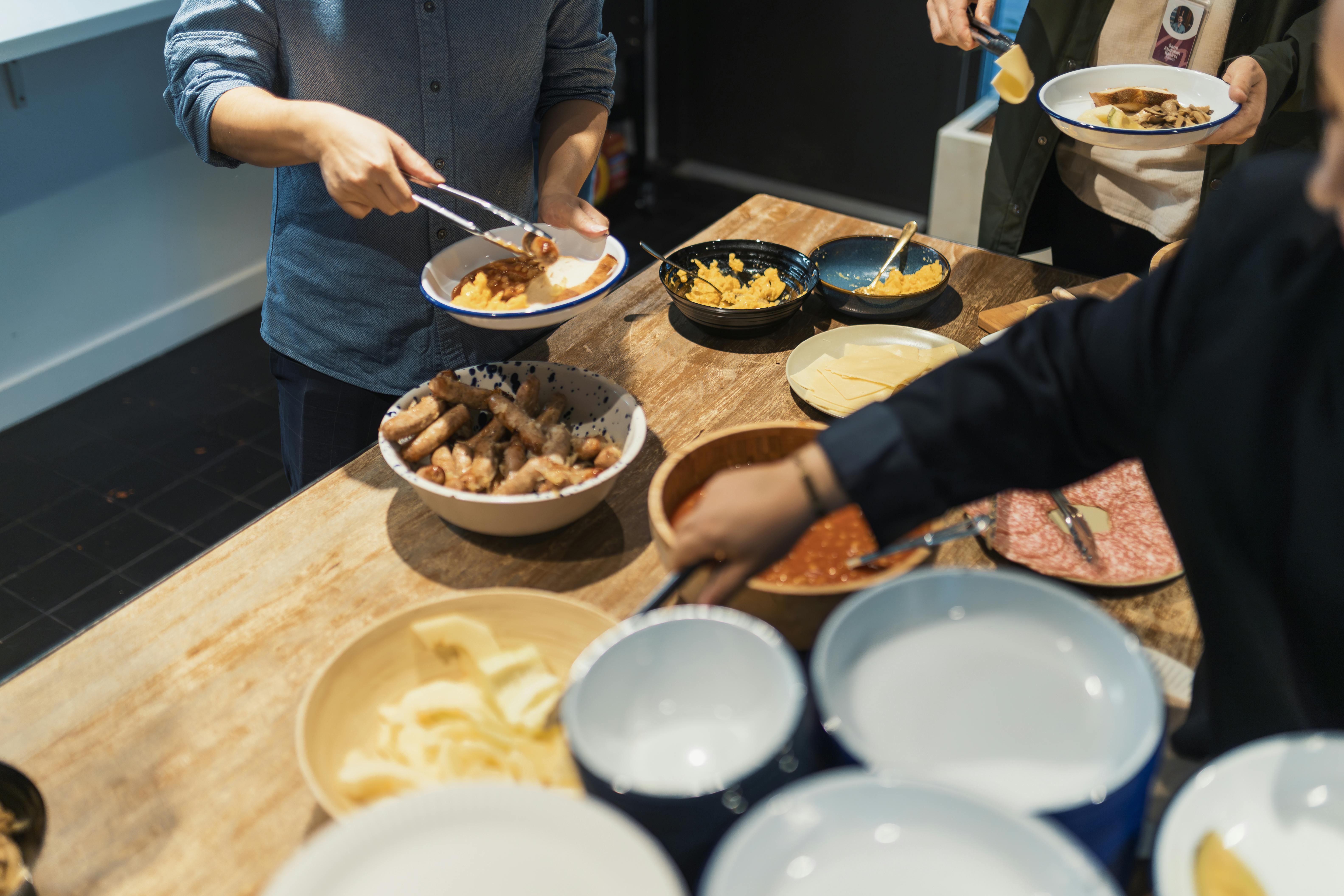

There is a moment familiar to anyone who has ever sat at a multicultural table. Your plate is full. You are still chewing. And yet, a hand reaches across, spoon already loaded, and someone says, "Here, have more." It is not a question, but an offering. Refusing it can feel almost like an insult. Across Filipino, Indian, Persian, and Latino households, urging guests to eat more is one of the most deeply coded gestures in food-hospitality culture. It carries meaning that no single phrase can fully translate.
Food Is Never Just Food
In many cultures, the table is a stage for expressing love, demonstrating generosity, and asserting identity. When a host offers more food, they are communicating something far beyond nutrition. They are saying: *You are welcome here, you matter to us, and our home has abundance to share.*

Welcome to United Tribes
Where Diverse Cultures Come Alive
Join Your Tribe
Connect with your people
Discover Events
Watch parties & festivals
Find Tribe Businesses
Restaurants, markets & more
Earn Crown Credits
Get rewarded for engaging
The cultural meaning of sharing meals stretches back through centuries of tradition. Hospitality was often a survival mechanism — communities sharing resources during hard seasons, celebrating harvests, or honoring guests who traveled far. Those ancient rituals have transformed into modern dinner tables, but the emotional core remains unchanged.
The Filipino Table: Abundance as Devotion
For Filipino families, food is the primary language of care. The phrase *"Kain na!"* (Let's eat!) is an invitation, but what follows — the persistent offering of more rice, more ulam, more everything — is a demonstration of devotion. A host who lets a guest leave hungry has, in Filipino cultural terms, failed at something fundamental.
Filipino cooking is labor-intensive, often beginning hours before guests arrive. Dishes like adobo, sinigang, and kare-kare are made in large quantities precisely because abundance is the message. The more food on the table, the greater the love behind it. Filipino comfort food carries emotional weight that goes far beyond flavor — it is memory, belonging, and identity served on a plate.
Refusing second servings in a Filipino household requires gentle navigation. A flat "no" can read as rejection. Most guests learn to say "onti na lang" (just a little more) as a graceful middle ground.
Indian Hospitality: The Sacred Duty of Feeding Guests
In Indian culture, the concept of *Atithi Devo Bhava* — "the guest is god" — is not a metaphor. It is a lived philosophy that shapes how hosts behave. Serving food generously is considered a moral and spiritual obligation. Letting a guest feel hungry is a source of genuine shame.
Indian meals are structured around abundance from the start. Multiple dishes arrive simultaneously — dal, sabzi, rice, roti, pickle, papad — because variety itself is a form of respect. And when plates start to empty, hosts will immediately refill them, often without asking. The question "Would you like more?" is sometimes skipped entirely, replaced with action.
This approach to why hosts offer more food is rooted in both religion and community. In many Hindu traditions, feeding others is an act of spiritual merit. At celebrations — especially weddings — the scale of food offering is a direct reflection of the family's respect for their guests. The rituals around food at these events, as explored in Indian wedding customs, reveal just how deeply nourishment is woven into cultural identity.
Persian Taarof: Ritual Generosity With Layered Meaning
Persian hospitality operates through a cultural framework called *taarof* — a sophisticated system of ritualized politeness that governs everything from entering a room to accepting food. When a Persian host offers more food, and the guest declines, the host will offer again. And again. This persistence is culturally ingrained in Persian households.
Understanding food etiquette across cultures means recognizing that taarof is a mutual performance of respect. The host demonstrates generosity by insisting. The guest demonstrates humility by initially declining. Eventually, after the appropriate number of exchanges, the guest accepts. Both parties know the script, and both honor it.
The result is a meal experience that is almost theatrical in its warmth. Persian tables are laden with dishes that took days to prepare — ghormeh sabzi, fesenjan, jeweled rice. The effort behind the food is itself a message. Persian hospitality etiquette offers a deeper window into how taarof shapes not just meals, but entire relationships.
Latino Generosity: The Open Table
Across Latino cultures — Mexican, Colombian, Puerto Rican, Salvadoran, and beyond — the open table is a foundational value. Guests are not just welcomed; they are absorbed into the family, at least for the duration of the meal. And at a Latino table, the meal is never considered finished while someone still looks hungry.
The phrase *"hay más"* (there is more) is a constant refrain. Tortillas keep coming. The pot of beans is never allowed to visibly empty. Tamales, arroz, and carne guisada — all are replenished before being asked for. This approach to food hospitality culture is inseparable from concepts of community, warmth, and familia. The influence of these traditions on American food culture broadly is substantial, as Latin cuisine's footprint in the U.S. continues to grow and reshape how the country eats.
In many Latino households, sending guests home with food is their final act of hospitality. Leftovers are neatly packed and pressed into their hands, letting you bring a piece of them on your way home.
What Second Servings Really Mean
Across these four cultures, the gesture of offering more food shares a common soul: nourishment is love made tangible. It says, without words, that you are seen, valued, and safe at this table. The cultural meaning of sharing meals is ultimately about human connection — the ancient, universal need to belong to something larger than yourself.
For diaspora communities living in the United States, these food rituals become even more significant. They are threads connecting first, second, and third generations to homelands many have never visited. Every plate piled high is an act of cultural preservation.
Every Bite Carries a Deeper Story
Food hospitality culture is one of the most powerful and underappreciated forces in human connection. Whether it is a Filipino lola spooning more rice onto your plate, an Indian auntie insisting you try one more dish, a Persian host pressing food upon you through taarof, or a Latino grandmother sending you home with containers full of leftovers — these gestures speak the same essential language. They are expressions of love, identity, and belonging that no translation can fully capture.
Understanding why hosts offer more food means understanding the communities themselves. These rituals are living archives of history, spirituality, migration, and resilience. When we sit at tables different from our own and accept a second serving, we are participating in something genuinely profound.
Visit United Tribes today and find out more about Filipino, Indian, Persian, and Latino culture and community — and discover the stories, businesses, and traditions that make each table a world of its own.


