
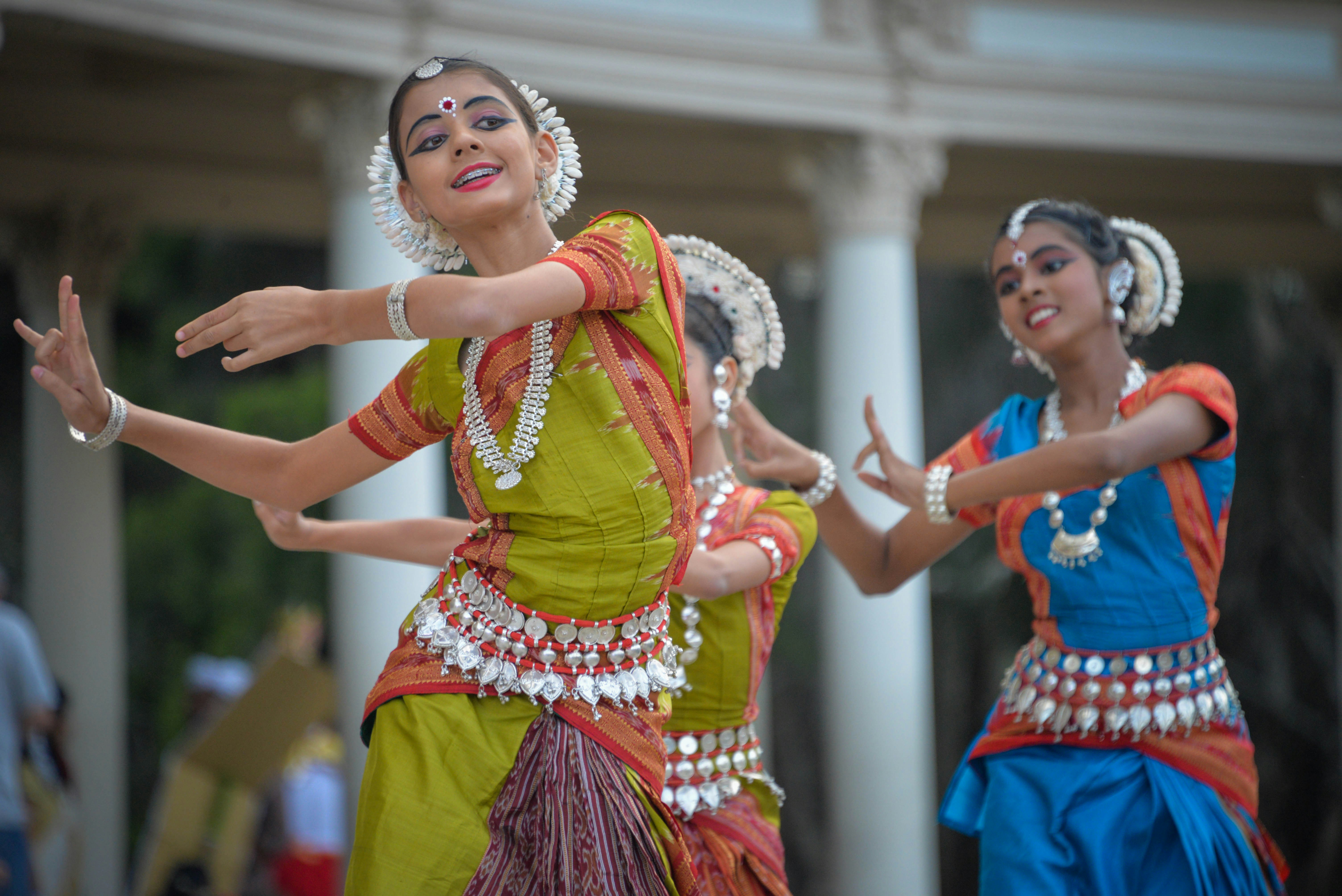

Beyond showing graceful movements, Indian classical dances express centuries of history, spirituality, and traditional culture. They were first performed in temples and royal courts, turning storytelling, music, and detailed movements into powerful performances.
Today, Indian classical dance forms continue to intrigue and impress global audiences while keeping Indian culture alive. Let’s look at some of these traditional dances and discover their origins, styles, and significance.

Welcome to United Tribes
Where Indian Culture Comes Alive
Join Your Tribe
Connect with your people
Discover Events
Watch parties & festivals
Find Indian Businesses
Restaurants, markets & more
Earn Crown Credits
Get rewarded for engaging
The Origins & Elements of Indian Classical Dances
To understand how Indian classical dances are performed, we must delve into the Natyashastra, an ancient treatise on drama, dance, and music. This writing is said to have been made between the 2nd century B.C.E. and the 2nd century C.E.
According to the ancient works, dance involves the following elements:
- Natya - adding drama to dancing
- Nrityas - making dances expressive (Basically, dancers perform to express what a theme or idea symbolizes.)
- Nritta - dancing without conveying certain moods or actual meaning, just like freestyle dance.
Understanding the Other Aspects of Indian Classical Dances
All Indian traditional dances follow various classifications, including Tandava and Lasya. One is a masculine form of dancing with a courageous, strong, and energetic disposition. Meanwhile, the other is a feminine form of dancing that’s described as soft, lyrical, and graceful.
Another classification under Indian classical dance is the abhinaya (expression). Dancers use angika (the body and limbs), vachikasong (speech), aharya (costume and accessories), and satvika (moods and emotions) for powerful performances.
In the Bharata and Nandikesvara, dance is viewed as an art form that’s expressed with our bodies. These aspects of Indian classical dances divide the human body into two parts: the anga, which encompasses the head, torso, and the upper and lower limbs, and the upangas, which include all parts of the face and the joints.
Finally, the natya can be performed in different ways and styles. Two significant forms of presentation exist: the Natyadharmi, a theatrical performance, and the Lokadharmi, which can be called folk, realistic, naturalistic, or regional dance.
As for the dance styles or vrittis, they’re divided into three forms. Kaishiki is a graceful and lyrical style associated with lasya elements, while the Arbati expresses the energetic and masculine form of dancing. Satvati performers used the latter to present the rasas. And, last but not least, we have the Bharati or literary content.
3 Major Indian Classical Dance Forms to Know
Indian classical dance has several major styles, including:
- Bharatanatyam (Tamil Nadu)
- Kathak (Northern India)
- Odissi (Orissa, Eastern India)
- Kathakali (Kerala)
- Mohiniattam (Kerala)
- Kuchipudi (Andhra Pradesh, Southern India)
- Manipuri (Manipur, Northeastern India)
- Sattriya (Assam)
For this guide, we’ll highlight three of the major Indian classical dances: Bharatanatyam, Kathak, and Odissi.
Bharatanatyam: The Dance of Devotion
This over 2,000-year-old dance was first performed by Tamil Nadu’s temple dancers and named Sadir or Dasi Attam. It’s rooted in the basic rules of performance and the aesthetics established by ancient dance-focused treatises.
Bharatanatyam is danced to Telugu, Tamil, and Sanskrit-language songs, performed in a style created by the “Tanjore Quartet.” The group consisted of four brothers: Ponniah, Chinnaiah, Sivanandam, and Vadivelu. A highly refined language of Nritta, abstract dance, and Nritya is incorporated for captivating storytelling. Its themes focus on human and divine love, all falling under shringara (romantic love) and Bhakti (devotion).
Moreover, the music that accompanies the dance is classified as Carnatic music. It’s played by a band of at least one vocalist, a drummer, and a flute player, violinist, or lute player, with a dance conductor leading them. The conductor chants the dance syllables while playing two small bronze cymbals.
Kathak: The Storyteller’s Dance
Originating in Northern India, Kathak is primarily performed in Uttar Pradesh, Rajasthan, Delhi, Madhya Pradesh, and some areas in Western and Eastern India. It’s said that this classical dance style comes from Kathakaras or storytellers who’ve taught the scriptures, the epics Ramayana and Mahabharata, and puranic literature to laypeople.
From being performed at Indian courts, the Kathak dance flourished during the Mughal rule. Then, it made its way to the princely courts at Lucknow, Jaipur, Raigarh, and other areas. And in the 20th century, group choreography was added to the Kathak dance. The overarching themes are set in different realms, with the tale of Krishna at the heart of Kathak.
Kathak involves intricate footwork, graceful pirouettes, and rhythmic dancing. Performances typically start with an amad and continue as people dance to different rhythms and tempos. Also, performers show abstract and expressive dances during recitals.
As for the music, lyrical songs such as the Thumri are played for Kathak dances. Musicians play them on the tabla, pakhawaj, sarangi, sitar, or other instruments with plucked strings. The Thumri contains lyrics about the different facets of romantic love.
Odissi: Grace in Motion
Odissi comes from the eastern Indian state of Orissa. Like the Bharatanatyam, it was performed in temples, with maharis or female temple servants dancing.
This Indian classical dance style has since found its place in theater arts in the mid-20th century. At the time, Odissi’s new form kept its original style and reflected how dance was expressed in Orissa’s prehistoric sculptures, paintings, and literature.
The Odissi dance is rooted in the Vaishnava faith, highlighting themes based on the tale of Radha and Krishna. It’s why love lyrics from Jayadeva’s Gitagovindam are included in Odissi repertoires. Plus, performers dance to Oriya songs written by prehistoric and early modern poets. These songs are expressed through hand gestures of hastas.
Odissi is also characterized by standardized footwork (pada bheda), postures and walks (chalis), and spins (bhramaris). It’s a sculpture-like dance that uses serpentine movements called “tribhangi-s” and a firm, square stance named “chowk.” Finally, Odissi is danced with soft, graceful movements.
4 Similarities Between Major Indian Classical Dance Styles
While major Indian classical dance styles are performed in different ways and locations, they share several similarities, such as:
- A spiritual foundation - Since ancient Indian dance forms were part of temple rituals, they’re devotional.
- Codified gestures - These dances use various kinds of movements to express emotions, stories, and meanings.
- Storytelling - Indian classical dance styles tell stories from religious epics and ancient mythology.
- Music & rhythm - The songs used for Indian classical dances are played on musical instruments like the mridangam (drum), tabla, veena (lute), flute, or sitar. Some dances also have rhythmic syllables to add beats to the choreography.
Why Does Indian Classical Dance Matter?
Indian classical dance matters because it keeps evolving while preserving its spiritual and cultural form. In India and across the diaspora, Indian traditional dances are taught in schools, performed at cultural festivals, and have helped people express their unique identity.
If you’re interested in Indian classical dance, we recommend watching live performances or joining beginner’s dance classes. This way, you can truly appreciate the craft, discipline, and devotion expressed by major Indian classical dance styles. An online event or business directory should list live performances and Indian dance classes or schools near you.
Watch or Join Indian Classical Dance Performances Today
Regardless of how they’re performed, major Indian classical dance forms speak a timeless language of movement. Each step, turn, and gesture means something in Indian culture, enduring in an ever-changing world. Learning about and trying these traditional dances takes you on a journey full of movement and helps you understand India’s unique cultural heritage.
Looking for more helpful guides to Indian culture? Visit the United Tribes blog or our Indian community page today.
Make United Tribes Your Preferred Source
Add United Tribes on Google to get the latest stories, cultural updates, and community events directly in your Google Search and Top Stories.


