

Key Takeaways
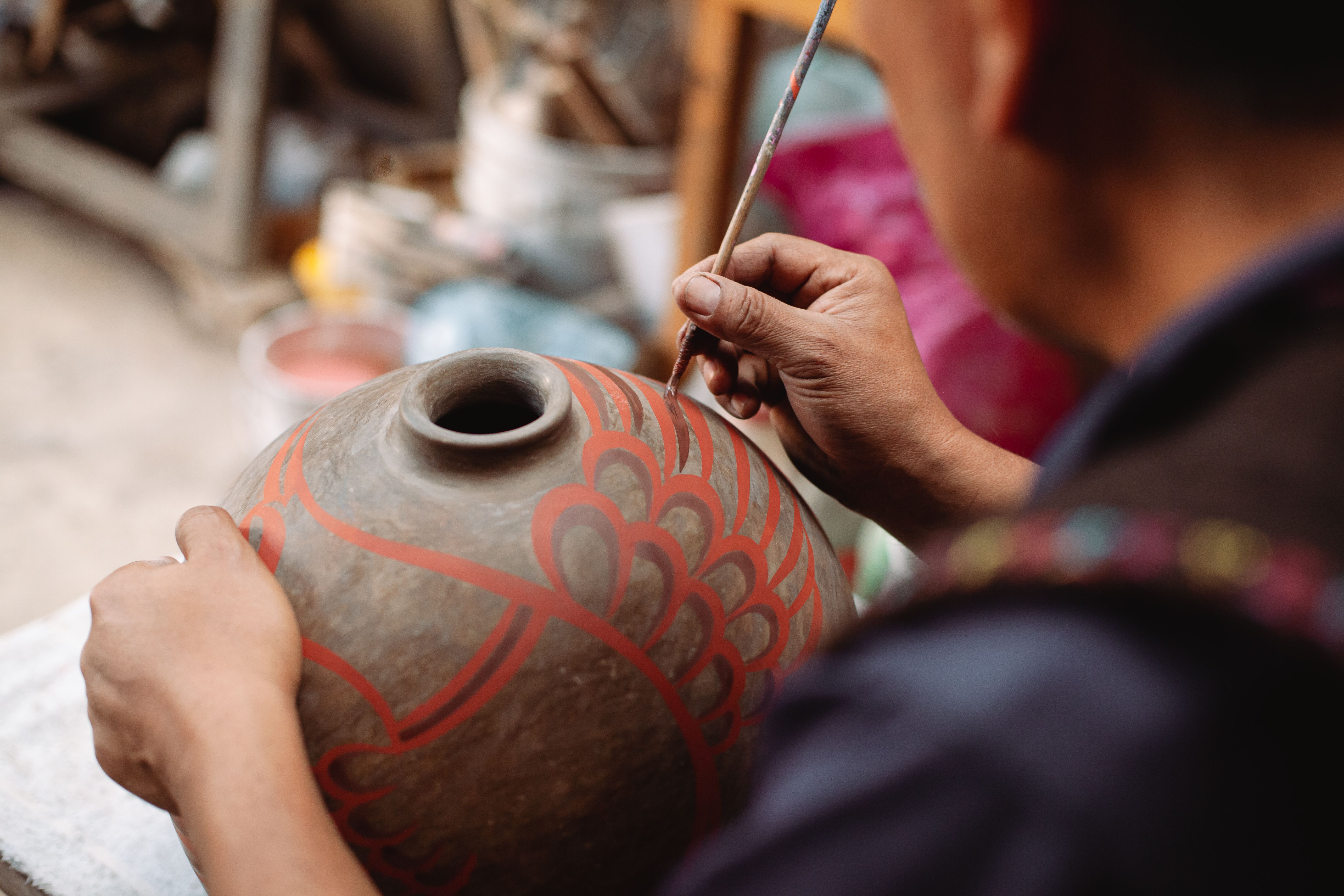
- La Campa is the heart of Lenca pottery in Honduras. This Lempira Department village produces distinctive red clay pottery shaped entirely by hand, without wheels or molds, using local clay sourced from Camapara Mountain.
- Women artisans called loceras are the keepers of this tradition. Lenca women learn pottery-making from their mothers and grandmothers, ensuring cultural transmission and contributing meaningfully to household economies.

Welcome to United Tribes
Where Honduran Culture Comes Alive
Join Your Tribe
Connect with your people
Discover Events
Watch parties & festivals
Find Honduran Businesses
Restaurants, markets & more
Earn Crown Credits
Get rewarded for engaging
- Pre-Hispanic techniques remain central to modern Lenca craft. Coiling, stone-burnishing, and low-temperature firing are methods rooted in ancient practice, still used today with virtually no industrial modification.
- Spiritual belief is woven into the clay-making process. Potters historically perform pagos a la tierra — offerings to the earth — before extracting clay, honoring the land and asking for successful firings.
- Lenca artisans face real challenges around representation and market access. Despite strong cultural value, potters in La Campa report limited institutional support and misrepresentation by outsiders who photograph their work without offering compensation.
In the mountainous Lempira department of western Honduras, the smell of fired clay still drifts from open-air hearths where women shape vessels the same way their ancestors did centuries before European contact. Lenca pottery is not a relic in a museum case — it is a living practice, embedded in daily life, local economies, and a worldview that treats the earth as a partner rather than a resource. Understanding this tradition means understanding how Indigenous knowledge survives not through monuments, but through hands.
What is Lenca pottery and why does it matter?
Lenca pottery is a pre-Hispanic, hand-built ceramic tradition practiced by Indigenous Lenca communities in Honduras, most prominently in the village of La Campa in the department of Lempira. It matters because it encodes ancestral knowledge about materials, environment, and cosmology — knowledge transmitted person to person, generation to generation, without written instruction. The craft is simultaneously a household tool, a cultural document, and an economic lifeline for families who produce and sell it.
La Campa has become synonymous with Honduran traditional pottery precisely because its artisans have maintained pre-Columbian methods with remarkable continuity. The red clay pots produced there are shaped without wheels or industrial molds, polished with flint or smooth stones, and fired at relatively low temperatures in earthen or open kilns. Their distinctive red color comes from a mineral-rich clay deposit on nearby Camapara Mountain. This local material ties the finished object literally to the ground beneath the community's feet.
This is not folk art in a decorative sense. The forms produced — ollas for cooking, cántaros and jarros for carrying and storing water, comales for heating tortillas, tinajas for larger storage — are everyday necessities. They are used in the kitchens of the women who make them and sold to neighbors, regional markets, and visitors. Many Lenca families believe cooking in clay imparts health benefits, reinforcing the pottery's place in daily use rather than on a display shelf.
The Process Behind Every Lenca Clay Vessel
Making Lenca pottery is a multi-stage craft that begins long before a lump of clay touches a potter's palms. The process reflects deep environmental knowledge and a spiritual relationship with the land, shaping every decision.
Gathering and Preparing the Clay
The red clay that defines La Campa's pottery is collected from communal deposits, managed through shared cultural and economic agreements within the community. Potters also use local sand and water to achieve the right consistency. Before extraction, artisans have historically performed pagos a la tierra — ritual offerings to the earth — acknowledging that removing material from the ground requires reciprocity. This practice frames the entire process within a worldview in which land and people are in ongoing relationship, not in a transaction.
Once gathered, the clay is cleaned of debris, worked by hand, and mixed with sand to reduce cracking during drying and firing. No wheels are involved. Potters build forms by coiling long ropes of clay upward from a flat base, smoothing and compressing each coil into the last.
Shaping, Burnishing, and Firing
After a vessel is coiled to its intended shape, the surface is refined and smoothed by hand. Stone-burnishing — rubbing the leather-hard surface with a smooth piece of flint or similar stone — gives the pottery its characteristic sheen and helps seal the clay before firing. This step requires patience and skill; uneven pressure can crack the surface or distort the form.
Firing happens at lower temperatures than industrial ceramics, typically in open or earthen kilns. The resulting ware is earthenware rather than stoneware or porcelain — porous enough to allow slight moisture evaporation, which can keep water stored inside naturally cool. This practical benefit is one reason cántaros remain in use for water storage even today.
|
Stage |
Method |
Materials Used |
|
Clay sourcing |
Hand-collected from communal deposits |
Red clay from Camapara Mountain |
|
Preparation |
Hand-mixed and cleaned |
Clay, local sand, water |
|
Shaping |
Coiling technique, no wheel |
Prepared clay body |
|
Burnishing |
Stone-polishing by hand |
Flint or smooth river stones |
|
Firing |
Open or earthen kiln, low temperature |
Wood fuel, earthen kiln |
Loceras: The Women Who Carry the Tradition
In La Campa, women are the primary potters, known locally as loceras. Their role is not incidental — they are the tradition's keepers, teachers, and economic engines. Pottery knowledge passes through maternal lines, with daughters learning beside their mothers, often starting as young as ten or twelve.
Doña Desideria Pérez stands as one of La Campa's most recognized artisans. She learned pottery from her mother at age twelve and has spent decades producing comales, cántaros, vasijas, jarros, ollas, and tinajas entirely by hand. Some of her work has entered international collections, a testament to the artistic depth embedded in what might, at first glance, appear to be purely functional objects.
The economic contribution of loceras extends beyond individual households. Pottery sales support families, enable children to attend school, and keep communities financially grounded. Yet formal economic accounting often undervalues this contribution, as it rarely captures informal craft economies accurately. Recognizing the work of loceras means recognizing them as entrepreneurs, not just custodians of tradition.
Challenges Facing Lenca Artisans Today
Despite the cultural richness of Lenca crafts, artisans in La Campa navigate a difficult landscape of limited institutional support and problematic outside representation. Potters report that tourists and researchers sometimes photograph their work or their process without offering compensation, then use those images in promotional or commercial contexts. This extraction of cultural imagery without consent mirrors broader patterns of exploitation that Indigenous communities across the Americas have long documented.
Access to wider markets remains constrained. Artisans who might benefit from tourism-based income face infrastructure limitations, weak marketing networks, and a lack of organized channels to reach buyers beyond their immediate region. The Honduran Indigenous heritage embedded in La Campa's pottery has cultural value that is widely acknowledged. Still, acknowledgment does not automatically translate into economic support for the people who sustain it.
Scarcity of raw materials adds another layer of concern. Clay deposits, colored soils, and sand used in pottery production are treated as communally managed cultural patrimony. As demand grows and environmental conditions shift, protecting these deposits becomes both an ecological and a cultural imperative.
Community-led responses have begun to address some of these pressures. PhotoVoice initiatives in La Campa have empowered potters to document their own processes and create promotional materials — tourist guides, business cards — on their own terms. These efforts shift authorship and representation back to the artisans themselves, offering a model for how outside attention can be redirected from extractive to collaborative.
Honoring Lenca Pottery as Living Heritage
Lenca pottery should be understood as living heritage, not a vanishing one—though it requires active, respectful support to remain so. The "Traditional Crafts of Honduras" documentation project has formally recognized the La Campa pottery tradition as a pre-Columbian, hand-formed practice in need of preservation attention, situating it within broader frameworks for safeguarding intangible cultural heritage.
Supporting this heritage means more than admiring it. Buying pottery directly from Lenca artisans, crediting the community when you share images, and advocating for fair representation in tourism and cultural programming are concrete ways to align appreciation with respect. The diversity of Lenca cultural practice — across different communities, generations, and individual artisans — also deserves recognition. No single pot represents the whole tradition, and no single artisan speaks for an entire people.
Keeping Lenca Clay Knowledge in Living Hands
From the communal clay deposits of Camapara Mountain to the burnished surfaces of a finished olla, Lenca pottery in Honduras carries knowledge that no textbook could fully contain. The techniques are ancient, the materials are local, and the women who shape each vessel are both craftspeople and cultural historians. What they produce is functional, beautiful, and irreplaceable — a direct line between the present and a pre-Hispanic past that never entirely disappeared.
For the Honduran diaspora in the United States and for anyone drawn to the depth of Central American Indigenous culture, engaging with Lenca pottery is an act of recognition. It means seeing artisans like Doña Desideria Pérez not as background figures in a travel narrative, but as skilled professionals whose work deserves fair compensation, accurate representation, and a market that reflects its true value. The challenges facing La Campa's loceras are real, but so is their resilience and the pride they carry in every hand-coiled, stone-burnished piece.
Discover more about Honduran cultural heritage and connect with the community preserving traditions like these — explore the Honduran tribe on United Tribes and support the artisans, businesses, and stories that keep this living heritage visible.
Frequently Asked Questions
Where exactly is La Campa located, and can visitors travel there?
La Campa is a small municipality in the department of Lempira in western Honduras. It is accessible by road and has become a modest cultural tourism destination, though infrastructure remains limited and visitors should plan accordingly.
Are there other Lenca communities in Honduras that also produce traditional pottery?
While La Campa is the best-known center of Lenca pottery in Honduras, Lenca communities are spread across western Honduras, including departments such as Intibucá and La Paz. Pottery traditions vary between communities, reflecting regional differences in clay sources and techniques.
How can someone outside Honduras purchase authentic Lenca pottery?
The most ethical approach is to buy directly from artisans or through community-based cooperatives in La Campa. Some cultural organizations and fair-trade retailers also carry Lenca crafts, but buyers should verify that artisans receive a fair share of the sale price.
Is Lenca pottery considered safe for cooking and food use?
Many Lenca families use their clay pots daily for cooking and believe food prepared in clay tastes better and offers health benefits. However, buyers should confirm that specific pieces are made with traditional, unglazed clay and no industrial additives before using them for food preparation.
How long does it take to learn Lenca pottery-making techniques?
Lenca girls in La Campa often begin learning beside their mothers or grandmothers around age ten to twelve, and developing true proficiency typically takes years of daily practice. Mastering stone-burnishing in particular requires time and tactile sensitivity that only comes from sustained repetition.
What is the significance of pagos a la tierra in the pottery-making process?
Pagos a la tierra are ritual offerings made to the earth before clay is extracted, reflecting a Lenca worldview in which the land is a living entity deserving of reciprocity. This practice frames pottery not as industrial production but as a relationship between the artisan, the material, and the natural world.
Find your community: Honduran businesses near you on United Tribes.
Make United Tribes Your Preferred Source
Add United Tribes on Google to get the latest stories, cultural updates, and community events directly in your Google Search and Top Stories.