
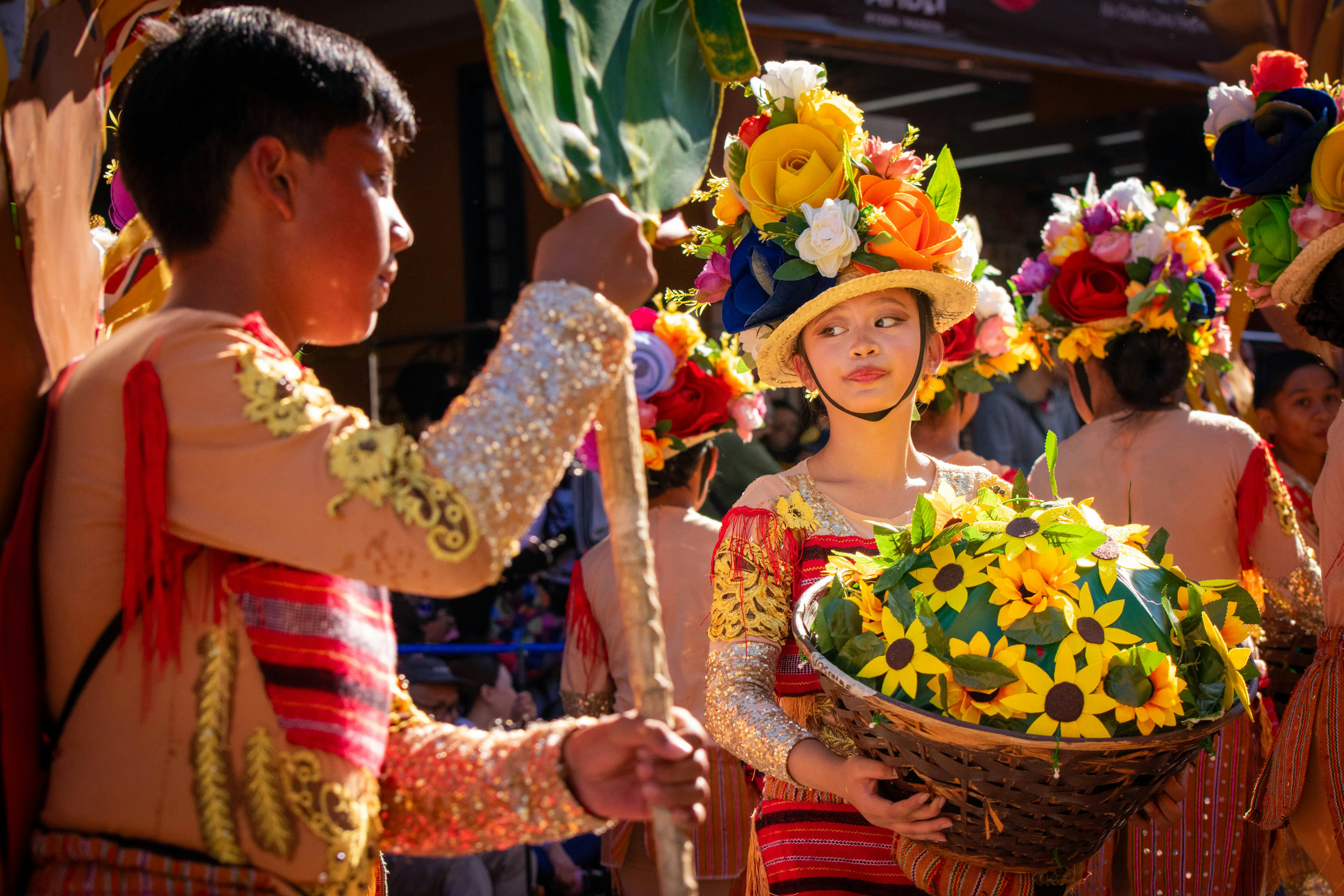

Every May in the Philippines, streets fill with flower-crowned children, candlelit processions, and the murmur of prayers rising toward the sky. But for many Filipino families, Flores de Mayo is more than a public celebration; it also lives quietly in homes, in the rhythm of daily habits, in the smell of food simmering on the stove, and in gestures passed down from grandmothers who never needed an audience. These are the traditions that rarely make it into photographs but shape the season just as profoundly.
The Altar at the Heart of the Home
Before any child rehearses their walk down the procession aisle, the home altar is prepared. In many Filipino households, this is the true first act of the Flores de Mayo season. Families clear a small table or corner shelf, drape it in white cloth, and place a statue of the Virgin Mary at the center. Fresh flowers — sampaguita, rosal, or whatever blooms in the yard — are gathered daily and offered as a living bouquet that changes throughout the month.

Welcome to United Tribes
Where Filipino Culture Comes Alive
Join Your Tribe
Connect with your people
Discover Events
Watch parties & festivals
Find Filipino Businesses
Restaurants, markets & more
Earn Crown Credits
Get rewarded for engaging
Filipino home rituals tied to this altar are highly personal. Some families light a candle every evening before dinner. Others recite the rosary as a household, with children assigned specific decades of the prayer. The altar becomes a soft anchor for the family's daily routine throughout May, pulling everyone toward a shared moment of quiet even on the most hectic days.
Daily Flower Offerings and the Habit of Noticing
One of the most tender Filipino May customs is the daily gathering of flowers for the Virgin. Children are often the ones sent to clip blossoms from the garden or arrange petals in small glass jars. This act, repeated daily for thirty-one days, builds something subtle — a habit of attention, of slowing down to notice what is blooming around you.
For Filipino diaspora families living in the United States, this ritual adapts beautifully. Grocery store flowers replace garden sampaguita. A windowsill altar fits a studio apartment. The practice of bringing Filipino celebrations to life in America shows how deeply rooted customs find new soil without losing their meaning.
Food as Offering and Memory
Flores de Mayo traditions in the kitchen are rarely discussed outside Filipino communities, but they carry enormous weight. Certain foods appear on tables during this season as quiet acts of devotion. Arroz caldo is prepared with extra care. Bibingka and puto bumbong, though more commonly associated with Christmas, sometimes return in May as offerings during evening prayers.
Merienda takes on a more deliberate character. Families share kakanin — sticky rice cakes made from glutinous rice, coconut milk, and sugar — as both food and symbol. The act of preparing these dishes together becomes its own form of prayer. Grandmothers teach granddaughters how to wrap suman, how to judge the steam, how to know when the pandan is right. These Filipino comfort foods carry layers of memory that no recipe card can fully capture.
The Novena Prayers That Shape the Month
At the structural core of Flores de Mayo traditions is the daily novena. Families gather each evening — sometimes just two or three people, sometimes an entire extended household — to pray the Flores de Mayo novena dedicated to the Virgin Mary. The prayers are sung in Filipino, and many families use songbooks worn soft at the spine from decades of use.
This evening ritual shapes the entire month. It creates a rhythm that younger family members often carry into adulthood, recognizing the cadence of those prayers as something deeply associated with the smell of candle wax and the feeling of May air through open windows.
Santacruzan Culture at the Neighborhood Level
While grand Santacruzan culture is associated with elaborate pageants and processions organized by towns and parishes, the neighborhood-level version tells a more intimate story. In barangays across the Philippines, small Santacruzan parades wind through narrow streets with children carrying lanterns and women holding flowers, their audience being neighbors sitting on doorsteps rather than crowds behind barricades.
Families prepare for weeks. Mothers sew or borrow gowns. Young men are assigned roles as escorts. The preparation itself — the fittings, the rehearsals, the friendly debates about who carries which banner — becomes communal glue. Understanding this layer of Santacruzan culture helps explain why the tradition travels so well. Filipino-Americans have recreated these neighborhood processions in California, Texas, and beyond, because it was never really about the spectacle. It was always about togetherness.
Passing the Traditions to the Next Generation
Perhaps the most meaningful quiet tradition is telling children why. Explaining why the flowers are offered fresh each day, why the same prayers are sung in the same order, and why the altar is treated with such care. These conversations, often informal and brief, are how Filipino home rituals survive across generations and across oceans.
Keeping the Quiet Flame Alive
Flores de Mayo is a season of flowers, yes, but more precisely, it is a season of attention. Attention to the altar, to the prayers, to the food prepared with devotion, to the child learning to arrange blossoms. These quiet daily acts are the foundation beneath the pageantry, making Filipino May customs so enduring across generations and geographies.
For Filipinos living abroad, maintaining these rituals is both a cultural act and a deeply personal one. The home altar in a Chicago apartment and the sampaguita clipped from a garden in Cebu are part of the same living tradition, sustained by families who choose to carry it forward with care and consistency.
Visit United Tribes today to learn more about Filipino culture and community, including events, stories, and connections that help keep traditions like Flores de Mayo alive wherever you are in the world.


