

Traditional Indian Jewelry & Its Symbolic Elements
Indian jewelry isn’t just worn for a more stylish look. Each piece tells a unique story about India’s history, spirituality, and culture. Beyond symbolizing wealth or social status, traditional Indian jewelry connects its owners to their roots and the cosmos.
Indian jewelry symbolism is as varied as the country’s traditions and communities. Today, we’ll decode the hidden meanings behind these exquisite pieces and discuss their cultural and spiritual significance. Read on to discover the rich symbolism surrounding traditional Indian jewelry.

Welcome to United Tribes
Where Indian Culture Comes Alive
Join Your Tribe
Connect with your people
Discover Events
Watch parties & festivals
Find Indian Businesses
Restaurants, markets & more
Earn Crown Credits
Get rewarded for engaging
Traditional Indian Jewelry & Its Symbolic Elements
From intricate necklaces to delicate anklets, each piece of Indian jewelry carries profound meanings. Jewelers select metals, gemstones, and motifs to convey their unique ideas and visions.
- Metals & Their Significance
Gold is commonly used to make traditional Indian jewelry because it represents wealth and prosperity, indicating the richness and power of a family. It’s believed that the Rig Veda associates gold with prosperity and success, making it the perfect choice for jewelry worn on special occasions.
Silver may seem less luxurious than gold, but it’s just as symbolic. Associated with the moon, this cool metal is believed to bring a peaceful life. Silver is commonly used to make toe rings for brides in southern India, believed to ward off negative energy.
- Gemstones: Stones with Mystical & Cosmic Meanings
Traditional Indian jewelry also features colorful, symbolic gemstones.
It’s assumed that some of these gems are enchanting or magical enough to cleanse, help people gain abundance, and protect them from evil spirits. Here’s a short list of the gemstones seen on Indian jewelry and their hidden meanings.
Diamonds are worn to celebrate Venus, a symbol of femininity and beauty. It’s also said that these gems can attract fortune and power, and they’re associated with a joyful marriage.
Rubies are associated with the sun. They’re worn to please the sun god and attract positive energy.
Indian people consider emeralds extremely valuable because they’re believed to improve concentration and make the mind more alert and capable.
Sapphires are included in the Navaratna, or “nine gems,” which symbolize the nine planets in our solar system.
Blue sapphires represent Saturn.
Yellow sapphires represent Jupiter.
Finally, pearls are often worn because they are less expensive than other gemstones and are considered timeless gems.
They’re used for Indian bridal jewelry, typically hanging from these pieces.
Pearls are associated with emotional stability and creativity.
The Symbolism of Indian Jewelry’s Detailed Designs
- Lotus
As a spotless flower rising from muddy waters, the lotus represents purity, enlightenment, and spiritual growth. It’s typically seen on necklaces, pendants, and earrings.
Specifically, lotus motifs on Indian jewelry symbolize the soul crossing through darkness and toward the light. They express our continuous pursuit of enlightenment.
- Elephant
One of India’s most sacred animals represents Lord Ganesh, the remover of obstacles and the god of beginnings. It’s included in jewelry to bring the wearer good luck as they embark on a new chapter in their lives. Jewelry with elephant motifs is gifted to newly married couples for this reason.
Finally, elephants signify strength, good fortune, health, and happiness.
- Peacock
The national bird of India symbolizes beauty, grace, and love. Moreover, it’s used to represent different Hindu gods. Lakshmi, the goddess of wealth and prosperity, is often connected to the peacock.
- Fish
Many writings state that Lord Vishnu turned into a fish to help Manu (the presumed creator of human beings) travel during an extreme flood. After that, Manu is said to have produced humankind.
Hinduism associates the fish with rebirth, while South Asian religions consider it a symbol of fertility and abundance.
Indian Bridal Jewelry & Its Hidden Meanings
Indian brides deliberately pick 16 pieces of jewelry to wear on their wedding, a practice known as the Solar Shringar. Each of these ornaments, including the ones mentioned earlier, has significant meaning.
Indian grooms gift a necklace called the mangalsutra to their bride. It’s the “holy thread” between the couple, consisting of gold, black beads, and valuable stones. The black beads are believed to ward off evil.
Additionally, Indian brides wear a gold or silver nose ring (nath). It signified beauty and womanhood in southern India.
A Closer Look at the Spiritual Meaning of Indian Jewelry
Beyond its attractive designs and cultural significance, much of Indian jewelry holds deep spiritual meaning. Many pieces are worn as talismans or amulets to combat evil spirits, attract divine blessings, and balance the wearer's life energy.
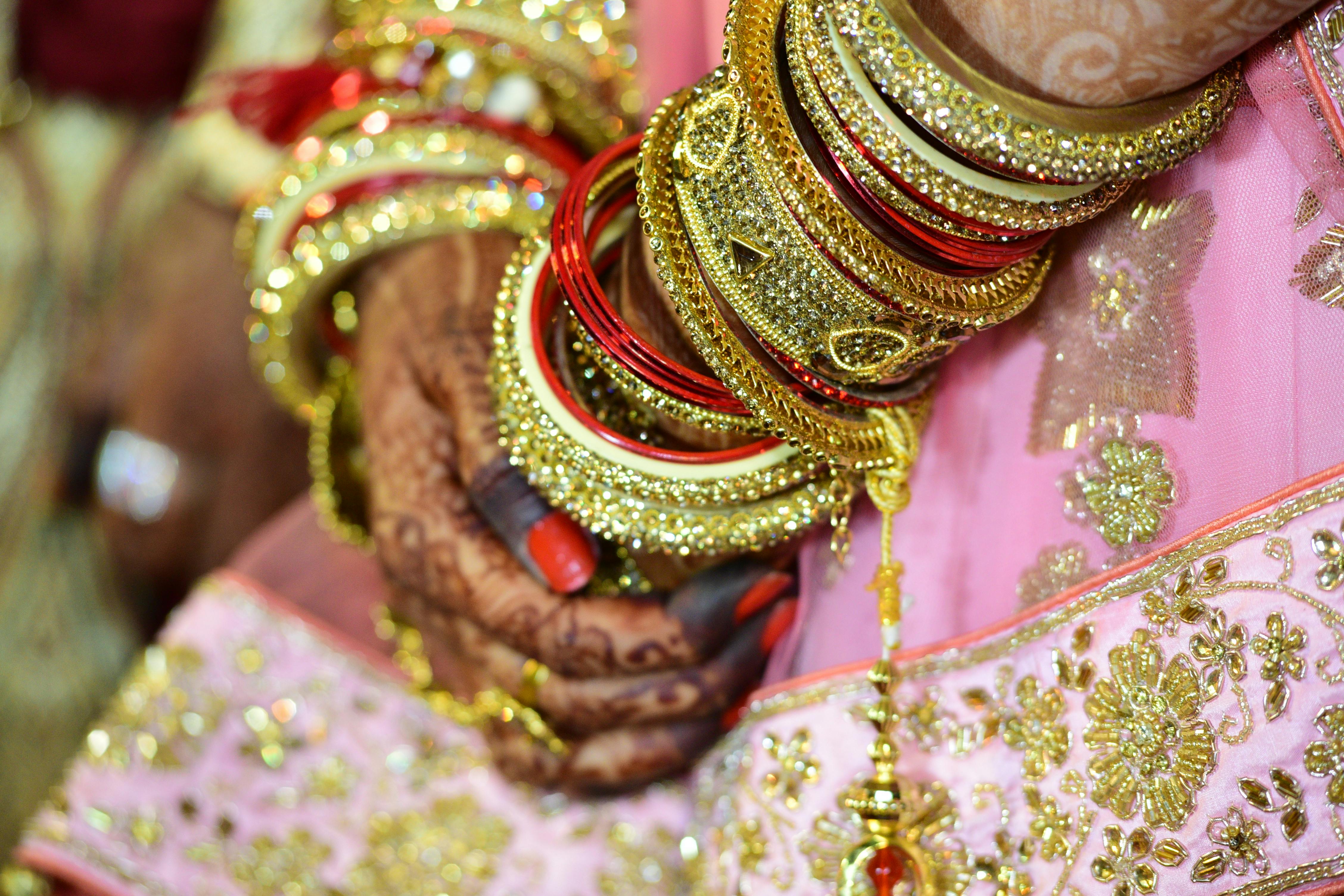
For example, bangles do more than just adorn the wrist. The sound they make is believed to ward off negative energy, and their circular shape represents eternity and completeness. On the other hand, the rhythmic jingling of anklets (payals) is said to attract positive energy and bring happiness to the wearer.
Temple jewelry, which features 22K gold ornaments with deity-inspired motifs, illustrates the connection between adornment and devotion. Classical dancers and devotees wear these well-crafted pieces.
Exploring the History of Traditional Indian Jewelry
The historical significance of Indian jewelry is traced back to the Indus Valley Civilization. During this period, shells, stones, and beads were used to make exquisite jewelry. Valuable metals were also turned into distinctive designs through enameling, filigree work, and other jewelry-making techniques.
As various empires and dynasties ruled over India, traditional Indian jewelry highlighted their influence. The Mughal era, in particular, saw jewelers combine Indian handiwork with Persian designs. Each historical period left its indelible mark on Indian jewelry, making it extremely diverse and stunning.
Sellers of these exquisite pieces will demonstrate their elegance and craftsmanship. You can find these businesses in an online directory, such as United Tribes.
Discover the Charm of Traditional Indian Jewelry
Traditional Indian jewelry showcases centuries of incredible artistry, profound spirituality, and rich cultural heritage. Whether these accessories have been passed down through generations or were bought recently, they tell a story and express a long-standing connection to Indian culture.
Understanding the rich symbolism of Indian jewelry allows us to appreciate its beauty and acknowledge its cultural significance. It’s an art form that evolves yet continues to adorn, convey profound meanings, and connect people to Indian communities.
To learn more about Indian culture, visit our blog or our India community page today.
Make United Tribes Your Preferred Source
Add United Tribes on Google to get the latest stories, cultural updates, and community events directly in your Google Search and Top Stories.