
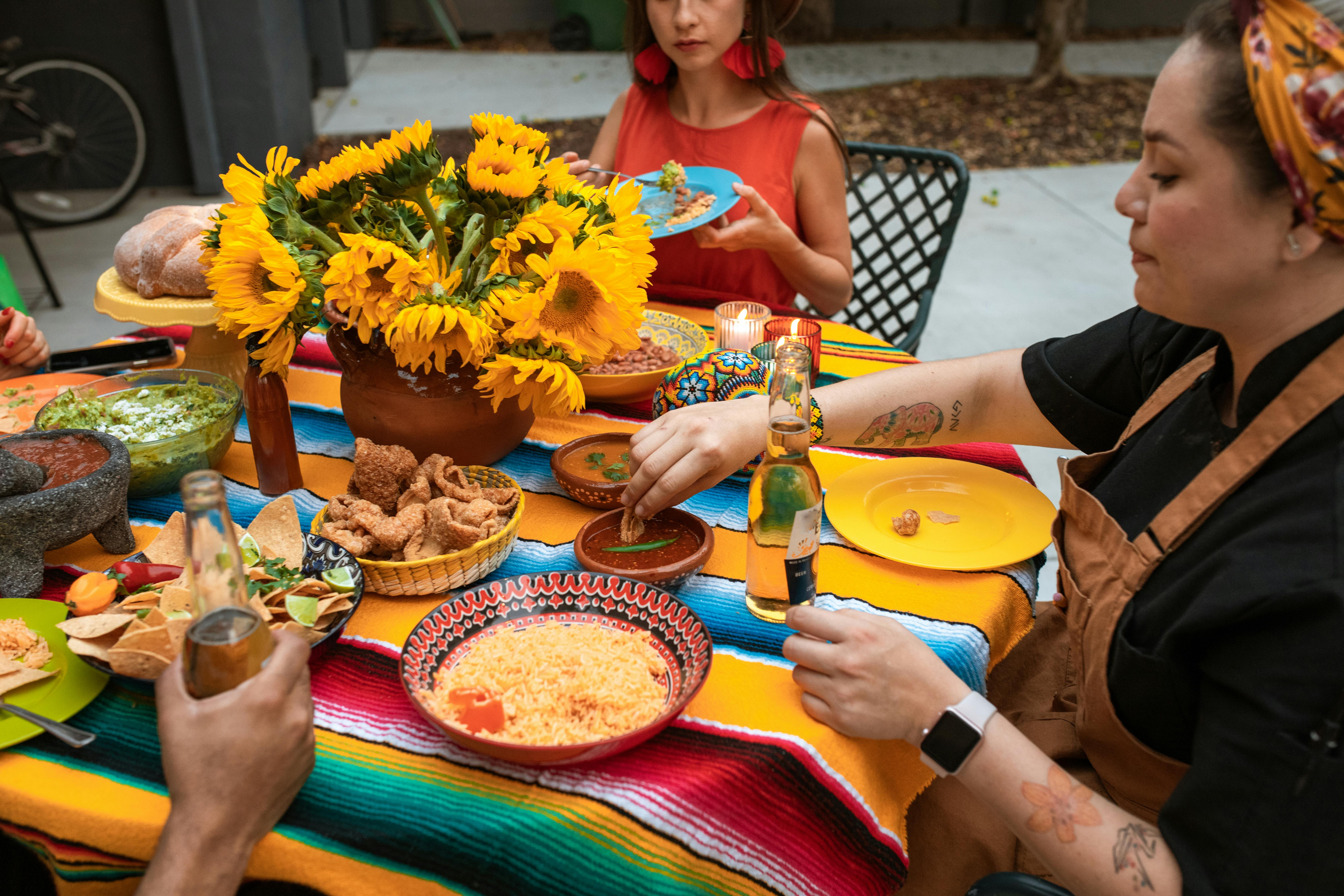


In Latino households, the celebration never truly begins on the day of the event. It begins days—sometimes weeks—earlier, when the first pot hits the stove, and the first family member walks through the door ready to help. Latino gathering culture is deeply rooted in the belief that preparation itself is part of the celebration, and that the act of coming together to cook, decorate, and plan is as meaningful as the event itself.
The Preparation Is Part of the Party
Ask anyone who grew up in a Latino household what they remember most about big celebrations, and they'll rarely describe just the party. They'll describe waking up early to the smell of simmering chile, watching their grandmother's hands move with practiced ease, and hearing cousins argue over who gets to taste first. Hispanic family preparation is communal by nature—tasks are distributed, everyone has a role, and no one is expected to carry the weight alone.
This shared approach reflects a core value found across Latin American cultures: the idea that love is expressed through effort. The hours spent wrapping tamales, arranging flowers, or stringing lights together are hours spent saying *I care about this moment, and I care about you.*
The Kitchen as the Heart of Preparation
In most Latino homes, the kitchen is ground zero for any celebration. It's where preparation begins and where the most important conversations happen. Recipes passed down through generations come to life here, often without written instructions—guided by memory, instinct, and correction from the eldest in the room.
Latino cuisine carries deep cultural meaning, and this is never more visible than during celebration prep. Whether it's slow-cooked carnitas for a quinceañera, arroz con leche for a holiday gathering, or handmade tortillas for a Sunday family meal that's grown into something bigger—the food tells a story. Preparing it together keeps that story alive.
Roles in the kitchen are rarely assigned formally, but they are understood. The abuela oversees seasoning. The tías handle volume production. The younger generation is handed the simpler tasks first, slowly learning by watching and doing.
Decorating as a Collective Act
Decoration in Latino celebrations is rarely minimal. Color, abundance, and visual warmth are expressions of welcome and joy. And like the cooking, decorating is done together. Family members arrive with papel picado, fresh flowers, balloons, and handmade signs. The house transforms gradually, with everyone contributing.
This collective approach to creating the physical space for a celebration reinforces a sense of belonging. When a child helps hang a banner or an uncle rearranges tables to fit more people, they are investing in the shared experience. They are building something together—and that sense of shared ownership carries into the celebration itself.
Hispanic social customs often emphasize group participation over individual effort, and nowhere is this more apparent than in the hours before a big gathering begins.
Why Early Preparation Strengthens Family Bonds
The extended preparation timeline—starting days before the event—creates additional opportunities for connection. Family members who might not otherwise spend unstructured time together find themselves side by side, working toward a common goal. Conversations happen naturally. Stories get told. Younger generations absorb cultural knowledge without it feeling like a lesson.
La familia sits at the center of Latino identity, and the preparation ritual is one of the most direct expressions of that centrality. This logistical approach is about reinforcing the relationships that make the celebration meaningful in the first place, while ensuring everyone has a good time.
This is why children are rarely sent away during prep time. They are brought in, given small jobs, and allowed to witness the full process. The goal isn't efficiency. The goal is participation.
Planning as a Social Ritual
In many Latino families, even the planning phase is communal. Phone calls, group chats, and kitchen-table discussions about menus, guest lists, and timing are all part of the social fabric. Decisions are made collectively, with input from multiple generations. Disagreements are common—and part of the fun.
Latino celebration traditions extend beyond individual families to broader community networks, where neighbors, friends, and extended community members are often involved in both the preparation and the event itself. The circle of care expands outward naturally.
This planning culture also means celebrations are rarely left to chance. The level of care and detail that goes into preparation reflects the importance placed on the gathering itself. A well-prepared celebration is a form of respect—for the guests, for the occasion, and for the traditions being honored.
Passing Traditions to the Next Generation
One of the most powerful functions of collective preparation is cultural transmission. When young people participate in getting ready for a celebration, they absorb values, techniques, and stories that can't be taught in a classroom. They learn what certain dishes mean, why certain decorations appear, and how hospitality is expressed in their family's particular cultural tradition.
The values embedded in Latino holiday traditions are often most powerfully transmitted during these preparatory moments, from the quiet instruction on how to fold a napkin correctly to the reminder to always make enough food for people who show up unannounced.
Preparation Is Where Culture Lives
Latino celebration traditions remind us that the destination isn't the only thing worth savoring. The journey to it, shared with family and community, holds equal weight. From the first pot on the stove to the final decoration hung on the wall, every step of preparation is an act of cultural expression, love, and continuity. These rituals bind generations together and give celebrations their depth and meaning.
For Latino families across the United States, this culture of preparing together is both a practical approach to hospitality and a profound statement of identity. It says: this moment matters, and so do the people we share it with. Supporting and celebrating these traditions keeps them alive for the generations that follow.
Visit United Tribes today to learn more about Latino culture and community, from local Latin businesses to upcoming cultural events near you.


