

Key Takeaways
- San Basilio de Palenque is the only surviving palenque from colonial Latin America. Founded by freedom-seeking Africans in the early 17th century, it gained official recognition as a free community through a royal decree in 1691.
- Benkos Biohó led the founding escape from Spanish enslavement. His 1599 flight from captivity and years of resistance established the foundation of what became San Basilio de Palenque.

Welcome to United Tribes
Where Colombian Culture Comes Alive
Join Your Tribe
Connect with your people
Discover Events
Watch parties & festivals
Find Colombian Businesses
Restaurants, markets & more
Earn Crown Credits
Get rewarded for engaging
- Palenquero is the only Spanish-based creole language in Latin America. Its grammar draws from Bantu roots, particularly Kikongo, making it a linguistic bridge between African heritage and the Spanish colonial world.
- UNESCO inscribed San Basilio's cultural space as Intangible Heritage of Humanity in 2008. Colombia also declared it national cultural heritage in 2004, recognizing its irreplaceable oral traditions, music, and social structures.
- The community faces ongoing threats to cultural continuity. Economic pressure, armed conflict, and ethnic discrimination challenge San Basilio de Palenque's ability to sustain its distinctive way of life across generations.
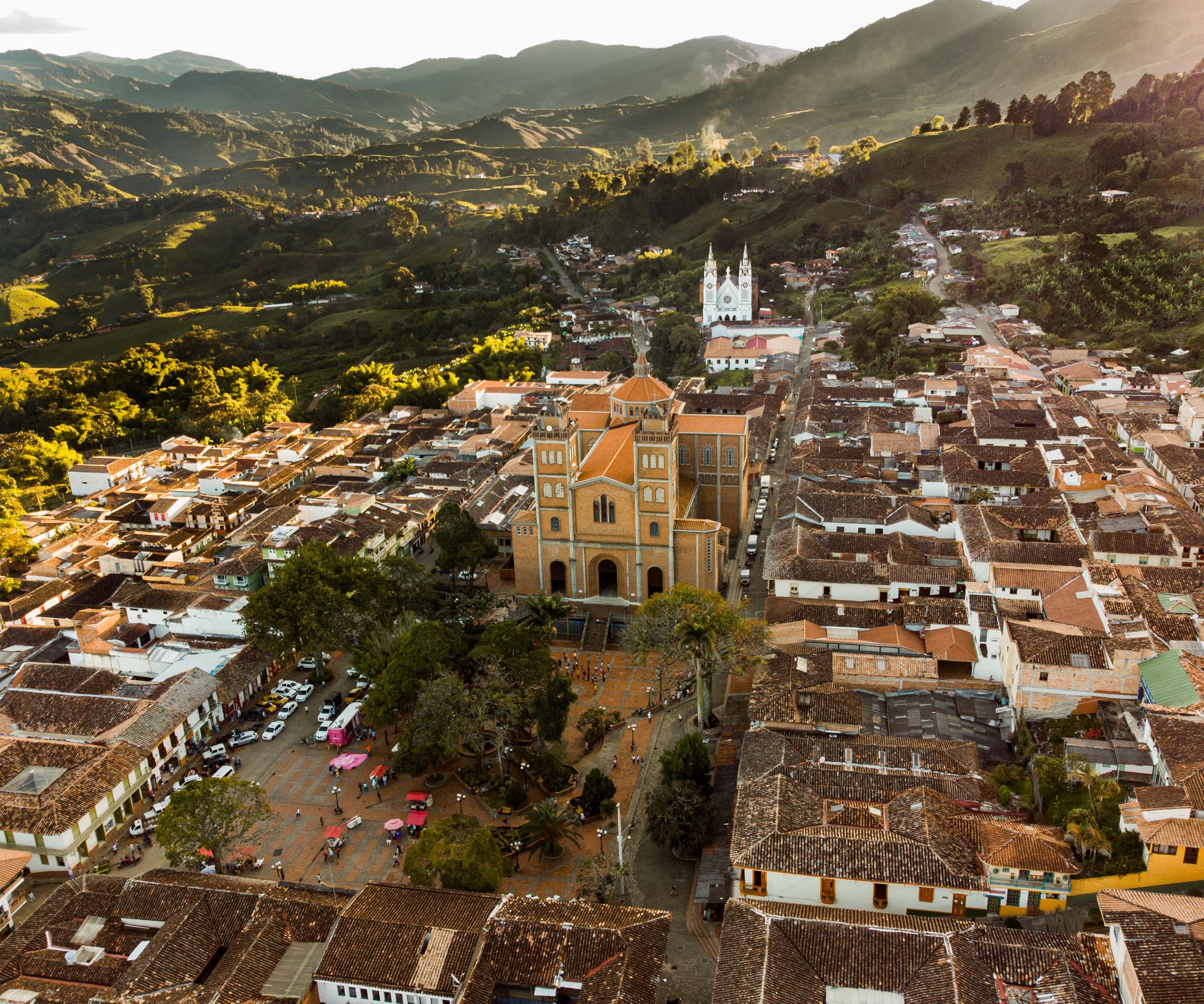
Tucked into the foothills of the Montes de María, southeast of Cartagena, a small community of roughly 3,500 people tells a story that stretches back more than four centuries. San Basilio de Palenque is not simply a village — it is a living monument to resistance, survival, and cultural ingenuity that has shaped what it means to be Afro-Colombian in ways that resonate far beyond Colombia's borders.
Why does Palenque de San Basilio hold such a special place in Afro-Colombian history?
San Basilio de Palenque holds a singular place in Afro-Colombian history because it is the only palenque — a fortified settlement founded by Africans who escaped enslavement — to have survived from the colonial era to the present day. Born from an act of radical self-liberation, it became the first legally recognized free Black community in the Americas, preserving a distinct language, social structure, and cultural worldview that no other community in Latin America has replicated.
The word *palenque* referred to the fortified, often remote settlements that freedom-seeking Africans built throughout the Spanish colonial world. Many were eventually destroyed by Spanish forces. San Basilio endured. Its survival is inseparable from Benkos Biohó, an enslaved man of African origin who escaped captivity in 1599, established a settlement called La Matuna, and waged a prolonged guerrilla resistance against Spanish colonial forces. After decades of conflict and negotiation, the Spanish Crown issued a royal decree in 1691 granting the community its freedom — a recognition formally consolidated in 1714 as San Basilio de Palenque.
That decree was more than a document. It set a precedent—proof that African resistance in the Americas could carve out a legally protected space for freedom.
The Palenquero Language Bridges Africa and the Americas
Palenquero is the only creole language in Latin America built on a Spanish-based lexicon with grammar rooted in Bantu linguistic traditions, particularly Kikongo. This makes it one of the most remarkable linguistic artifacts in the Western Hemisphere — a living record of African cultural survival embedded in daily conversation.
Unlike languages that faded when colonial pressures mounted, Palenquero persisted because the community's geographic and social isolation helped shield it. Elders pass it down orally through stories, rituals, and everyday interaction. Children grow up hearing it alongside Spanish, and in many households the two languages weave together naturally.
The language is not merely a communication tool. It is an act of cultural memory. Every sentence spoken in Palenquero carries forward the grammatical logic and expressive patterns of ancestors who refused to let their identity be erased. Linguists regard it as irreplaceable evidence of how Africans in the Americas adapted and transformed their linguistic heritage under conditions of extreme duress.
Ma-Kuagro Social Structure and Community Solidarity
San Basilio de Palenque organizes its social life through extended family networks and age-based groups called ma-kuagro. Membership in a ma-kuagro is not optional — it is assigned at birth and carries defined rights, duties, and mutual obligations that last a lifetime.
Within these groups, community members cooperate on agricultural work, share resources during hardship, and coordinate participation in ceremonies and celebrations. The system creates a dense web of solidarity that reinforces collective identity and ensures no individual faces life's major events—birth, illness, death, celebration—without communal support.
This structure has proven to be one of the community's most durable cultural assets. Where formal institutions have been absent or hostile, the ma-kuagro system has sustained cohesion across generations.
Music, Ritual, and the Rhythms of Palenque Life
The musical and oral traditions of San Basilio de Palenque are not entertainment — they are the connective tissue of community life. Genres including bullerengue sentado, son palenquero (also called son de negro), sexteto music, chalusonga, and champeta criolla accompany births, baptisms, weddings, religious festivals, and funerals. Instruments such as the marímbula, timba, pechiche, and guaracha give each occasion its sonic identity.
Among these traditions, the lumbalú stands apart. This nine-day, nine-night funeral ceremony of music, dance, and communal lamentation is believed to guide the deceased's soul on its return journey. The lumbalú transforms grief into collective action, pulling the entire community into shared mourning and spiritual intention. It is one of the most striking examples anywhere in Latin America of African-rooted ceremonial practice surviving in near-complete form.
Alongside music, the community maintains traditional healing practices grounded in ancestral knowledge of medicinal plants and spiritual systems. These practices address both physical illness and spiritual imbalance, reflecting a worldview in which health is inseparable from community and cosmology.
Colombia's rich arepa culture offers one example of how food also anchors cultural identity across the country — just as music and ritual do in Palenque. The connection between food, language, and cultural pride runs deep in Colombian life, whether in a coastal village or a diaspora kitchen in the United States.
UNESCO Recognition and National Heritage Status
San Basilio de Palenque received formal international recognition when UNESCO declared its cultural space a Masterpiece of the Oral and Intangible Heritage of Humanity in 2005, followed by inscription on the Representative List of the Intangible Cultural Heritage of Humanity in 2008. Colombia had already moved ahead of that recognition by declaring the community national cultural heritage in 2004 under Resolution 1472.
These designations matter because they bring visibility, resources, and an institutional framework for preservation. But they also carry risk: tourism and external attention can commodify what they intend to protect, drawing outsiders to consume a culture without engaging its depths or materially supporting its people.
|
Cultural Element |
Description |
Significance |
|
Palenquero language |
Spanish-lexicon, Bantu-grammar creole |
Only Spanish-based creole in Latin America |
|
Lumbalú ceremony |
Nine-day funeral ritual of music and lamentation |
Preserves African spiritual practice in near-complete form |
|
Ma-kuagro system |
Age-based social groups with shared duties |
Sustains community solidarity across generations |
|
Son palenquero |
Distinct musical genre for communal celebrations |
Documents African musical heritage in Colombia |
|
Medicinal plant knowledge |
Ancestral healing system for body and soul |
Integrates spiritual and physical wellbeing |
The Ongoing Struggle for Cultural Continuity
San Basilio de Palenque faces serious threats that no UNESCO designation can fully resolve. Economic pressures push younger residents toward urban centers, where employment opportunities are greater but ties to Palenquero language and tradition tend to weaken. Armed conflict — involving both paramilitary groups and guerrilla forces — has disrupted community life in the surrounding Montes de María region, forcing displacement and eroding the social stability that cultural transmission depends on.
External discrimination and ethnic stereotyping add another layer of challenge. When Palenque's cultural values are reduced to exotic novelty rather than respected as a sophisticated knowledge system, the community's ability to claim its full place in Colombian national life is undermined.
These challenges are not abstract. Residents live them daily as they balance preserving an irreplaceable heritage with the practical demands of contemporary life. The Colombian-American diaspora has also shown sustained interest in elevating these stories — much as the broader community has rallied around Colombian identity in public spaces, from cultural celebrations to international sporting events that unite Colombians across the United States.
The work of cultural continuity in Palenque is not the community's responsibility alone. It requires engagement from institutions, policymakers, diaspora networks, and anyone who believes linguistic and cultural diversity is worth protecting.
A Legacy That Demands to Be Heard
San Basilio de Palenque endures as a testament to what people can achieve when survival and self-determination become inseparable from identity. From Benkos Biohó's escape in 1599 to the living pulse of the Palenquero language today, this community has built something that colonial violence tried to erase and that time has not managed to diminish. Its social structures, musical ceremonies, healing traditions, and linguistic heritage together form one of the most complete examples of African cultural survival anywhere in the Western Hemisphere.
For Colombian-Americans and members of the broader Afro-Colombian diaspora, Palenque's story is also their story — a reminder that the foundations of Colombian identity run deeper and wider than mainstream narratives often acknowledge. Honoring that heritage means more than appreciation; it means active engagement with the communities, artists, educators, and traditions that keep it alive.
Curious about where to connect with Colombian cultural life, businesses, and community in the United States? Explore the Colombian tribe on United Tribes and discover the people and places carrying this heritage forward today.
Frequently Asked Questions
Where exactly is San Basilio de Palenque located in Colombia?
San Basilio de Palenque is a corregimiento within the municipality of Mahates, in the department of Bolívar. It sits in the foothills of the Montes de María, roughly southeast of Cartagena, and has a population of about 3,500 people.
Who was Benkos Biohó and why is he important to Palenque's history?
Benkos Biohó was an enslaved African man who escaped Spanish captivity in 1599 and founded a fortified settlement of freedom in the region. His prolonged resistance against colonial forces ultimately led the Spanish Crown to recognize the community's freedom, making him a foundational figure in San Basilio de Palenque's identity.
Is Palenquero language still spoken today, and can outsiders learn it?
Palenquero remains in active everyday use within San Basilio de Palenque, passed down orally through families and community rituals. It is not widely taught in formal educational settings outside the community. Still, linguists and cultural organizations have documented it extensively, and some learning materials exist for those with serious scholarly interest.
What is the lumbalú ceremony and how long does it last?
The lumbalú is a traditional nine-day, nine-night funeral ceremony combining music, dance, and communal lamentation. It is believed to help guide the deceased's soul on its return journey. It represents one of the most intact African-derived ceremonial practices surviving anywhere in Latin America.
How has armed conflict affected life in San Basilio de Palenque?
The broader Montes de María region, where Palenque is located, experienced significant paramilitary and guerrilla violence during Colombia's internal armed conflict. This disrupted community life, caused displacement, and threatened the social stability that intergenerational cultural transmission depends on, compounding the economic pressures residents already face.
What does UNESCO's recognition actually mean for the community's preservation efforts?
UNESCO's 2008 inscription on the Representative List of the Intangible Cultural Heritage of Humanity brings international visibility and can attract funding and policy support for preservation programs. However, recognition alone does not resolve economic hardship or discrimination, and communities like San Basilio must balance the benefits of global attention against the risk of cultural commodification.
Find your community: Colombian businesses near you on United Tribes.
Make United Tribes Your Preferred Source
Add United Tribes on Google to get the latest stories, cultural updates, and community events directly in your Google Search and Top Stories.