
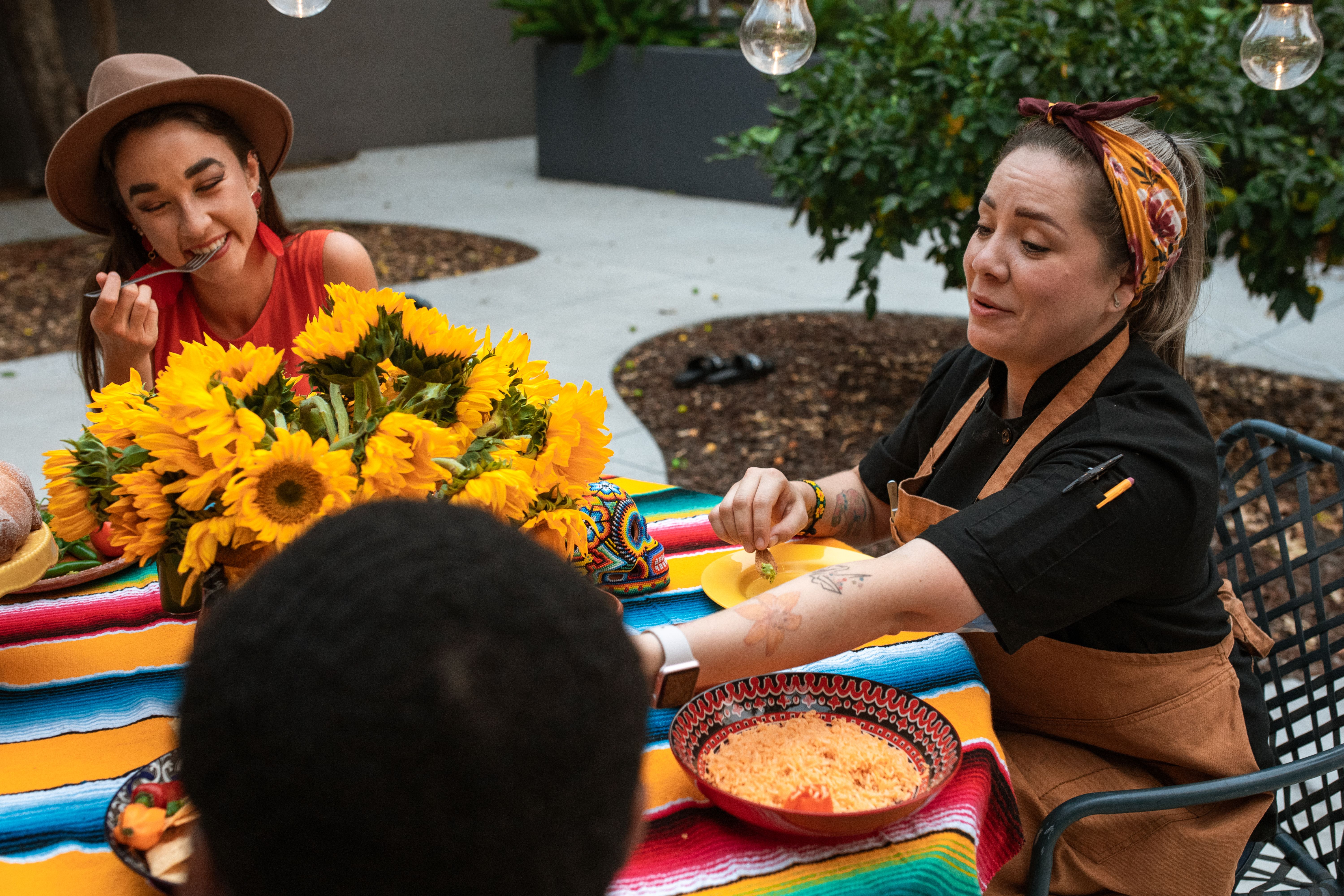

There is something almost ritualistic about a Latino Sunday. The alarm may not ring, but the kitchen does, with the smell of sofrito, slow-braised meats, or a pot of beans simmering since early morning. Long before anyone else is awake, an abuela or tía has already begun her work. This is Latino family tradition in its most honest form, and it has been happening every Sunday for generations.
More Than Just a Meal
In many Hispanic families, Sunday lunch is the week's emotional anchor. It is the one guaranteed moment when cousins, grandparents, parents, and children all end up in the same place. No invitation needed. Everyone simply knows to come.

Welcome to United Tribes
Where Mexican Culture Comes Alive
Join Your Tribe
Connect with your people
Discover Events
Watch parties & festivals
Find Mexican Businesses
Restaurants, markets & more
Earn Crown Credits
Get rewarded for engaging
This gathering is deeply tied to how Latino culture understands family as an extended, interdependent web of people who show up for each other. Sunday lunch is where that showing up becomes tangible. It is presence made into practice.
The Foods That Hold the Table Together
Food is never incidental to a Sunday lunch in a Latino household. It is the language the meal speaks. Depending on the country of origin, the spread can vary widely, but the intention is always the same: abundance, effort, and love made visible.
Some of the most iconic dishes that anchor these Sunday tables include:
- Pernil or lechón — slow-roasted pork that requires hours of marinating and cooking, often started the night before
- Arroz con pollo — a one-pot rice and chicken dish layered with saffron, peppers, and olives
- Sancocho — a hearty stew of root vegetables and meats, found across Colombian, Dominican, Puerto Rican, and Venezuelan households
- Tamales — labor-intensive corn dough bundles that entire families sometimes gather to prepare together
- Pozole or caldo de res — deeply spiced soups that warm both the body and the spirit
The influence of Latin cuisine in the U.S. has grown enormously, but the soul of these dishes is best understood at a family table on a Sunday afternoon, not in a restaurant.
Why Sunday and Not Another Day
Sunday holds a particular cultural weight in Latino culture. For many families, especially those with roots in predominantly Catholic countries, Sunday was always structured around Mass followed by a shared meal. Even as religious attendance has shifted across generations, the rhythm stuck. The day became synonymous with rest, togetherness, and the kind of slow time that weekdays never allow.
There is also something deliberate about it. A Tuesday dinner is convenience. A Sunday lunch is intention. It signals to every person at the table that they were worth the effort, the marinated meat, the hand-pressed tortillas, the three-hour drive a cousin made to get there.
The Unspoken Rules of the Sunday Table
Every Hispanic family has its own version of Sunday lunch, but certain unwritten rules tend to hold across cultures:
1. The table is always set for more than expected — extra chairs appear from nowhere
2. No one eats until the elders are seated
3. Seconds are encouraged — refusing food can genuinely cause offense
4. Conversation overlaps, interruptions are affectionate, and laughter is constant
5. Children eat with the adults, absorbing everything
6. The meal ends when it ends — not according to a clock
These customs are the operating system of the family, quietly installing values like hospitality, respect, and generosity into the youngest members at the table.
How Sunday Lunch Travels With the Diaspora
For Latino families living in the United States, the Sunday meal takes on added meaning. Distance from home country, language barriers, and the pressures of immigrant life can all create fractures in cultural identity. The Sunday lunch becomes an act of preservation.
A mother serving her daughter the same recipe her own mother made in Oaxaca or Medellín or San Juan is doing something profound. She is saying: *this is who we are, and this is where you come from.* The dish carries memory across borders.
Supporting local Latin businesses- the carnicerias, panaderías, and Latin grocery stores- often plays a quiet but essential role here. These are the places where families find the right cut of pork, the correct dried chile, the masa that tastes like home.
Passing the Tradition to the Next Generation
One of the most meaningful aspects of Latino family traditions is how they self-perpetuate through participation. Children are also put to work during Sunday lunch prep. They stir, they taste, they carry dishes, they watch. By the time they have their own homes, they already know the recipe by muscle memory.
Even families who have been in the U.S. for three generations often still gather on Sundays; the language may have shifted to English, the playlist may have changed, but the table remains.
The Table That Never Empties
The Sunday lunch tradition in Latino families is a living, breathing institution that adapts without losing its core. Whether it is a backyard in Texas filled with cumbia and pernil smoke, or an apartment kitchen in Chicago where a grandmother is teaching her granddaughter how to season sancocho, the ritual endures because it works. It binds people to each other and to their roots in ways that calendars and obligations rarely can.
For the Hispanic family navigating life in the United States, the Sunday table is both comfort and compass. It reminds everyone present that identity is the smell of sofrito, the sound of overlapping voices, and the feeling of being expected somewhere every single week.
Curious about the sancocho or the slow-roasted pernil described here, and where to find the ingredients or restaurants that do them justice? Explore the Latino community on United Tribes and discover the businesses, stories, and traditions keeping these Sunday tables alive.


