
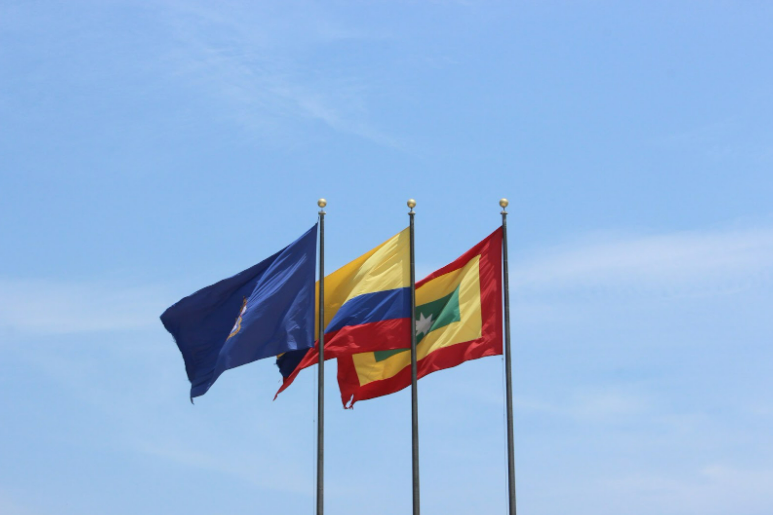

Latin American Independence Days: A Celebration of Freedom
Like the United States and many other nations, Latin American countries commemorate their independence from colonial rule every year. Their fight for independence defined the Age of Revolutions that occurred from the late 1700s to the mid-1800s.
During this period, several countries revolted against colonizing nations. They included most of Latin America, which gained independence by 1836. Today, these countries honor their struggle for independence, national pride, and revolutionary spirit through distinctive traditions. Read on for a closer look at Latin American independence days and how they’re celebrated every year.

Welcome to United Tribes
Where Mexican Culture Comes Alive
Join Your Tribe
Connect with your people
Discover Events
Watch parties & festivals
Find Mexican Businesses
Restaurants, markets & more
Earn Crown Credits
Get rewarded for engaging
Latin American Nations & Their Fight for Independence
A relatively swift wave of independence followed three centuries of colonization in most Latin American countries. These nations broke free from their Iberian rulers between 1808 and 1826, driven by great friction within the latter and a series of external events.
The Root of the Latin American Revolutions
Before the revolutions occurred, the Spanish Bourbons altered the governance of Latin American countries. This caused rifts between the rulers and their colonial subjects.
For many Creoles (Hispanic people born in the Americas), the Bourbon policy would impact their wealth, political power, and social status. Other Creoles also benefited from this policy, particularly when it was gradually enforced through free trade. Nevertheless, the profits these individuals earned led to a push for greater free trade.
Creoles were also angered by the Bourbons assigning peninsulars to administrative positions and neglecting the caste system, including their privilege. They felt that they were a recently conquered nation.
Uncovering Latin America’s Path to Freedom
Over time, the Creoles expressed their frustrations through ideas based on the Enlightenment. Writings centered on these beliefs infiltrated the colonized Latin American nations despite the Bourbons' ban. However, these actions weren’t enough to overthrow colonial rule.
A series of European diplomatic and military events pushed the Creoles to fight for their independence. They included:
- The Spanish crown enforcing free trade after losing communication with the Americas
- Napoleon I imprisoning King Charles IV and his son Ferdinand
- A new colonial Cortes (parliament) that denied Creole participants equal rights
- Ferdinand’s attempt to take full control of Spanish colonies in the Americas
The Independence Days of Latin American Countries
If you’d like to know when Latin American countries celebrate their independence, we’ve listed the important dates for several nations below.
Brazil: September 7, 1822
Brazil made significant progress during the Portuguese royal family’s stay, particularly during the Napoleonic Wars. In 1821, King João VI’s son, Dom Pedro I, governed the country. He responded to citizen discontent and demands by declaring Brazil’s independence, thereby establishing it as a sovereign state.
São Paulo saw Dom Pedro I yelling “Independência ou Morte!” (“Independence or Death!”) to declare Brazil free from Portuguese rule.
Mexico: September 16, 1810
Social and land reforms fueled Mexico’s independence movement during the Age of Revolutions. It emerged as natives and mestizos got tired of the Spanish rule and the privileged Creoles.
In the early hours of September 16, 1810, Fr. Miguel Hidalgo y Costilla rang the bell of his church in Dolores to declare an uprising. Mexico then embarked on a turbulent, decade-long fight for its independence.
Chile: September 18, 1810
Chile sought independence from Spain for several reasons. However, Napoleon I's invasion of Spain not only justified but also strengthened these motives. It allowed the Creole leaders of the Chilean revolution to form a national regime in Ferdinand’s name. From there, Chile fought for and gained full independence from Spanish rule.
Other Latin American Countries
In five Latin American countries, Independence Day falls on the same date. Costa Rica, El Salvador, Guatemala, Honduras, and Nicaragua proclaimed themselves free from Spanish rule on September 15, 1821.
With Napoleon disrupting Spain’s empire, Central America cried for freedom. The leaders of Guatemala’s independence movement heard this call and declared the country’s independence. Soon after, Guatemala’s neighboring provinces would back the proclamation. It’s why the aforementioned nations commemorate their freedom on the same day.
Additionally, Belize’s Independence Day is celebrated on September 21st, and Panama celebrates its independence from November 3 to 10.
How Do Latin American Countries Celebrate Independence Day?
Latin American Independence Day celebrations vary from nation to nation. Let’s look at how some countries commemorate their struggle for independence.
Mexico
Mexico celebrates its freedom every September through a wide range of traditions, from grand street parties to folk dancing performances on the streets. If you’re visiting Mexico City during the country’s independence day, keep your eyes peeled for a military march toward Hidalgo’s memorial.
The celebration also includes a re-enactment of Hidalgo’s call for a revolution, known as “El Grito,” from the National Palace’s balcony. Once night falls on September 15, the Mexican president recites the full battle cry, with the audience shouting a vigorous “Viva!” after every line. To cap off the event, the president rings a bell, just like what Hidalgo did before.
Colombia
In Colombia, Independence Day (held every July 20th) means listening to the president’s official message, watching public concerts or beauty pageants, seeing parades with floats, military displays, and dancers in traditional costumes, and more. These popular customs reflect the country's struggle for independence.
Colombian communities also feast on delicious traditional food during their Independence Day celebrations, including arepas with fillings or toppings ranging from meat to fruit.
El Salvador
Next, we head to El Salvador, where posters, billboards, and Independence Day decorations are often seen around town. The country’s schools and families also join the festivities. Schoolchildren get history lessons, while parents recount their memories of El Salvador’s fight for freedom as they help their children make scrapbooks, essays, and plays about it.
Moreover, schools across the country hold simple or large-scale Independence Day events. You may even hear kids practice singing the national anthem and reciting a piece called “Oración a la Bandera” (“Prayer to the Salvadoran Flag”).
Costa Rica
Costa Rica’s Independence Day celebrations start on September 14. On this day, Costa Ricans join the annual Antorcha de la Independencia (“running of the torch”) relay. A symbolic torch is lit in Cartago, the country’s capital under Spanish rule, in the evening to honor Costa Rica's receipt of news of independence from Guatemala’s messenger in 1821.
Similarly, schoolchildren hold paper lanterns shaped like houses and other objects to commemorate this torch. It’s the highlight of Desfile de Faroles, which translates to “lantern parade.”
Following the relay, Costa Rica holds a parade featuring school marching bands and children wearing vibrant traditional dresses. The country’s national anthem is played nationwide at 6 o’clock, encouraging people to sing along. Also, there are other parades where participants hold homemade torches. Kids and adults join these walks, accompanied by background music played on traditional Costa Rican instruments, and large crowds gather on the sides.
Join Latin American Independence Day Celebrations Near You
Latin American independence days are celebrated with meaningful traditions and lively festivities. They make Latinos and Latinas proud of their countries and cultural heritage while teaching younger generations about the sacrifices their ancestors made in the fight for freedom. More importantly, it strengthens ties among Hispanic communities and encourages the rest of us to understand and appreciate their culture.
Want to join Latin American Independence Day celebrations in your city? Check out upcoming festivities on the United Tribes event directory. And, for more informative guides to Hispanic culture, please visit our blog.
Make United Tribes Your Preferred Source
Add United Tribes on Google to get the latest stories, cultural updates, and community events directly in your Google Search and Top Stories.


