
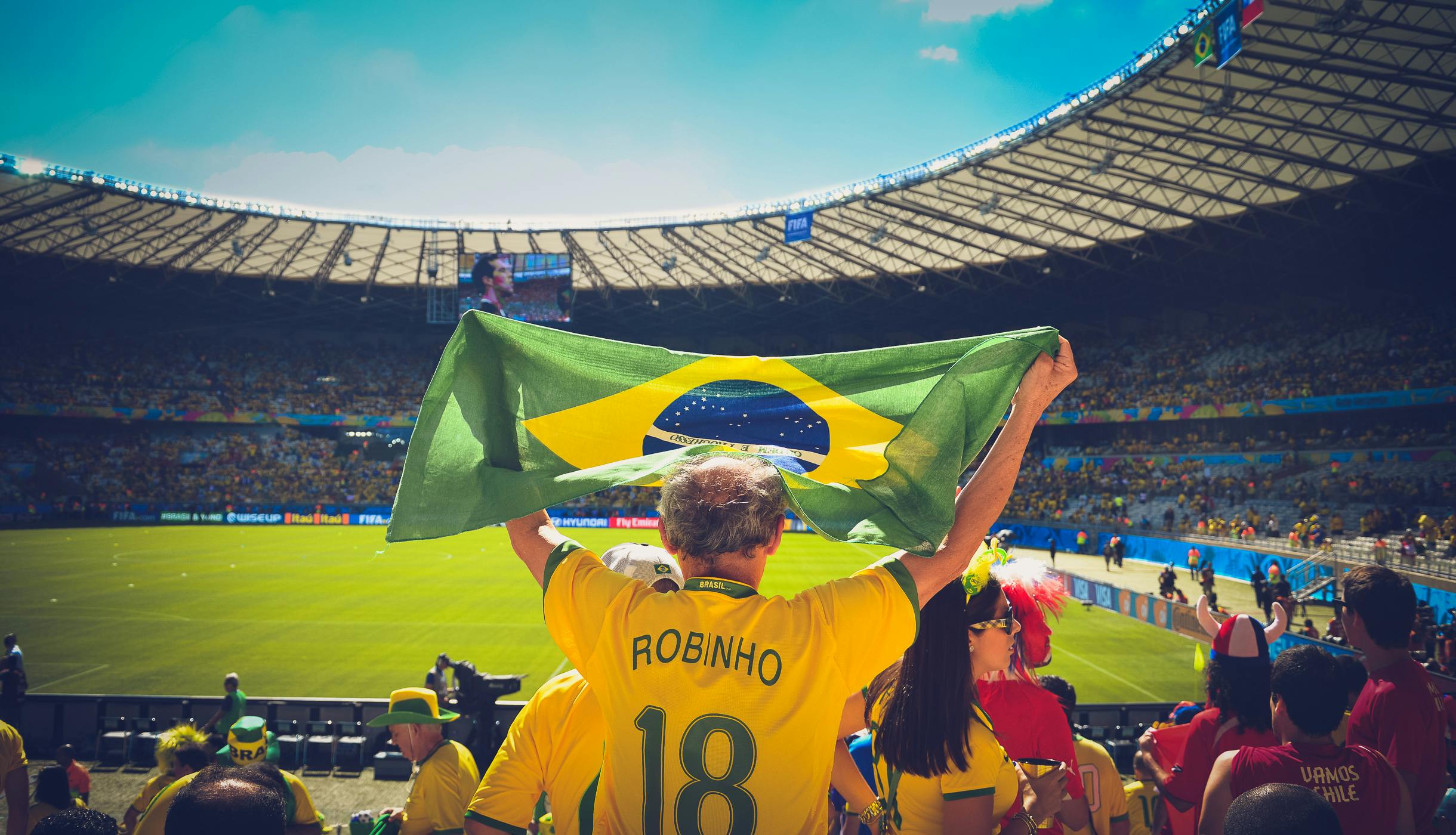


In Brazil, football is a language spoken across favelas and city centers, a thread woven into the national identity, and an emotion shared by over 200 million people. To understand Brazil's football culture is to understand Brazil itself: its joy, its pain, its resilience, and its extraordinary creativity. No other nation has shaped the sport as profoundly, and no other sport has shaped a nation as completely.
The Origins of a National Obsession
Football arrived in Brazil in the late 1800s, brought by Charles Miller, a Brazilian-born son of a British engineer who returned from studies in England carrying two footballs and a rulebook. What began as an elite, European pastime quickly transformed into something entirely Brazilian. The sport spread rapidly through working-class neighborhoods and mixed-race communities, shedding its colonial trappings and absorbing the rhythms and spirit of the Brazilian people.
By the early 20th century, football was no longer foreign. It had become jogo bonito, “beautiful game,” a phrase that would later be popularized globally but was always rooted in the Brazilian soul. The style of play that emerged was fluid, improvisational, and expressive, mirroring the samba culture developing simultaneously in the country's musical underground.
Football as Cultural Identity
Brazil's football culture cannot be separated from the country's complex social and racial history. Football became one of the few spaces where Black Brazilians, mixed-race individuals, and people experiencing poverty could achieve recognition, visibility, and national pride during decades when systemic inequality limited their opportunities elsewhere.
Legends like Pelé, Garrincha, and Ronaldo won and represented entire communities. Pelé, born in poverty in Três Corações, became a symbol of possibility. Garrincha, with his unorthodox playing style born from a childhood disability, embodied the triumph of creativity over limitation. These athletes were and continue to be cultural icons who gave millions of Brazilians a sense of identity and belonging.
The World Cup and National Emotion
Brazil's relationship with the World Cup is unlike that of any other nation. With five titles, namely the 1958, 1962, 1970, 1994, and 2002 world cup, Brazil holds the record for the most World Cup victories. Each tournament carries enormous emotional weight. Streets empty during matches. Businesses close. Families gather around televisions in rituals passed down through generations.
World Cup traditions in Brazil are vivid and deeply felt. Homes are draped in green and yellow. The smell of churrasco fills neighborhoods. Samba rhythms pulse from speakers. Children paint their faces. The collective experience of watching together, regardless of region, class, or background, creates a rare moment of national unity that few other events can replicate.
The 2014 World Cup, hosted in Brazil, added a layer of complicated emotion. The devastating 7-1 semifinal loss to Germany became known as the Mineirazo, a national wound that revealed just how deeply football is tied to Brazilian identity. The grief felt like a statement about national pride, expectation, and vulnerability.
Soccer Brazil Fans: A Culture of Passion
Soccer Brazil fans are among the most passionate and theatrical in the world. The torcida, the Brazilian fan culture, is an art form in itself. Organized fan groups called torcidas organizadas create elaborate choreographies, percussion ensembles, and massive flag displays that transform stadiums into living cultural celebrations.
The famous Maracanã stadium in Rio de Janeiro is a cathedral on match days, with the energy inside feeling electric and almost spiritual. Fans watch, perform, sing, and become part of the spectacle. This participatory culture reflects a broader Brazilian value: that celebration is communal, expressive, and unapologetically loud.
Football, Favelas, and Social Reality
Football has always existed in a complicated relationship with Brazil's social inequalities. The favelas, Brazil's informal urban communities, have historically produced some of the country's greatest players. The sport offers a visible, if narrow, path out of poverty for gifted young players, and this dynamic has both inspired and burdened generations of Brazilian youth.
Community football pitches, known as campos de várzea, remain vital social spaces in lower-income neighborhoods. They are places where identity is formed, friendships are built, and culture is transmitted. For many Brazilians, these informal fields are where the love of the game is first discovered and where jogo bonito is genuinely practiced for the pure joy of the sport.
Football and Brazilian Festivity Culture
Football in Brazil shares cultural DNA with the country's larger festive traditions. Just as Brazilian Carnival transforms cities into stages of collective expression, so too does a major football match. Both events dissolve social barriers, amplify national pride, and create communal spaces where Brazilian creativity and emotion flow freely.
The overlap is not coincidental. Both football and Carnival emerged as forms of expression for communities that were marginalized in formal cultural spaces. Both became globally recognized symbols of Brazilian identity. And both continue to serve as moments when Brazilians collectively affirm who they are.
Brazil's Beautiful Game Lives On
Football is Brazil's most universal story, a narrative of beauty, struggle, triumph, and identity told through every match, every chant, and every child kicking a ball in a dusty neighborhood field.
Understanding this connection means understanding Brazil beyond its stereotypes. The World Cup, Brazil's traditions, the passion of soccer fans, the social complexity embedded in every match, and other culturally relevant events and norms are windows into a culture that is rich, layered, and endlessly expressive. Football here is both a mirror and an anthem.
Visit United Tribes today to learn more about Brazilian culture and community, from the stories behind the beautiful game to the traditions, businesses, and celebrations that define one of the world's most vibrant cultural identities.


