


When the Whistle Blows, Brazil Comes Alive
There is no country on earth where football means more than it does in Brazil. The moment a match kicks off, an entire nation collectively holds its breath, erupts in cheers, and pulls out the snacks. Brazilian soccer traditions are about community, identity, and a shared heartbeat that pulses through every city, favela, and family home. Game night in Brazil is a full sensory experience: the smell of grilled meat, the sound of drumbeats bleeding through apartment walls, and the unmistakable energy of millions watching together.
The Gathering: Where People Watch and Why It Matters
In Brazil, watching football is rarely a solo activity. Whether it's a boteco (a casual neighborhood bar), a friend's living room, or an outdoor plaza with a giant screen, football gatherings in Brazil are deeply communal events. The boteco is arguably the most iconic venue: cheap beer, plastic stools, and a television mounted high on the wall draw in locals from all backgrounds.
These small bars function as social glue. Strangers become a temporary family during a tense penalty shootout. Arguments erupt and dissolve within seconds. There is laughter, anguish, and an infectious collective passion that is hard to replicate anywhere else in the world. Public squares in cities like São Paulo, Rio de Janeiro, and Salvador often host large screen setups during major tournaments, turning streets into open-air stadiums.
For families, the living room becomes sacred. Grandparents, children, aunts, and neighbors pile onto couches and plastic chairs. The television volume competes with the noise of celebration coming from the surrounding apartments. It is messy, loud, and absolutely electric.
Food and Drink: The Unofficial Lineup
No match day Brazil culture experience is complete without the right spread. Brazilian game night food is hearty, flavorful, and built for sharing. Some staples you'll almost always find include:
- Coxinha — deep-fried chicken croquettes shaped like teardrops, a beloved snack eaten in hand
- Pão de queijo — soft, chewy cheese bread that disappears within minutes of hitting the table
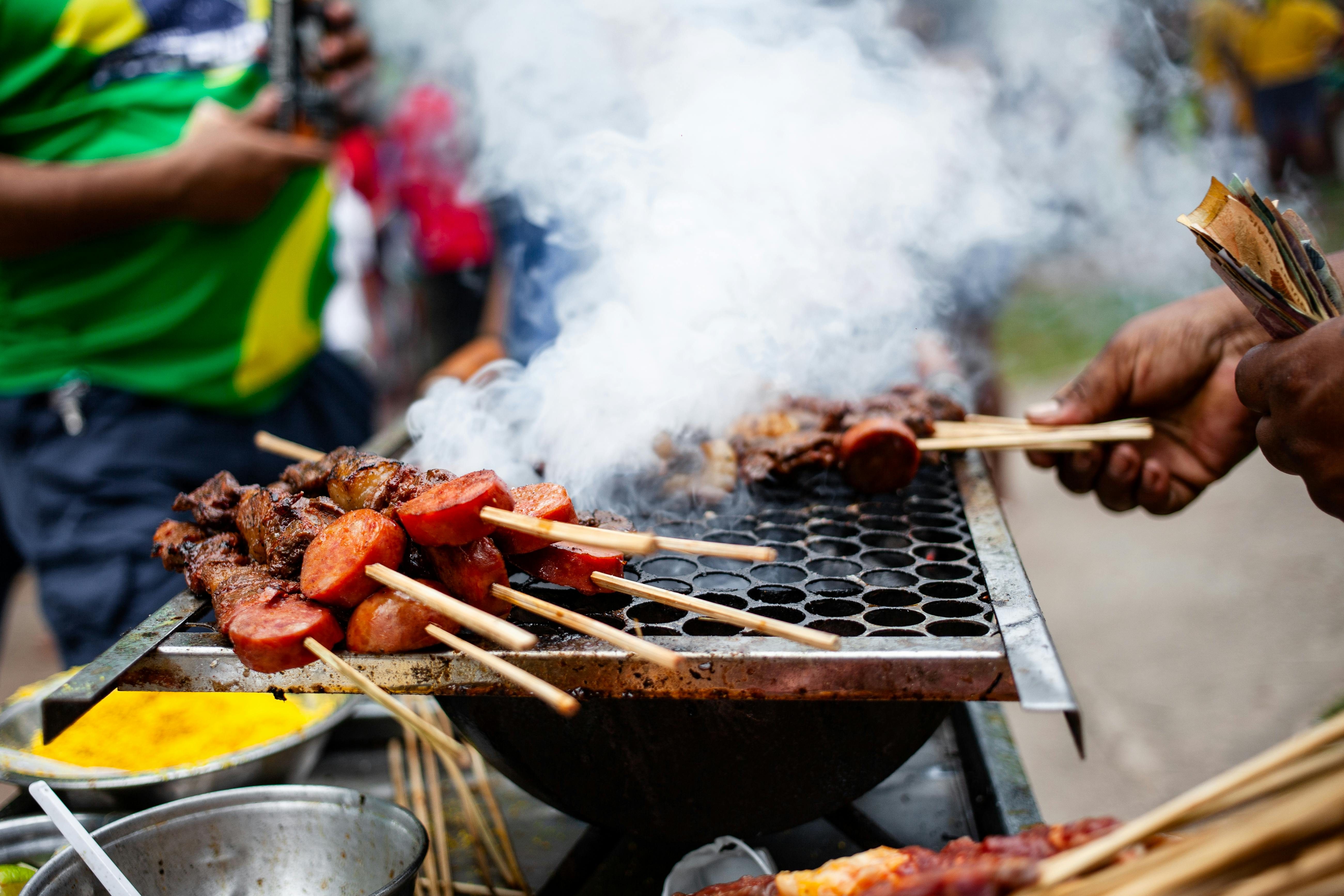
- Churrasco skewers — grilled meats passed around between friends, often cooked on a small backyard grill
- Farofa — toasted cassava flour mixed with butter and herbs, scooped alongside anything and everything
- Caipirinha — Brazil's national cocktail, made with cachaça, lime, and sugar, flowing freely through the night
Beer, particularly the ice-cold Brazilian lager Skol or Brahma, flows as freely as conversation. The food is not formal. Plates are passed around, napkins are forgotten, and eating with your hands is completely acceptable. The atmosphere is always more important than the presentation.
Superstitions and Rituals Before the Match
Brazilian fans are famously superstitious. Brazil soccer traditions include a rich set of pre-match rituals that fans take surprisingly seriously. Some will wear the same jersey they wore during a previous winning match, refusing to wash it. Others follow specific routines: sitting in the same chair, eating the same snack, or saying the same phrase before kickoff.
Lighting candles at home or visiting a local church before a big Seleção match is not uncommon. In some regions, offerings are made at Candomblé or Umbanda spiritual sites for good luck. Football in Brazil has always intersected with spirituality in uniquely Brazilian ways, reflecting the country's deep blend of African, Indigenous, and Catholic traditions.
The Seleção Effect: When Brazil Plays, the Country Stops
When the Seleção, Brazil's national team, is playing in a World Cup or Copa América, the country functionally pauses. Schools close early. Businesses hang signs on their doors. Streets empty out about thirty minutes before kickoff and explode with noise after every goal. The scenes following a Brazilian victory are like a spontaneous carnival.
Just as Brazilian Carnival channels the nation's love of music, movement, and collective joy, a major football victory produces a similar release of energy: samba drums seemingly appearing from nowhere, strangers embracing in the streets, and fireworks lighting up the sky without any formal announcement.
Music as the Backdrop to Every Match
Music is inseparable from football gatherings in Brazil. Before and after matches, samba rhythms, funk carioca, and pagode beats set the atmosphere. Street vendors pump music through portable speakers. Fans compose chants that blend football cheers with musical traditions.
The drums of batucada, a style of samba percussion, often fill the air during outdoor viewings. This is not incidental. Music and football in Brazil share the same cultural DNA: both are expressions of national pride, resistance, joy, and resilience rooted in the country's African diaspora heritage.
Regional Flavors of Match Day Across Brazil
Match day culture in Brazil varies fascinatingly by region. In Salvador, Bahia, expect spicier snacks, stronger ties to Afro-Brazilian traditions, and music that feels even more central to the gathering. In Rio, beach-adjacent viewings mix football with the breezy, social energy of Carioca culture. In São Paulo, botecos in diverse neighborhoods bring immigrant communities together, Japanese-Brazilians, Italian-Brazilians, and Lebanese-Brazilians all joining the same national passion.
Each region brings its own flavors to the table, literally and culturally, making Brazilian game night a mosaic of influences unified under the same green and gold.
Celebrate the Spirit of Brazilian Football
Brazilian game nights are a living cultural ritual that brings together food, music, family, spirituality, and community identity in a way that is unique to Brazil. Brazilian soccer traditions carry centuries of cultural history in every chant, every coxinha, and every communal viewing. Understanding these traditions is understanding Brazil itself.
For members of the Brazilian diaspora in the United States, these rituals become even more meaningful, serving as a way to stay connected to home, pass traditions down to new generations, and find community in unfamiliar places. Recreating match-day Brazilian culture abroad keeps cultural identity alive and vibrant.
Visit United Tribes today to learn more about Brazilian culture and community, from cultural spotlights and business listings to events that celebrate what it means to be Brazilian in America.


