
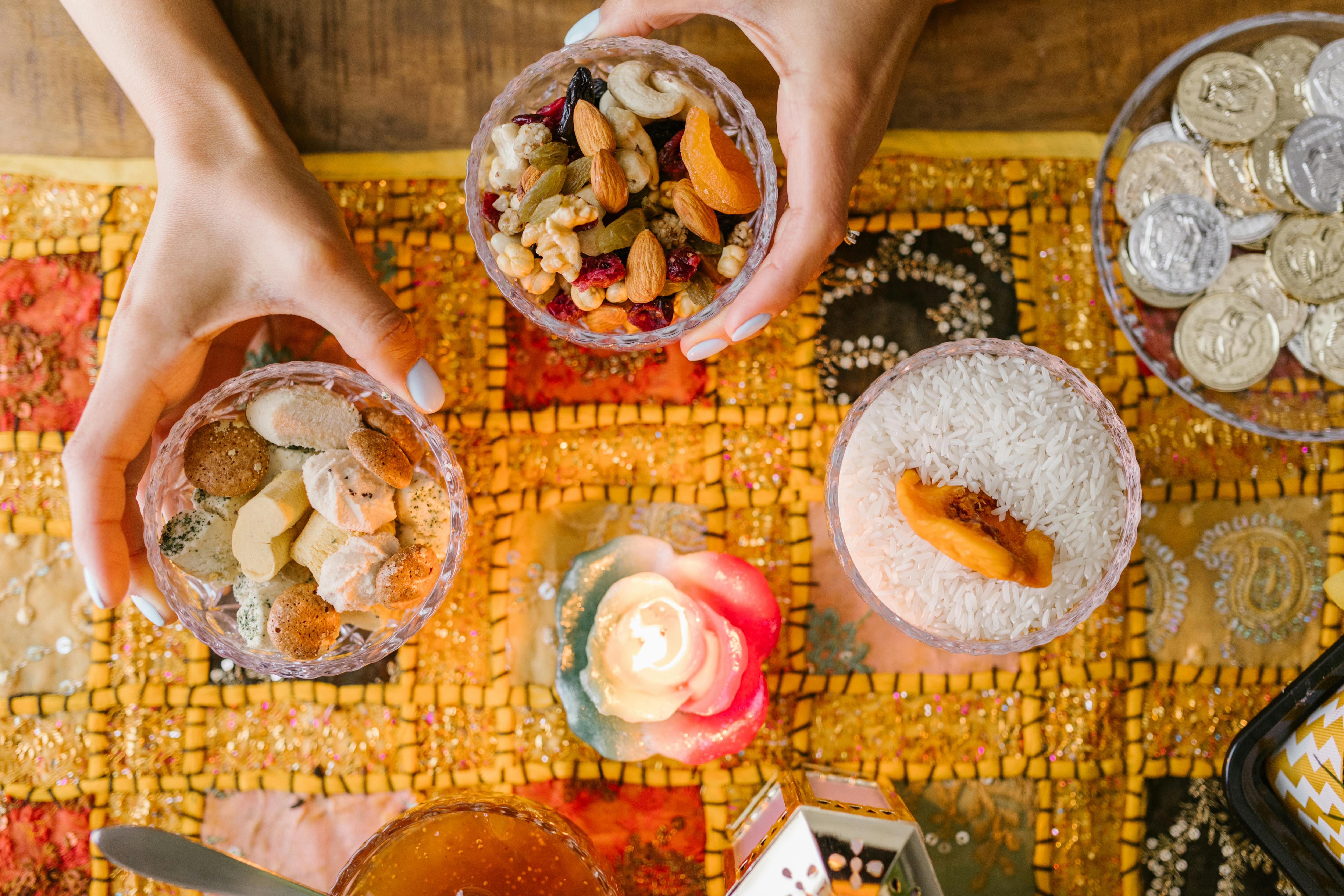

The world of Persian desserts offers a mesmerizing journey through centuries of culinary tradition, where rose water mingles with pistachios, honey cascades over delicate pastries, and every bite tells a story of ancient Persia. Today, across the United States, Iranian-American communities are preserving these treasured recipes while introducing them to eager new audiences. From the crispy layers of baklava to the syrup-soaked spirals of zoolbia, Persian cuisine continues to captivate taste buds with its unique blend of aromatic spices, nuts, and floral essences.
The sweet side of Persian cooking represents cultural identity, family traditions, and the art of hospitality that defines Iranian heritage. As Iranian sweets gain recognition in American culinary circles, they're creating bridges between cultures and offering glimpses into the sophisticated dessert-making techniques that have been passed down through generations.

Welcome to United Tribes
Where Persian Culture Comes Alive
Join Your Tribe
Connect with your people
Discover Events
Watch parties & festivals
Find Persian Businesses
Restaurants, markets & more
Earn Crown Credits
Get rewarded for engaging
The Art of Persian Dessert Making
Persian dessert preparation is steeped in tradition and requires patience, precision, and an understanding of delicate flavor balancing. Unlike many Western desserts that rely heavily on chocolate or vanilla, Persian desserts showcase treats that celebrate the natural flavors of nuts, fruits, and aromatic ingredients like cardamom, rose water, and saffron.
The foundation of many Persian sweets lies in the masterful use of sugar syrups infused with rose water or orange blossom water. These syrups transform simple dough into golden, fragrant confections that capture the essence of Persian gardens. Traditional techniques passed down through generations ensure each dessert maintains its authentic character while adapting to modern kitchen environments.
Iranian-American bakers today face the unique challenge of sourcing authentic ingredients while maintaining traditional preparation methods. Many have established relationships with specialty importers to ensure access to Persian rose water, high-quality pistachios from Kerman, and the finest saffron threads that give these desserts their distinctive flavors and golden hues.
Baklava: Layers of Persian Tradition
While baklava appears across Middle Eastern cuisines, Persian baklava distinguishes itself through specific preparation techniques and flavor profiles. Persian versions often incorporate cardamom-scented syrups and emphasize the delicate balance between crispy phyllo layers and aromatic nut fillings.
The traditional Persian baklava features paper-thin layers of phyllo dough brushed with clarified butter, creating a foundation for finely chopped pistachios, almonds, or walnuts. What sets Persian baklava apart is the syrup preparation: a careful blend of sugar, water, lemon juice, and rose water that's allowed to cool completely before being poured over the warm pastry.
Modern Iranian-American bakeries have perfected the art of baklava making, often offering multiple varieties including pistachio, walnut, and mixed nut versions. Some innovative bakers incorporate American influences while maintaining Persian authenticity, creating fusion varieties that appeal to broader audiences without compromising traditional flavors.
The cultural significance of baklava extends beyond its taste—it represents celebration, hospitality, and the Persian tradition of offering sweets to guests. During Persian New Year (Nowruz) celebrations, baklava often graces tables alongside other traditional sweets, symbolizing sweetness and prosperity for the coming year.
Zoolbia and Bamieh: The Dynamic Duo
Zoolbia and bamieh represent perhaps the most beloved pair in Persian dessert tradition. These deep-fried confections, always served together, showcase the Persian mastery of achieving perfect texture contrasts while maintaining complementary flavors.
Zoolbia: The Spiral Delight
Zoolbia's distinctive spiral shape requires specialized technique and equipment. The batter, made from yogurt, flour, and a touch of starch, is piped through a funnel in circular motions into hot oil, creating interconnected spirals that fry to golden perfection. The key to authentic zoolbia lies in the batter consistency. It shouldn't be too thick that the spirals become heavy, nor too thin that they fall apart during frying.
Once fried, zoolbia is immediately immersed in cool, rose water-scented syrup, allowing the crispy exterior to absorb the aromatic sweetness while maintaining its structure. The result is a dessert that offers textural complexity with every bite: crispy yet tender, sweet yet delicately floral.
Bamieh: The Ridged Companion
Bamieh, resembling tiny okra pods with their characteristic ridged surface, are formed using a similar batter but shaped differently. The ridged pattern isn't merely decorative—it serves a functional purpose by creating more surface area for syrup absorption while providing structural integrity during frying.
The preparation of bamieh requires patience and skill to achieve uniform shapes and consistent cooking. Traditional cooks often use specialized tools to create the ridged pattern, though modern Iranian-American bakers have adapted techniques using contemporary kitchen equipment while maintaining authentic results.
Faloodeh: The Persian Ice Cream Experience
Faloodeh represents Persian cuisine's answer to frozen desserts, predating modern ice cream by centuries. This traditional frozen treat combines thin rice noodles with a semi-frozen syrup base, typically flavored with rose water and lime juice, creating a refreshing dessert unlike anything else in the culinary world.
The preparation of authentic faloodeh begins with creating extremely thin rice noodles, achieved by pushing rice starch mixture through fine holes into boiling water. These noodles are then combined with a sugar syrup that's frozen to a slushy consistency, creating a unique texture that's both creamy and crystalline.
Iranian-American establishments serving faloodeh often offer multiple flavor variations, including traditional rose water and lime, as well as more contemporary options like sour cherry or pomegranate. The serving ritual remains traditional. Faloodeh is typically presented in small bowls with a squeeze of fresh lime juice and sometimes garnished with ground pistachios.
During hot summer months, Persian families gather around faloodeh as both dessert and cooling refreshment. Its preparation becomes a family affair, with different members contributing to noodle making, syrup preparation, and the careful freezing process that achieves the perfect consistency.
Cultural Significance and Modern Adaptations
Persian desserts carry deep cultural meaning within Iranian communities, serving as connections to homeland traditions and markers of important celebrations. Each sweet tells a story, whether it's the zoolbia and bamieh traditionally prepared during Ramadan breaking of fast, or the special sweets created for wedding celebrations and Nowruz festivities.
Iranian-American bakeries have become cultural ambassadors, introducing Persian cuisine to diverse American audiences while serving as gathering places for Persian communities. These establishments often function as more than businesses—they're cultural centers where traditions are preserved, recipes are shared, and younger generations learn about their heritage through food.
The adaptation process involves balancing authenticity with accessibility. Many Persian bakeries now offer cooking classes, allowing non-Persian customers to learn traditional techniques while providing Persian-American youth with opportunities to connect with their cultural roots through hands-on experience.
Modern innovations include adapting traditional recipes for dietary restrictions, creating sugar-free versions using alternative sweeteners, and developing gluten-free alternatives that maintain authentic flavors. These adaptations ensure Persian desserts remain accessible to broader audiences while respecting traditional preparation methods.
Finding Authentic Persian Sweets in America
The growing popularity of Persian desserts has led to increased availability across major metropolitan areas, particularly in cities with significant Iranian-American populations like Los Angeles, San Francisco, New York, and Washington D.C. These communities have established networks of authentic bakeries, specialty stores, and restaurants specializing in traditional Persian sweets.
Quality Persian bakeries distinguish themselves through several characteristics: use of authentic ingredients imported from Iran or sourced from reputable suppliers, adherence to traditional preparation methods, and often, family recipes passed down through generations. Many of the most respected establishments are family-owned businesses where recipes and techniques represent generations of accumulated knowledge.
Seasonal availability plays an important role in Persian dessert culture. Certain sweets appear during specific celebrations or seasons: rose petal jam during spring rose harvest, special Nowruz cookies during the Persian New Year, and cooling faloodeh during the summer months. Understanding these seasonal patterns helps customers appreciate the cultural context surrounding each dessert.
Preserving Sweet Persian Heritage
The journey through Persian dessert tradition reveals a cuisine that masterfully balances complex flavors, celebrates natural ingredients, and maintains deep cultural significance. From the layered elegance of baklava to the refreshing uniqueness of faloodeh, Persian sweets offer experiences that transcend simple dessert consumption and provide connections to centuries of culinary artistry and cultural heritage.
Iranian-American communities continue to serve as guardians of these precious traditions while successfully introducing them to appreciative new audiences across the United States. Through their dedication to authentic preparation methods and quality ingredients, Persian bakeries and dessert makers ensure these sweet traditions remain vibrant and accessible for future generations.
Visit United Tribes today and find out more about Persian culture and community celebrations, where these magnificent desserts continue to bring people together in the spirit of traditional Persian hospitality.


