
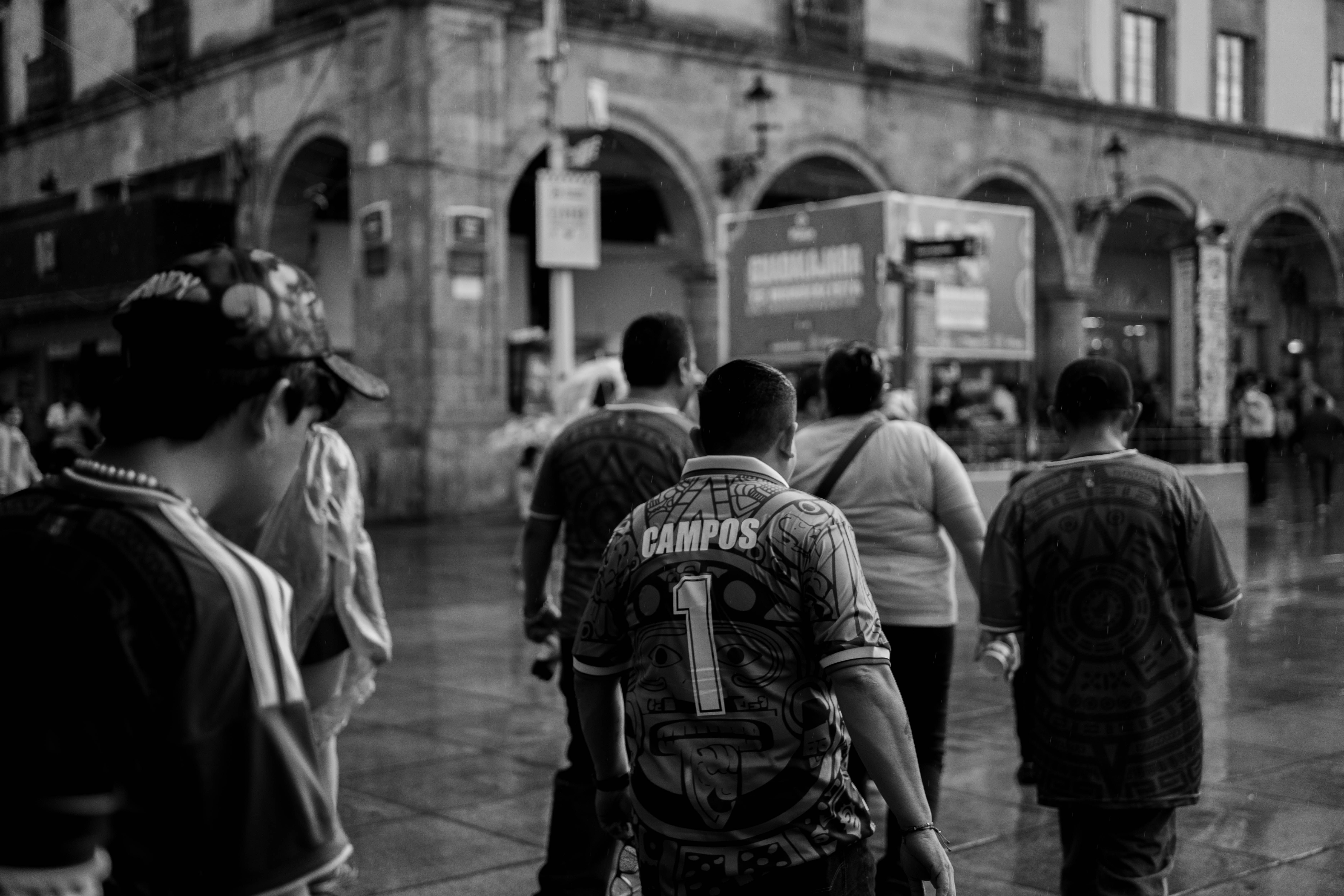

When the FIFA World Cup 2026 kicked off across U.S. soil, something shifted for a generation of young fans who had grown up between two flags. For Mexican American youth, this event was a chance to see where they stood, what they cheered for, and what that cheering meant.
Born Between Two Anthems
Most young Mexican-American fans have never had to choose a single identity. They grew up singing both national anthems phonetically, code-switching between English and Spanish before they understood linguistics, and navigating spaces where being "too Mexican" or "not Mexican enough" was always someone's critique.

Welcome to United Tribes
Where Mexican Culture Comes Alive
Join Your Tribe
Connect with your people
Discover Events
Watch parties & festivals
Find Mexican Businesses
Restaurants, markets & more
Earn Crown Credits
Get rewarded for engaging
FIFA 2026 brought that tension to the surface in a way few events could. Mexican soccer identity carries enormous emotional weight, for second- and third-generation fans raised in the U.S., cheering for Mexico felt like a declaration. It was a public alignment with heritage at a time when that heritage was both celebrated and politicized.
The Social Media Layer
No previous World Cup generation experienced the tournament the way these young fans did. In 2026, young Latino football fans were creating and consuming content in real time. Match commentary, meme formats, player edits, post-game reactions in Spanglish, all of it moved through Instagram Reels and TikTok at a pace that traditional sports media couldn't match.
What made this particularly meaningful was visibility. When a young Mexican-American fan in Phoenix or Chicago posted their watch party video, and it got thousands of shares, it reinforced one thing: their experience mattered. Their version of El Tri loyalty of being bilingual, bicultural, American-born, was real and recognized.
The social layer also created community across geography. Fans who might never meet connected over shared moments: a controversial call, a stunning goal, a player's post-match interview in Spanish. Mexican soccer identity in the USA wasn't limited to border towns or barrios. It spread digitally, organically, and with genuine emotional investment.
Family as the First Classroom
Ask almost any young Mexican-American fan how they got into El Tri, and the answer involves family. A grandfather who remembers 1986. A mother who taught them that the jersey meant something. An uncle who turned every match into a cultural event, complete with food, ritual, and noise.
This family dimension is inseparable from the tournament experience. Watch parties were structured gatherings with unspoken rules, assigned seating, and menudo on the stove hours before kickoff. Food and football overlapped as expressions of the same thing: belonging. The table and the television screen both became sites where Mexican identity was performed, passed down, and reinforced.
For younger fans, this meant FIFA 2026 was never just about the ninety minutes. It was about what surrounded the match: the conversations, the memories referenced, the inside jokes that only made sense if you'd been watching El Tri since childhood.
Language, Loyalty, and the In-Between
One of the more nuanced dynamics of this generation's experience was language. Many young soccer fans are dominant English speakers who feel the weight of Spanish as a heritage language, present but sometimes fragile. El Tri broadcasts, Spanish-language commentary, and bilingual social content permitted them to exist in that in-between space without apology.
Chanting in Spanish at a watch bar in Los Angeles felt different from speaking Spanish at work. The stadium context, or the living room that replicated it, created a safe register. You didn't have to be fluent. You just had to feel it. And most of them did.
This linguistic comfort matters because Latino representation in American media remains a live conversation. When El Tri commanded major broadcast attention on U.S. soil during FIFA 2026, it was a moment of visibility that signaled that Spanish-language culture and Mexican-American audiences are mainstream, not marginal.
What Loyalty Looks Like Now
The question of who young Mexican-Americans root for, Mexico, the U.S., or both, has no single answer, and FIFA 2026 didn't resolve it. What the tournament revealed instead was that loyalty itself has evolved. Many fans wore green jerseys while also acknowledging complicated feelings. Some cheered El Tri in the group stage and quietly admitted they'd rooted for USMNT in other matches without feeling like traitors.
The El Tri generation has grown up in a country that rarely lets them be simply American, while also belonging to a Mexican cultural world they experience primarily through the diaspora. Their soccer allegiance reflects that complexity honestly.
What FIFA 2026 gave them was a stage large enough to hold it all. The tournament didn't demand they pick a side so much as it gave them space to negotiate their own terms: loudly, publicly, and with an enormous amount of pride.
A Generation Defined by More Than Goals
FIFA 2026 was a landmark moment for young Mexican-American fans not because of what happened on the pitch alone, but because of what happened around it: in living rooms, on timelines, in group chats, and across generations of families who built their American lives without leaving Mexico behind. The El Tri generation found in the tournament a language for identity that statistics and surveys rarely capture.
For a community that navigates belonging as a daily practice, soccer offered something rare: a shared emotional frequency that needed no explanation.
Connecting with your roots and finding your community just got easier — explore what the Mexican tribe is celebrating, building, and sharing at United Tribes and tap into a space designed to make that connection feel real.


