
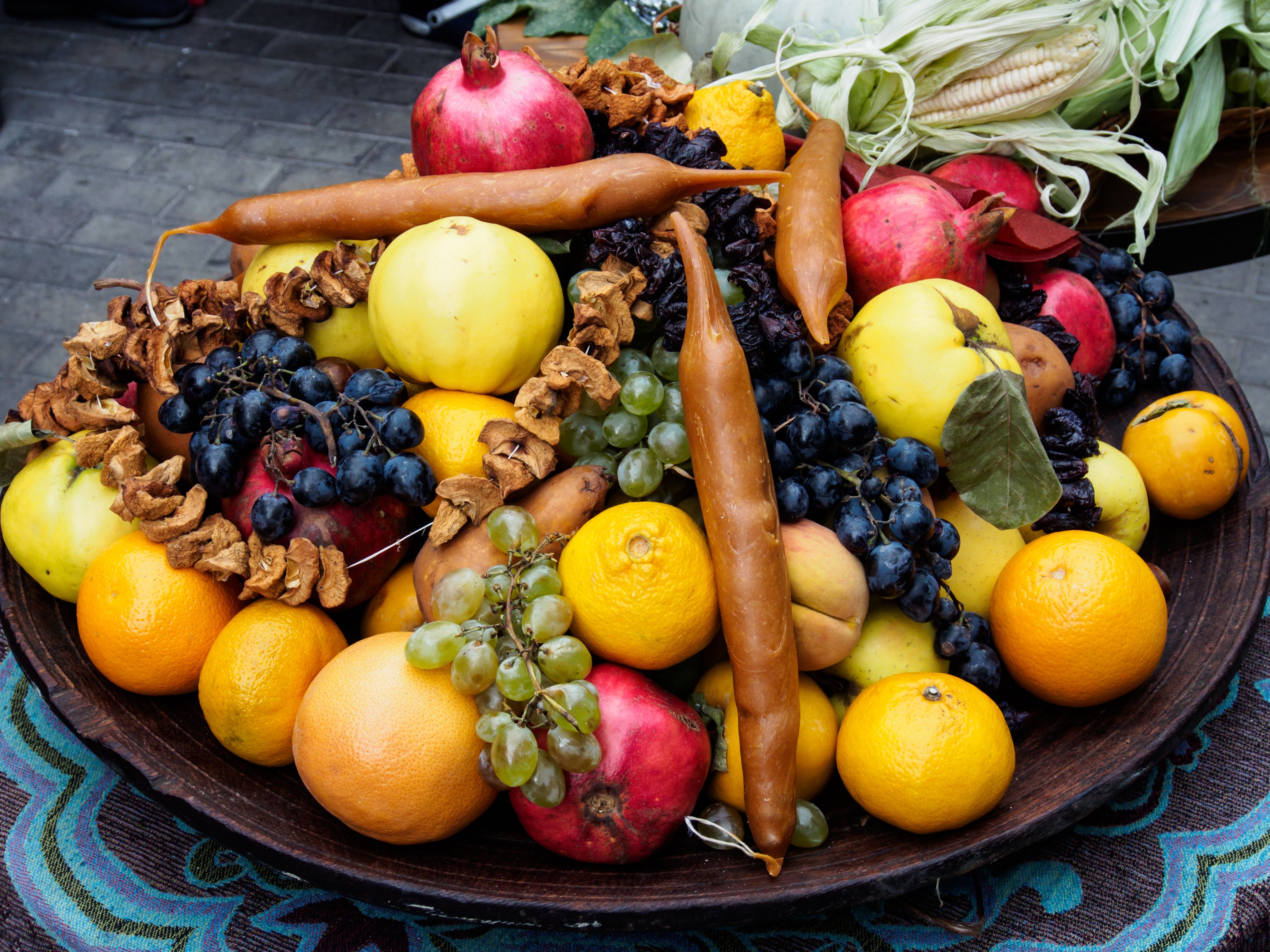

Walk into a Persian home during any season, and within minutes of sitting down, a fruit bowl will appear before you. Persian fruit culture is woven so deeply into Iranian food traditions that offering fruit to a guest is as reflexive as saying hello. The fruit table is a declaration: you are welcome here, and we have prepared something beautiful for you.
Fruit as a Language of Generosity
In Iranian culture, hospitality is about making guests feel honored. As explored in Persian hospitality at home, the home itself becomes a stage for generosity, and every element of a gathering carries meaning. Fruit occupies a central place in this ritual because it represents abundance without pretension. It is natural, seasonal, beautiful, and shared.

Welcome to United Tribes
Where Persian Culture Comes Alive
Join Your Tribe
Connect with your people
Discover Events
Watch parties & festivals
Find Persian Businesses
Restaurants, markets & more
Earn Crown Credits
Get rewarded for engaging
The concept of ta'arof, the elaborate Persian system of social politeness, shapes how fruit is offered and received. A host will insist you take more; a guest will initially decline before accepting. Understanding this dynamic, explored in depth here, helps explain why the fruit table is never just placed and forgotten. It is actively tended, replenished, and offered with warmth throughout the entire visit.
The Seasonal Rhythm of Persian Summer Fruit
Persian summer foods lean heavily on the season's freshest produce, and no category delivers more pleasure than summer fruit. Iranian food traditions follow the calendar closely — what is ripe is what is served, and what is served reflects care and intention.
Watermelon holds a particularly beloved place in Persian culture. Served ice-cold and sliced into generous wedges, it appears at nearly every summer gathering. Its sweetness and high water content make it the ideal afternoon offering during the heat of the season. Families linger over watermelon in a way they rarely do with other foods — it slows the meal down and invites conversation.
Cherries and sour cherries (آلبالو, *âlbâlu*) are deeply embedded in Iranian food traditions. Sweet cherries are eaten fresh by the bowlful, while sour cherries find their way into rice dishes, jams, and drinks. Both varieties signal summer's arrival and are consumed with enormous enthusiasm across generations.
Peaches and apricots represent the softer, more fragrant side of the Persian summer table. Fresh apricots, small, golden, and slightly tart, are often eaten whole, skin and all, with no ceremony required. Peaches are sometimes paired with tea or served alongside other fruits as part of a composed arrangement.
Melons, including the prized Persian cantaloupe and honeydew varieties, bring a cooling richness to the table. Iranian melons have a reputation for exceptional sweetness, and Iranian-Americans often seek them out at specialty markets when the domestic varieties fall short of memory. Grapes round out the summer spread, served in clusters directly on the vine, chilled and left whole so guests can help themselves at their own pace.
The Art of Arranging the Fruit Table
Presentation matters deeply in Iranian food traditions. A fruit bowl tossed together with whatever was in the refrigerator does not communicate the same message as a carefully arranged platter. Persian hosts take visible pleasure in selecting fruit that is perfectly ripe, washing and drying each piece, and arranging colors and shapes with an eye for beauty.
A well-set Persian fruit table might layer whole grapes over a bed of sliced melon, fan peach slices around a central mound of cherries, and place a chilled wedge of watermelon at the edge like an anchor. Small bowls of washed berries fill the gaps.
This attention to presentation communicates that the guest was worth the effort, that the host thought ahead, and that this moment of gathering deserves to look as good as it feels.
Fruit at the Center of Longer Gatherings
Persian hospitality is built around lingering. Meals are not rushed, and guests are not hurried toward the door. The fruit table extends this rhythm naturally. After tea is poured and sweets are passed, fruit arrives as a gentle second act, something to pick at slowly, to share across the table, to use as an excuse to stay a little longer.
This same warmth, the desire to gather, to mark time together, to make something meaningful out of an ordinary evening, also appears in seasonal Persian celebrations like Shab-e Yalda, where pomegranates and watermelon are served through the longest night of the year as symbols of light and life. The fruit table, in every season, carries that same symbolic weight.
Keeping the Tradition Alive in America
For Iranian-Americans, the fruit table is one of the most portable traditions: no special equipment required, no recipe to translate, no ingredient that cannot be sourced. What it requires is intention: the choice to slow down, to arrange something beautiful, to offer it openly.
Across the United States, Iranian communities continue to keep these traditions alive in homes, community spaces, and cultural gatherings. The fruit bowl on the coffee table, the platter carried out after dinner, the insistence that a guest take just one more slice — these small gestures form a living thread connecting diaspora families to something larger than geography.
A Table Worth Gathering Around
The Persian fruit table is a simple thing made meaningful by the intention behind it. Seasonal favorites like watermelon, cherries, peaches, apricots, melons, and grapes become more than food when they are chosen carefully, arranged with care, and offered with genuine warmth. They are expressions of a cultural value that runs through every layer of Persian hospitality: the belief that guests deserve beauty, abundance, and time.
For Iranian-Americans raising families far from Iran, this tradition is one of the easiest to preserve and one of the most powerful to pass on. A child who grows up watching their parents arrange a fruit platter before guests arrive learns something wordless and lasting about how to treat people. The fruit table teaches hospitality before a child can name it.
Iranian business owners, home cooks, and cultural community members sharing these traditions across the U.S. are part of a living heritage worth celebrating — connect with the Persian community on United Tribes and explore the people keeping these beautiful customs alive.


