
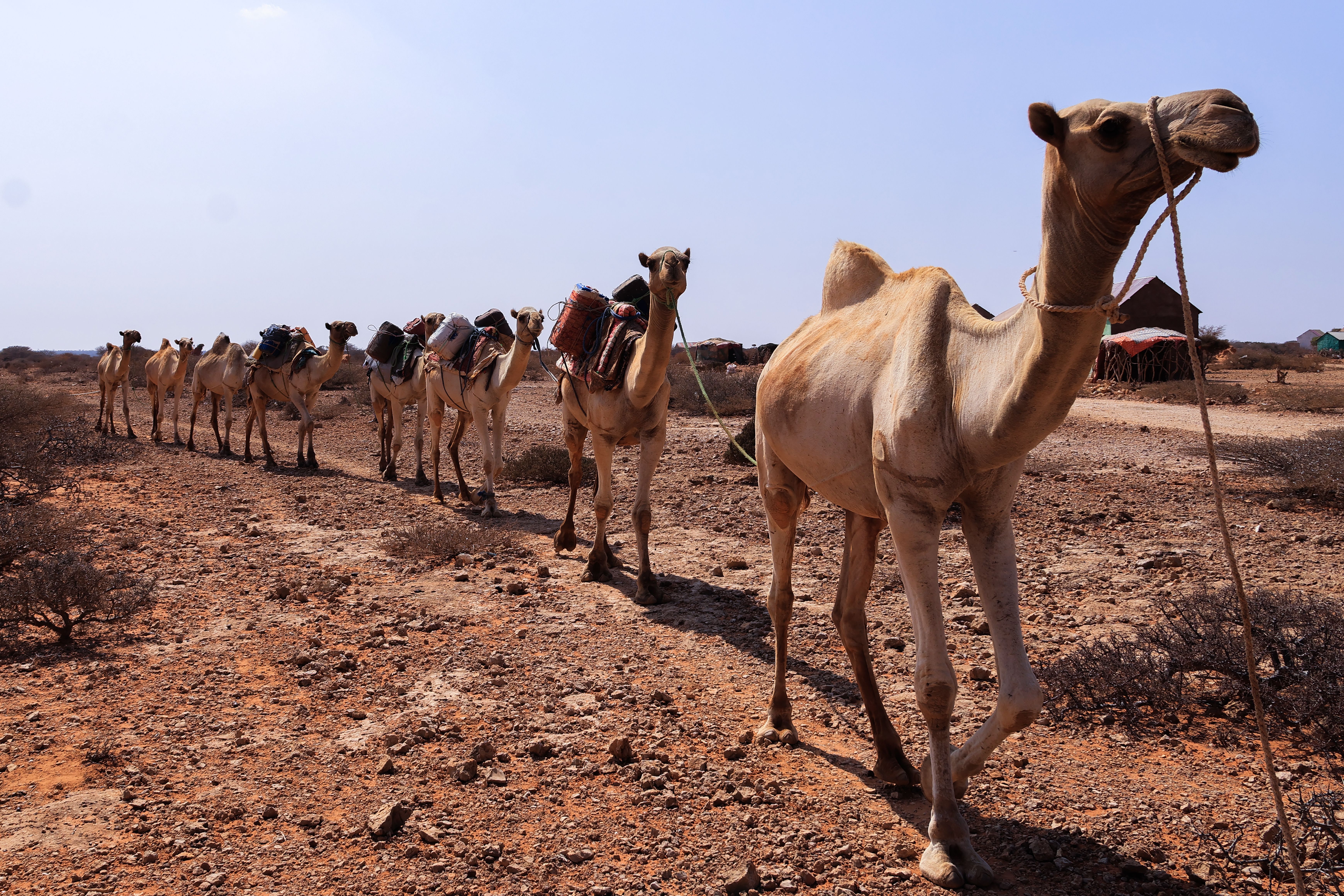

In Somali culture, few symbols carry the weight and meaning of the camel. Across centuries of pastoral life, trade routes, and oral tradition, the camel has stood at the center of Somali identity — not merely as an animal of burden, but as a living embodiment of resilience, wealth, and community. For Somali communities living in cities across the United States and around the world, that connection has not faded. It has transformed, traveling with the diaspora as a cultural anchor that ties generations to something ancient and enduring.
The Camel as Wealth and Social Standing
In traditional Somali society, camels — known in Somali as *geel* — were the primary measure of wealth. Owning a large herd marked status, security, and family power. Unlike cattle or goats, camels were uniquely suited to the Horn of Africa's arid landscape, able to travel vast distances without water and survive conditions that would defeat other livestock.

Welcome to United Tribes
Where Somalian Culture Comes Alive
Join Your Tribe
Connect with your people
Discover Events
Watch parties & festivals
Find Somalian Businesses
Restaurants, markets & more
Earn Crown Credits
Get rewarded for engaging
Camels were not simply property — they were currency in the deepest social sense. They formed the basis of *mag*, the system of blood compensation used to resolve conflicts between clans and families. The number of camels exchanged in a settlement carried legal, moral, and social meaning. Even today, in diaspora communities, references to this system surface in discussions of justice, family obligation, and inter-clan relationships, as United Tribes explores in its look at Somali family culture and the role of elders.
Camels and the Pastoral Way of Life
Somali pastoral culture is one of the world's most historically significant nomadic traditions. Families followed seasonal grazing patterns across the Horn of Africa, and the camel made that movement possible. They carried household goods, shelters, water, and food — essentially functioning as the infrastructure of nomadic life.
This mobility was not hardship for its own sake. It was a sophisticated system of environmental management, allowing pastoralists to avoid overgrazing and respond to rainfall patterns across a vast landscape. The camel was the engine of that system. Without *geel*, the traditional Somali way of life as it existed for centuries would have been impossible.
Somali society has always been diverse—not all Somalis were or are pastoralists. Coastal communities, farmers along river valleys, and urban populations have long coexisted alongside pastoral traditions. Today, most Somalis live in cities, and Somali-Americans are building thriving communities in Minneapolis, Columbus, Seattle, and beyond. The camel belongs to all of them as a cultural symbol, whether or not their families were herders.
Camel Milk: Nourishment and Cultural Identity
Few foods carry more significance in Somali heritage than camel milk. Traditionally, it was a primary source of nutrition for pastoral families, prized for its richness and its ability to sustain people through harsh conditions. Camel milk is higher in vitamin C and lower in fat than cow's milk, and it contains properties that have made it the subject of growing scientific interest.
In Somali households — both in Somalia and across the diaspora — camel milk holds enormous emotional significance. It is associated with home, with mothers, with the open landscape of the countryside. For many Somali-Americans, accessing camel milk is an act of cultural preservation. Specialty markets and cultural food businesses increasingly stock it, recognizing community demand. United Tribes explores the broader role of food in Somali identity and hospitality in depth at the Somali table—food, hospitality, and sharing.
The Camel in Somali Poetry and Oral Tradition
Perhaps nowhere is the camel's cultural significance more vivid than in Somali poetry. Somalia has one of Africa's richest oral literary traditions, and camels appear throughout — in classical *gabay* poetry, in songs, in proverbs, and in everyday speech.
Poets have long used the camel as a symbol of beauty, patience, pride, and homeland. The movements of a well-bred camel, the sound of a herd at dusk, the sight of camels crossing open land — these images recur across centuries of Somali verse as expressions of longing, love, and identity. When Somali poets in the diaspora write about camels today, they are often writing about loss, memory, and the distance between here and home.
The connection between Somali camel culture and literary tradition reflects how deeply the animal is woven into the language itself. Dozens of Somali words describe different types of camels, their ages, their qualities, their states—a vocabulary that signals how central *geel* has been to how Somalis understand and describe the world. United Tribes examines why that oral tradition matters so deeply in Somali poetry and storytelling.
The Camel as a Symbol for the Modern Somali Diaspora
For Somali communities in the United States, the camel is not a relic. It is a living symbol that appears in art, fashion, community events, and conversations about identity. Young Somali-Americans who have never visited Somalia still grow up hearing proverbs about camels, seeing the animal depicted in cultural artwork, and understanding its significance through family stories.
Community organizations and cultural events often use camel imagery as shorthand for Somali pride and heritage. In this way, *Somali traditions* around the camel continue to evolve — not disappearing in the diaspora, but finding new expression in a new context.
A Symbol That Travels With Its People
The camel's place in Somali culture is not defined by geography or era. It lives in the language, in the poetry, in the flavor of camel milk shared at a family gathering in Minneapolis, and in the pride of a young Somali-American explaining to a friend what *geel* means and why it matters. Somali camel culture is a thread that runs unbroken from the ancient pastoral landscape of the Horn of Africa to the living rooms of the diaspora today.
Understanding that thread means understanding something essential about Somali identity — the values of resilience, mobility, community, and deep connection to the natural world that the camel has always represented. These are not nostalgic ideas. They are active forces shaping how Somali communities build, celebrate, and define themselves in the United States and beyond.
Explore the stories, traditions, and community connections of the Somali diaspora — and so many others — at United Tribes, where cultural heritage finds a home in the digital world.
Make United Tribes Your Preferred Source
Add United Tribes on Google to get the latest stories, cultural updates, and community events directly in your Google Search and Top Stories.


