
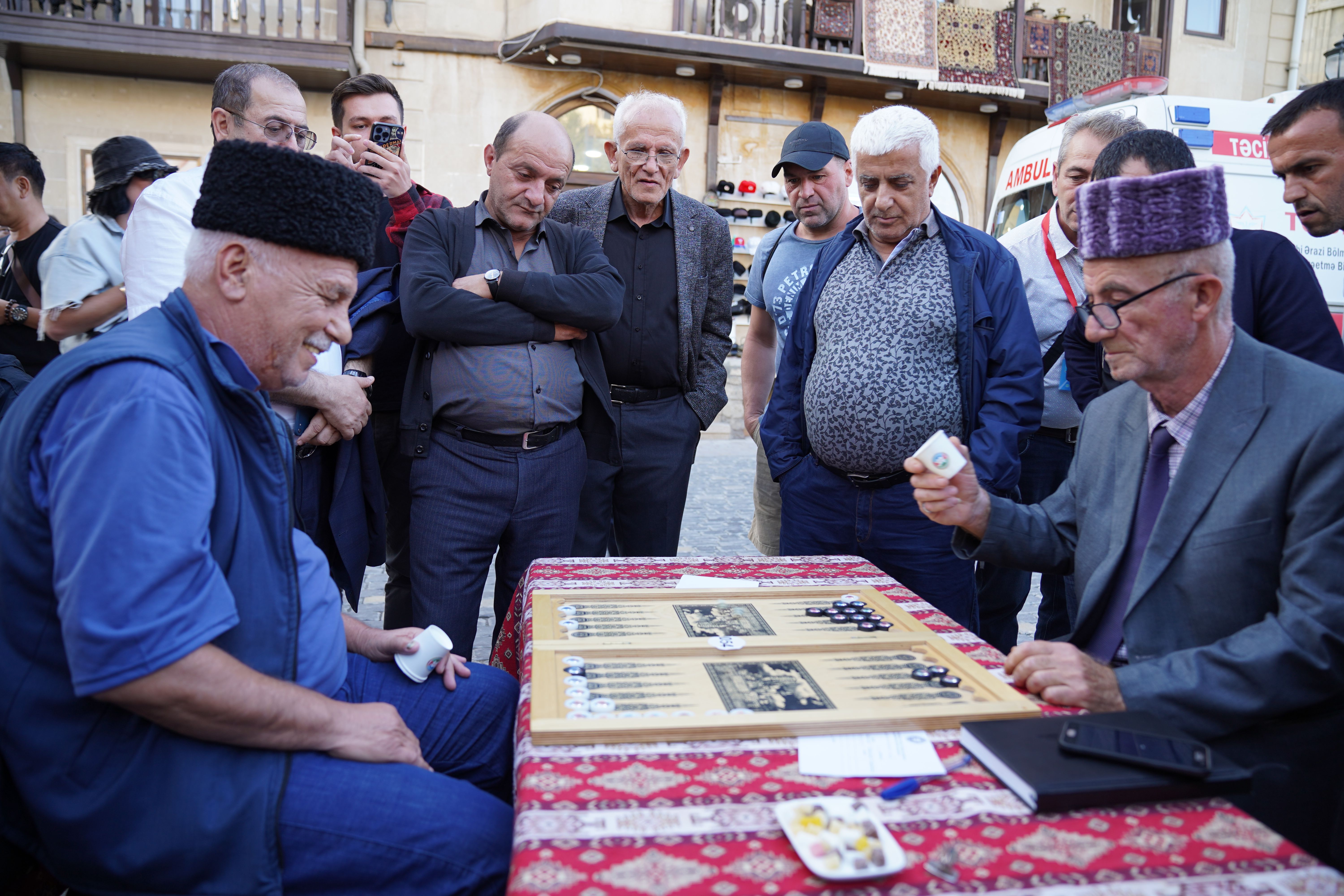

There is a particular sound that many Iranians recognize instantly — the sharp clatter of dice against a wooden board, the satisfying click of pieces sliding into place, followed by a burst of laughter or a dramatic groan. Takhte nard, the Persian name for backgammon, carries that sound through centuries of social life. Whether played on a worn board in a grandfather's home or on a sleek set at a Persian café in Los Angeles, the game remains a living thread connecting generations, relatives, and communities across time and distance.
A Game Woven Into Everyday Life
Backgammon has been part of Iranian culture for an extraordinarily long time. Archaeological evidence from the region suggests board games resembling backgammon date back over two millennia, and the game appears in classical Persian literature and court records. But its endurance lives in ordinary moments: A father teaching his teenage daughter how to move the checkers. Two brothers arguing cheerfully over a contested move. Neighbors settling in after dinner, board already open on the table.

Welcome to United Tribes
Where Persian Culture Comes Alive
Join Your Tribe
Connect with your people
Discover Events
Watch parties & festivals
Find Persian Businesses
Restaurants, markets & more
Earn Crown Credits
Get rewarded for engaging
Takhte nard translates loosely to "battle on wood," a name that hints at the game's competitive spirit while also acknowledging its physical, tactile nature. The board itself—folding, portable, often made of inlaid wood—has long been a household object of quiet significance in Iranian homes, passed down alongside recipes and poetry.
The Social Architecture of the Game
What makes takhte nard so durable in Persian culture is not just its mechanics but its social function. The game is rarely about winning alone. It is a structure for being together — for conversation, for rivalry without hostility, for the kind of companionship that deepens over repeated play. Cafés and teahouses in Iran have historically offered backgammon as naturally as they offer tea, and that tradition has traveled with the diaspora.
In Iranian-American communities, the game surfaces at family gatherings, New Year (Nowruz) celebrations, and community events. It sits comfortably alongside other markers of Persian hospitality — the spread of food, the insistence that guests feel at home, the slow pace of an afternoon with no particular agenda. Understanding how that hospitality shapes social life helps explain why a game like takhte nard never feels out of place; it belongs to the same cultural grammar. The Persian hospitality traditions that define community are inseparable from moments like these.
Intergenerational Teaching and Cultural Continuity
One of the most meaningful dimensions of takhte nard in the Iranian diaspora is how it functions as intergenerational glue. Grandparents who may not share a fluent common language with American-born grandchildren can still sit across a board and play. The rules become a shared vocabulary. The instruction itself — "watch how I block here," "remember, you count from this direction" — is a form of cultural transmission that doesn't require a formal lesson plan.
For many Iranian-Americans, learning takhte nard from a grandparent or older relative is among their earliest memories of engaging with Persian identity. The game becomes tied to those people, those rooms, and that particular smell of cardamom tea nearby. It anchors identity in sensory memory rather than abstract heritage, which helps it persist even among younger generations who may feel distant from other aspects of Iranian tradition. This kind of rooted cultural identity connects to the broader conversation about embracing the wisdom of Persian roots in modern life.
Persian Backgammon in the Diaspora Community
Iranian communities across the United States — concentrated in cities like Los Angeles, Houston, New York, and Washington, D.C. — have brought takhte nard with them as a natural part of cultural life. Persian cultural centers, community gatherings, and even informal meetups often include the game as a background fixture or a featured activity. The Persian cultural centers that serve as pillars of community and tradition across America provide exactly these kinds of spaces where takhte nard can thrive alongside language classes, art exhibitions, and holiday celebrations.
The resilience of this tradition mirrors the broader resilience of Iranian immigrants themselves — their capacity to carry culture across borders and rebuild community in new places. That story of adaptation and continuity is explored with depth and honesty in accounts of Iranian immigrants thriving across the globe, where takhte nard is one small but telling detail in a larger portrait.
Friendly Competition and the Spirit of the Game
Persian backgammon is not played in silence. Commentary, teasing, and theatrical reactions to the dice are practically part of the rules. There is a performative element to how experienced players handle the game — the confident shake of the dice, the deliberate pause before moving a piece, the exaggerated despair at a bad roll. This expressiveness is itself culturally specific, part of the warmth and humor that characterize Iranian social interaction.
The competitive edge is real but rarely bitter. Winning matters, but so does playing well, and so does the company. This balance — between genuine contest and genuine connection — is what keeps people returning to the board year after year, decade after decade. This pastime has a social ritual with its own etiquette, rhythms, and inside jokes that accumulate across a lifetime of play.
The Board That Keeps Connecting
Takhte nard endures because it holds relationships, memories, and cultural identity in a form that can be set up on any table, in any city, in any decade. For Iranian communities in the United States, the game is a quiet but powerful act of preservation, a way of staying connected to Persian culture without requiring explanation or ceremony. It simply begins with placing the pieces and rolling the dice.
The tradition also reminds us that cultural continuity rarely looks like a museum exhibit. It looks like two people arguing over a move, a grandmother correcting her grandson's counting, a café table claimed for the afternoon. These ordinary moments are where Iranian traditions live most vigorously, sustained not by institutions alone but by the people who keep showing up to play. The role of Persian poetry in Iranian-American identity offers a parallel story — how art and tradition travel in the most personal, human ways.
Explore the Iranian community, discover Persian-owned businesses, and connect with cultural events happening near you through the United Tribes community hub — a space built to celebrate the traditions that keep communities whole.
Make United Tribes Your Preferred Source
Add United Tribes on Google to get the latest stories, cultural updates, and community events directly in your Google Search and Top Stories.


