
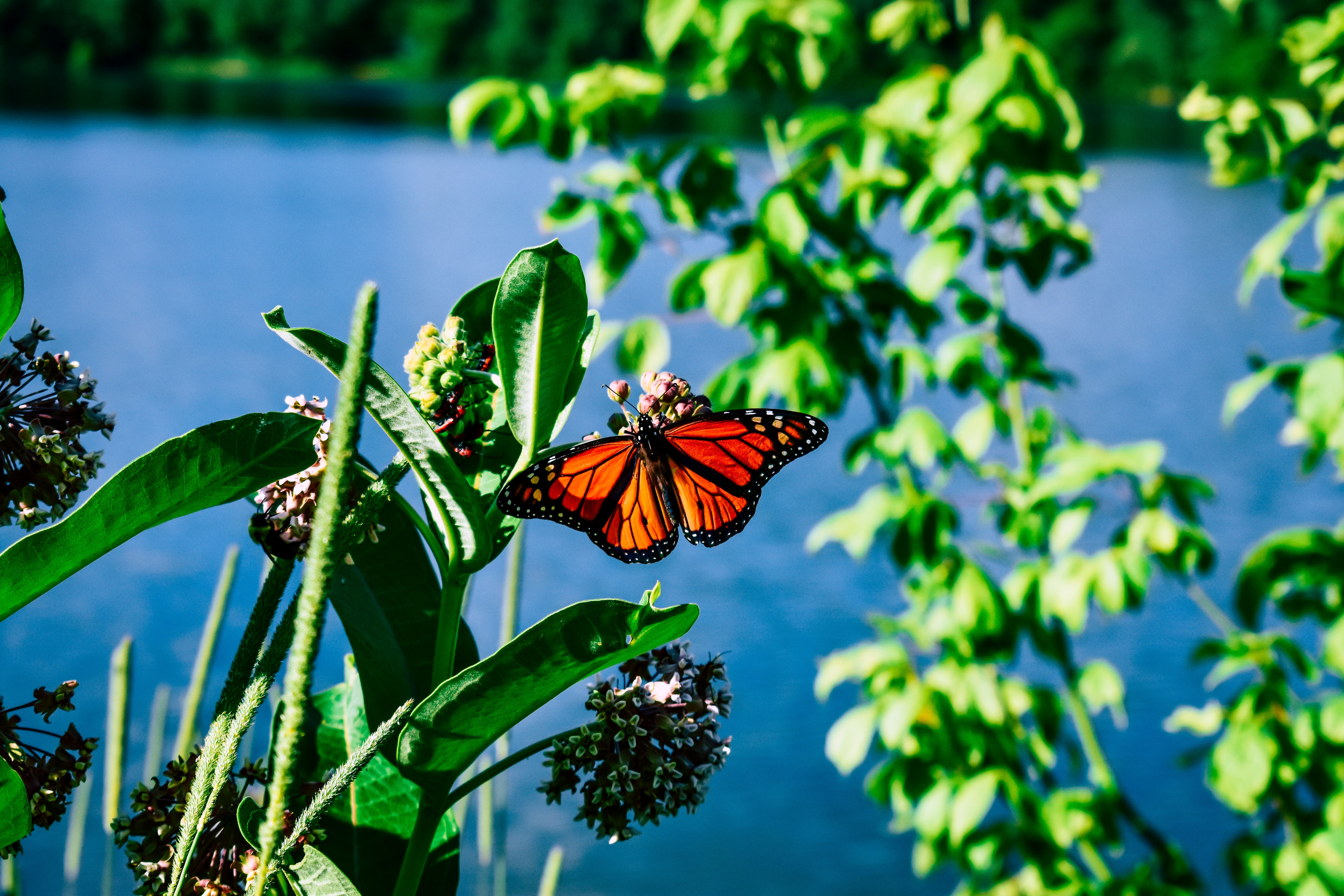

Every autumn, something extraordinary unfolds across the mountains of central Mexico. Hundreds of millions of monarch butterflies descend on the oyamel fir forests of Michoacán and Estado de México, blanketing trees in vivid orange and black. This is one of the most remarkable wildlife migrations on Earth — and for Mexican communities who have witnessed it for generations, the monarchs carry meaning far beyond biology.
The Migration Itself
The monarch butterfly's annual journey spans thousands of miles. Populations east of the Rocky Mountains travel from summer breeding grounds across the United States and Canada to overwintering sites concentrated in the Trans-Mexican Volcanic Belt. The butterflies arrive in central Mexico around late October and early November, clustering so densely that tree branches bow under their weight.

Welcome to United Tribes
Where Mexican Culture Comes Alive
Join Your Tribe
Connect with your people
Discover Events
Watch parties & festivals
Find Mexican Businesses
Restaurants, markets & more
Earn Crown Credits
Get rewarded for engaging
What makes monarch migration to Mexico so remarkable is its precision. The same mountain forests receive the butterflies year after year, even though no individual monarch makes the round trip twice. The generation that arrives in Mexico is several generations removed from the one that departed the previous spring. Scientists still study how monarchs navigate with such accuracy—using solar compasses and Earth's magnetic field—but for communities in Michoacán, the awe has always been as cultural as it is scientific.
Communities at the Heart of the Migration
The Mazahua and Purépecha peoples of Michoacán have lived alongside the monarch migration for centuries. In these indigenous communities, the butterflies were traditionally understood as returning spirits of the dead — ancestors coming home as the harvest season closed and the world turned toward winter. This belief held deep roots long before Día de los Muertos became a nationally celebrated holiday.
Local oral traditions, documented by ethnographers and cultural researchers, describe the monarchs' arrival as a homecoming. The timing is not coincidental in the cultural imagination: the butterflies appear just as communities begin preparing altars, marigolds, and offerings for Día de los Muertos on November 1st and 2nd. Whether the association was always spiritually intentional or developed through observed timing, it became woven into regional identity.
Día de los Muertos and the Butterfly Connection
It is important to distinguish between documented indigenous tradition and more recent symbolic layering. In some Michoacán communities, particularly among Mazahua groups, the association between monarchs and returning souls is genuinely historic — passed down through generations as part of local cosmology. These communities understood the butterflies as messengers or vessels for ancestral spirits.
However, much of the broader "monarchs as souls" narrative has gained wider cultural traction in recent decades, amplified through Mexican national identity movements, tourism, and media. Today, monarch butterfly imagery appears on Día de los Muertos altars, papel picado, and festival decorations across Mexico and the Mexican diaspora in the United States. Understanding the symbolism embedded in these decorations reveals how deeply layered Mexican traditions can be — each visual element carrying histories that stretch back centuries.
The Monarch Butterfly Biosphere Reserve
In 2008, UNESCO designated the Monarch Butterfly Biosphere Reserve a World Heritage Site. Spanning over 56,000 hectares across Michoacán and Estado de México, the reserve protects the core overwintering habitat. It also sits at the intersection of ecology and cultural identity — a recognition that the forests matter to both wildlife and to us as places of meaning.
Local communities in and around the reserve are central to conservation efforts. Ejido landowners, indigenous communities, and conservation organizations have worked together — sometimes in tension, sometimes in collaboration — to reduce illegal logging, develop sustainable tourism, and maintain the forest conditions the monarchs require. Mexican culture in this region is genuinely tied to the land, and the health of the migration is inseparable from the health of the communities who steward it.
Monarchs in the Mexican-American Experience
For Mexican communities in the United States, the monarch butterfly has taken on additional resonance. The migration itself crosses borders — monarchs pass through Texas, move through the Midwest, and return south through the central flyway. Chicano artists and activists adopted the monarch as a symbol of migration, resilience, and the right to move freely across the land.
Murals, tattoos, and community art across cities from Los Angeles to Chicago feature monarch imagery connected to themes of identity, belonging, and cultural continuity. During Hispanic Heritage Month, which runs from September 15 to October 15, monarch imagery often appears in community programming as a bridge between the summer and the approach of Día de los Muertos celebrations. Pan de Muerto and the broader world of Mexican pastries with deep cultural roots reflect this same seasonal rhythm — a culture that marks time through food, memory, and ritual.
Conservation as Cultural Preservation
The monarch population has declined significantly over the past two decades because of habitat loss on both sides of the border—milkweed reduction in the U.S. and Canada, deforestation in Mexico, and climate disruption affecting migration timing. Conservation of the monarch is, in this sense, also conservation of cultural meaning.
Organizations like the Monarch Butterfly Fund work alongside Mexican ejido communities to plant milkweed corridors and protect oyamel forests. For communities whose identity is bound to the butterflies' return — including those whose regional and indigenous customs reflect a broader pattern of land-based spiritual life — a world without the migration would be a cultural loss as much as an ecological one.
Where Migration Meets Memory
The monarch butterfly's journey is one of the natural world's great spectacles, but in Mexican culture, it is also a story about time, ancestors, and belonging. From the Mazahua oral traditions of Michoacán to the murals of East Los Angeles, the monarch has become a living symbol — one that crosses borders the way the butterflies themselves do, carrying memory from one place to another.
That cultural weight matters, especially as the population faces serious threats. Supporting conservation means supporting the communities whose identity, spirituality, and seasonal rhythms are tied to the annual return of these wings. The monarch's story is inseparable from the story of the people who watch for them each autumn.
Connecting with the broader Mexican-American community — its businesses, traditions, and living culture — is one of the most direct ways to honor that story. Browse the Mexican tribe page on United Tribes to discover the cultural entrepreneurs, events, and community voices keeping these traditions alive in the United States.
Make United Tribes Your Preferred Source
Add United Tribes on Google to get the latest stories, cultural updates, and community events directly in your Google Search and Top Stories.