
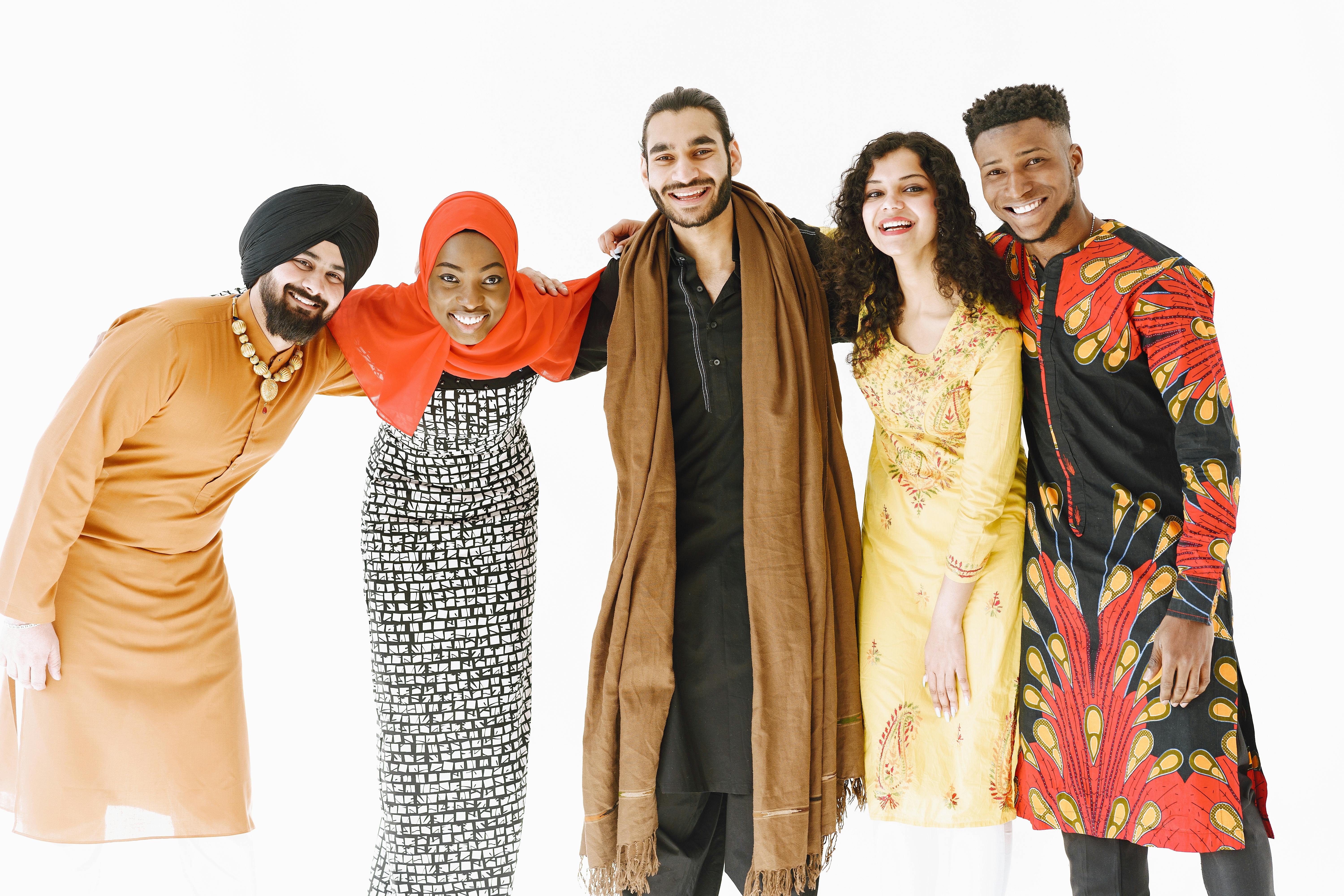

The Art of Saying No Without Saying No
In many cultures, a direct "no" is considered rude, aggressive, or even offensive. Instead, entire social systems have evolved around indirect communication, softening refusals, deflecting invitations, and preserving relationships through carefully chosen words and gestures. If you've ever left a conversation unsure whether someone actually agreed to something, you may have encountered this dynamic firsthand.

Welcome to United Tribes
Where Diverse Cultures Come Alive
Join Your Tribe
Connect with your people
Discover Events
Watch parties & festivals
Find Tribe Businesses
Restaurants, markets & more
Earn Crown Credits
Get rewarded for engaging
Understanding polite refusal culture isn't just an academic exercise. It's a practical skill that helps prevent cultural misunderstandings, deepens cross-cultural friendships, and builds genuine respect across communities. From Filipino delicadeza to Persian taarof, from Indian social cues to Latino familismo, the ways people say "no" reveal something profound about what they value most.
Filipino Indirectness and the Weight of Hiya
In Filipino culture, hiya — often translated as shame or propriety — plays a central role in how people communicate refusals. Saying a flat "no" risks embarrassing both the speaker and the listener, disrupting the social harmony that Filipinos deeply prioritize.
Instead, Filipinos rely on phrases like *"Sige, sige"* (loosely meaning "okay, okay") without any intention of following through, or *"Ay, baka hindi ako makapunta"* ("I might not be able to make it") as a gentle way of declining. Silence, a sharp intake of breath, or a slight smile paired with avoidance are also common indirect cues that signal hesitation or refusal.
This behavior is deeply tied to the concept of pakikisama and bayanihan — the collective values of getting along and maintaining group harmony. Disrupting that harmony with a blunt refusal would feel socially damaging. Understanding this context helps outsiders avoid misreading a Filipino friend's polite deflection as agreement or dishonesty.
Persian Taarof: The Elaborate Dance of Refusal
Few cultures have institutionalized indirect communication as formally as Persian culture. Taarof is a sophisticated system of politeness that governs social interactions, including how offers and refusals are exchanged. When a Persian host offers food or a gift, the guest is expected to refuse — sometimes multiple times — before finally accepting.
This back-and-forth isn't insincerity. It's a deeply respectful ritual that acknowledges the other person's generosity while also expressing one's own humility. A Persian person might say *"Nabaashad"* ("It shouldn't be") or *"Zahmat nemikesham"* ("I won't trouble you") even when they genuinely want what's being offered.
For outsiders, this creates confusion. Does "no" mean no? Often, only context tells you. Learning more about Persian hospitality etiquette and taarof reveals how central this practice is to Iranian identity, and why mehrbani and taarof function together as pillars of kindness and social cohesion in Iranian society.
Indian Communication: Reading Between the Lines
In India, indirect refusal is shaped by a blend of hierarchical respect, regional diversity, and deep-rooted hospitality norms. Saying "no" directly — especially to an elder, a host, or an authority figure — is considered deeply disrespectful in most communities.
Common indirect refusals include:
- The head wobble — a side-to-side gesture that can mean yes, no, maybe, or "I hear you," depending on context
- Phrases like *"I'll try"* or *"Let's see"* used as soft declines
- Redirecting the conversation entirely rather than addressing the request
- Offering a counter-suggestion to avoid a direct refusal
In family settings, especially, refusing food from a host is almost culturally impermissible. A guest might take a small portion they don't want rather than say no. The social cost of refusal — in terms of hurt feelings and broken hospitality — is seen as far too high. This is a prime example of how Filipino, Persian, Indian, and Latino etiquette all share a common thread: relationships come before bluntness.
Latino Culture: Indirectness as Warmth
In Latino communities, refusals are often softened by familismo — the deep sense of family loyalty and interpersonal warmth that defines social life. Saying no directly can feel like rejection, not just of a request, but of the relationship itself.
A Latino friend might say *"Ahorita voy"* ("I'll go in a little bit") with no real intention of arriving, or respond to an invitation with *"Si Dios quiere"* ("God willing") — a phrase that technically affirms the idea while leaving the outcome open. These aren't lies; they're ways of keeping connection alive while managing expectations.
Understanding these examples of indirect communication helps prevent cultural misunderstandings in mixed-company settings. What reads as flakiness to a direct communicator may actually be an expression of deep care, a desire not to disappoint or wound with a hard "no."
Why This Matters for Cross-Cultural Connection
Recognizing how different communities express refusal is essential for anyone navigating multicultural spaces — whether at work, in friendships, or at community events. Misreading a polite deflection as agreement leads to confusion, frustration, and unnecessary tension.
Key takeaways for cross-cultural communication:
- Ask follow-up questions to gently clarify intent without pressuring
- Observe patterns over time rather than interpreting one interaction in isolation
- Respect the social logic behind indirect communication — it exists to protect relationships
- Avoid labeling indirect communicators as dishonest; understand the cultural framework first
Bridging Cultures One Conversation at a Time
Across Filipino, Persian, Indian, and Latino communities, polite refusal culture reflects something beautiful: a prioritization of human connection over transactional directness. These indirect communication styles are not weaknesses or deceptions. Instead, they are refined social tools built over generations to preserve dignity, honor relationships, and navigate community life with grace.
Cultural misunderstandings often arise not from bad intent but from different communication frameworks colliding without context. When we take the time to understand why someone says "maybe" when they mean "no," or offers three refusals before accepting, we move from confusion to genuine cultural appreciation. That shift makes every interaction richer and every relationship more resilient.
Visit United Tribes today to learn more about Filipino, Persian, Indian, and Latino cultures and communities — explore stories, businesses, and traditions that bring these vibrant heritages to life in the United States.
Make United Tribes Your Preferred Source
Add United Tribes on Google to get the latest stories, cultural updates, and community events directly in your Google Search and Top Stories.


