
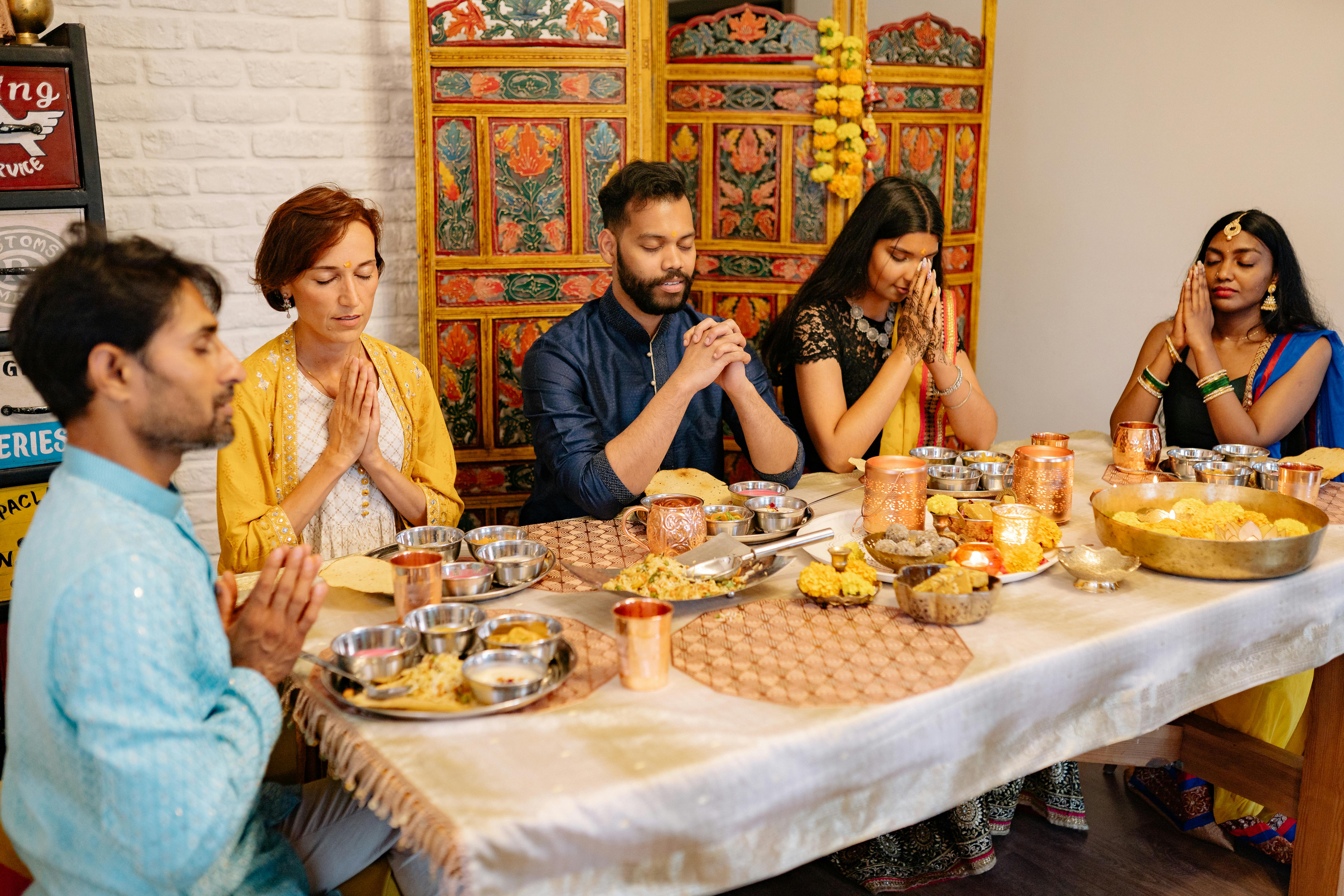


Walk into an Indian home and within minutes, you will be offered something to eat. It does not matter if it is an unannounced visit or a planned gathering — food appears quickly, warmly, and without hesitation. This is a lived, polite philosophy, woven into the fabric of Indian family meal culture for generations. Understanding why food is served first in Indian homes means understanding how love, status, and belonging are communicated without words.
Food as the First Language of Welcome
In Indian households, offering food is one of the earliest gestures a guest receives. Before conversation deepens, before tea cools, a plate or snack arrives. This practice is rooted in the ancient concept of Atithi Devo Bhava, a Sanskrit phrase meaning "the guest is God." It appears in the Taittiriya Upanishad and has shaped Indian dining etiquette across centuries and regional, linguistic, and religious lines.
The act of serving food communicates that a guest's comfort is the household's immediate priority. Refusing food in this context can feel like rejecting care itself. Indian serving traditions around hospitality are emotional and spiritual expressions of how a home treats those who enter it.
The Hierarchy of Serving: Who Eats First
One of the most telling aspects of Indian family meal culture is the order in which people are served. In traditional households, guests are always fed first, followed by elders, then men, then children, and finally the women who cooked. This sequence reflects layers of cultural priority — reverence for guests, respect for age, and the self-sacrifice embedded in the role of the caregiver.
While modern Indian homes are evolving and many families now eat together, the instinct to ensure a guest's plate is full before one's own remains deeply embedded. Indian hospitality food is never about abundance for its own sake — it is about making another person feel they are the most important presence in the room.
Why the Cook Rarely Sits First
In countless Indian homes, the person who prepared the meal is often the last to eat. This is not seen as a burden but as a form of devoted service. The cook — traditionally a mother, grandmother, or elder — monitors every plate, ensures second helpings are offered, and watches for any sign that someone needs more. Their fulfillment comes from others eating well.
This dynamic is deeply connected to how Indian parenting values across cultures prioritize giving over receiving. The kitchen becomes a place of purpose and identity, not just function. Meals are not prepared with intention, prayer, and the desire to nourish.
Regional Variations in Indian Serving Customs
India's diversity means that Indian serving traditions vary significantly by region, yet the underlying spirit remains consistent. Some notable expressions include:
- South Indian homes traditionally serve meals on banana leaves, with specific items placed in designated positions reflecting ritual and balance
- Punjabi households are known for overwhelming generosity — portions are large, refusals are gently ignored, and a nearly-empty plate invites immediate refilling
- Bengali families follow a multi-course serving sequence, with each dish presented in a specific order tied to digestive and cultural logic
- Gujarati thalis present a complete, balanced meal simultaneously, reflecting a philosophy of wholeness and harmony
- Rajasthani hospitality involves elaborate preparation for guests, often regardless of the household's own means
Despite these regional differences, Indian etiquette dining across the country shares one constant: the guest is never allowed to feel unwanted, hungry, or overlooked.
Food, Ritual, and the Sacred Connection
In many Indian households, food preparation begins with prayer. Ingredients are treated with respect, cooking is considered an act of service, and the first portion of a meal is often offered to a deity before anyone else eats. This ritual dimension connects directly to the spiritual practices embedded in Indian cultural traditions, where everyday acts carry sacred significance.
The connection between food and healing is equally profound. Many families use cooking as a form of care during illness, drawing on knowledge passed through generations. This overlaps with the principles found in Ayurvedic healing traditions, where specific foods are prescribed for balance, recovery, and well-being.
How These Traditions Translate in the Diaspora
For Indian Americans and Indian communities abroad, food-first hospitality remains one of the most preserved cultural expressions. Even in smaller apartments far from ancestral villages, the instinct to offer food immediately upon a guest's arrival persists. It is one of the most reliable ways for second-generation Indians to connect with a heritage they may experience incompletely in other areas of life.
At significant cultural moments — weddings, festivals, religious ceremonies — this tradition intensifies. The elaborate food rituals observed during Indian wedding celebrations reflect how food and identity are inseparable in marking life's most important transitions.
Food That Carries Culture Forward
The practice of serving food first in Indian homes is an expression of values that continue to adapt while holding their core meaning. Indian hospitality food traditions communicate care, respect, and belonging in ways that transcend language, region, and generation. Understanding these customs opens a deeper appreciation for what sits on the plate and why it arrived before you even asked.
For Indian communities in America, these traditions serve as anchors of identity in a landscape that constantly asks them to assimilate. Every shared meal, every refilled plate, every grandmother watching to ensure no one goes without — these are acts of cultural preservation as much as they are acts of love.
Visit United Tribes today and find out more about Indian culture and community, from food and family traditions to festivals and beyond.


