
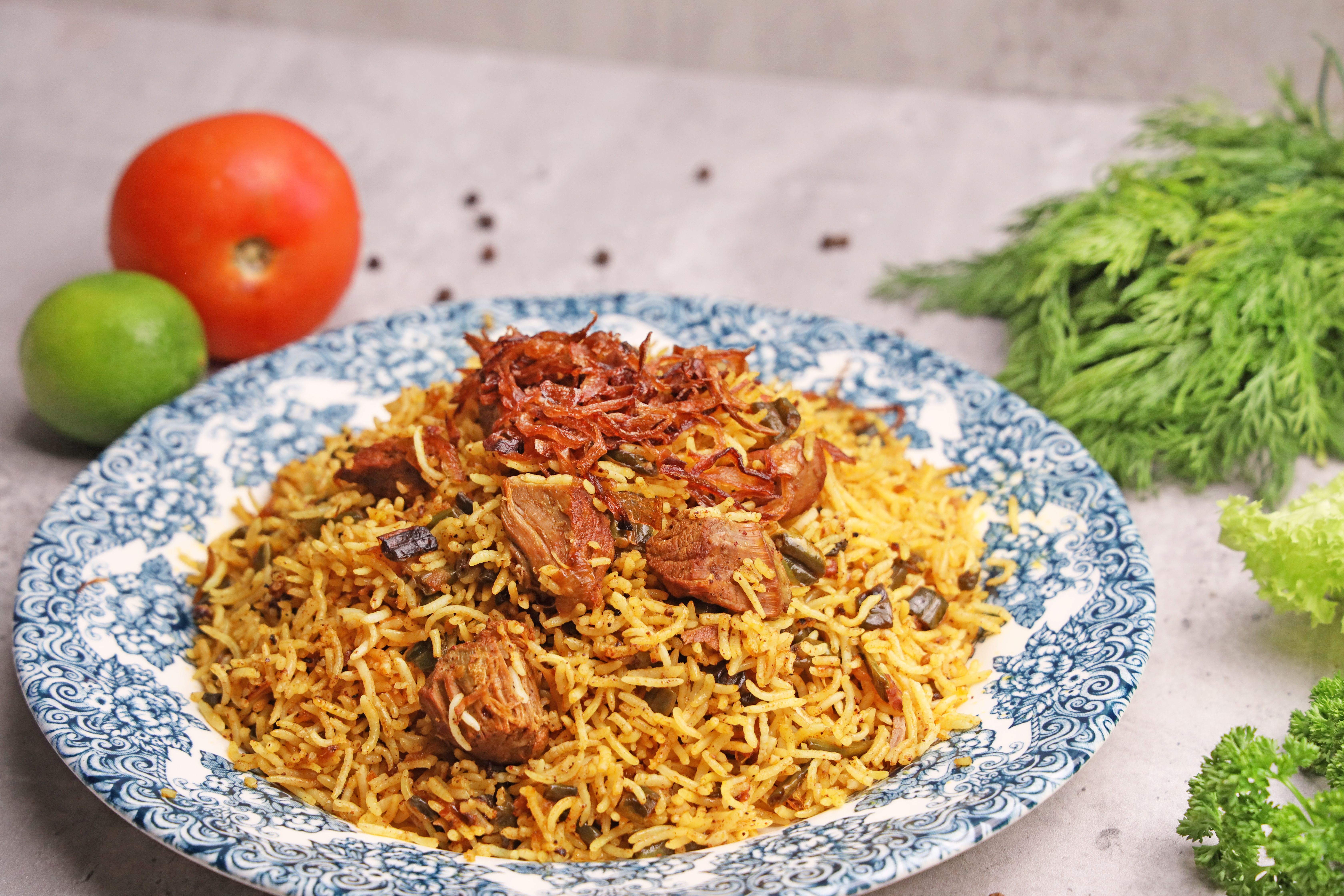

In Persian households, rice is never just a side dish. It is a centerpiece, a ritual, and a measure of a cook's mastery. Of all the elements that define Persian cuisine, none commands more reverence than tahdig, the golden, crispy crust that forms at the bottom of the pot. To understand tahdig is to understand something essential about Iranian food culture. Patience, precision, and pride are ingredients just as vital as saffron or basmati.
Rice as the Heart of Iranian Food Culture
Walk into any Persian home during a family gathering, and rice will anchor the table. Persian rice is washed, soaked, parboiled, drained, and then steamed slowly with fat and heat until it transforms into something extraordinary. This multi-step method, known as polow, sets Iranian cooking apart from nearly every other rice tradition in the world.

Welcome to United Tribes
Where Persian Culture Comes Alive
Join Your Tribe
Connect with your people
Discover Events
Watch parties & festivals
Find Persian Businesses
Restaurants, markets & more
Earn Crown Credits
Get rewarded for engaging
Rice holds such cultural weight in Persian cooking that the language itself reflects it. Persians distinguish between *chelo* (plain steamed rice served alongside stews), *polow* (rice cooked with herbs, legumes, or meats), and *kateh* (a simpler, stickier preparation). Each variety has its occasion, its pairing, and its emotional register. Beyond the familiar, regional Iranian dishes reveal just how deeply rice is woven into the country's culinary geography.
What Is Tahdig and Why Does It Matter
Tahdig, literally translating to "bottom of the pot" in Farsi, is the coveted crust that forms when rice steams over low heat against a layer of hot oil or butter. Done correctly, it emerges as a burnished, crackling sheet of rice that releases cleanly from the pot in one dramatic, unified piece. Done poorly, it burns, sticks, or crumbles, and every Persian cook has a story about both outcomes.
Guests at a Persian meal will reach for the tahdig first, often before anything else on the table. Hosts take quiet pride in presenting it intact. Children are raised knowing that the crispy bottom is the prize, and elders are often given the first piece as a gesture of respect.
What makes tahdig so compelling is its variability. The base layer is not always rice. Cooks use thin flatbread (*lavash*), sliced potatoes, or even lettuce leaves, each creating a different texture and flavor in the crust. Mastering the best Persian tahdig requires understanding not just technique but also the subtle cues- steam, timing, heat- that tell you when the crust has set.
The Technique Behind the Perfection
The process of making Persian rice with tahdig is methodical and deeply intentional. It begins with selecting the right rice, typically long-grain basmati, and washing it several times until the water runs clear. The rice is then soaked in salted water for at least an hour, sometimes overnight, which helps the grains elongate and separate during cooking.
After soaking, the rice is parboiled until just barely tender, then drained. The pot is returned to the stove with oil or butter coating the bottom. The rice is added back in a loose mound, and a cloth-wrapped lid (called a *damp-kesh*) is placed over the pot to absorb excess steam. The heat starts high to build the crust, then drops low to allow the rice to steam through gently for up to forty-five minutes.
This patience is non-negotiable. Rushing the process produces soggy rice and a pale, unformed crust. The timeless Persian cooking tips passed down through generations consistently emphasize one thing above all: trust the process, and do not lift the lid too soon.
Saffron, Spice, and the Finishing Touch
No discussion of Persian rice is complete without acknowledging the role of saffron. The bloomed, golden threads steeped in hot water are stirred into a small portion of cooked rice, creating the jewel-toned *morasa* layer that tops the dish when it is plated. This saffron rice is spooned over the white rice as a garnish, transforming a simple presentation into something visually stunning.
The essential spices of Persian food traditions extend well beyond saffron. Turmeric, dried limes, fenugreek, and rose water all play roles in the broader Iranian food canon. But for rice, saffron is the defining flourish. Its use signals celebration, care, and occasion.
Tahdig as Family Memory and Cultural Identity
For Persian-Americans, tahdig is not merely a cooking technique. It is a vessel for memory. The smell of rice steaming and oil crisping triggers something deeply embedded — Nowruz gatherings, grandmother's kitchen, the specific weight of a heavy-bottomed pot passed down through a family. Once you experience authentic Persian cooking, the standard shifts permanently.
In diaspora communities across Los Angeles, Houston, and New York, Persian rice continues to anchor cultural identity. Iranian-American families teach their children to make tahdig not only to preserve a recipe but to preserve a connection, to language, to homeland, to the people who taught them first.
Rice That Carries a Culture Forward
Persian rice and tahdig represent something far greater than culinary skill. They embody a philosophy of cooking that values care over convenience, tradition over shortcuts, and communal experience over individual preference. Every pot of rice prepared with this level of intention is an act of cultural preservation, a quiet insistence that some things are worth doing the slow, considered way.
For Iranian-Americans navigating life between two worlds, the ritual of making Persian rice keeps the thread intact. It connects generations who may never share the same geography but share the same crackling, golden crust, and the same instinct to reach for it first.
Connecting with authentic Persian food culture deepens your appreciation for what ends up on the plate — explore the Iranian community, discover heritage businesses, and browse cultural events through United Tribes.
Make United Tribes Your Preferred Source
Add United Tribes on Google to get the latest stories, cultural updates, and community events directly in your Google Search and Top Stories.


