
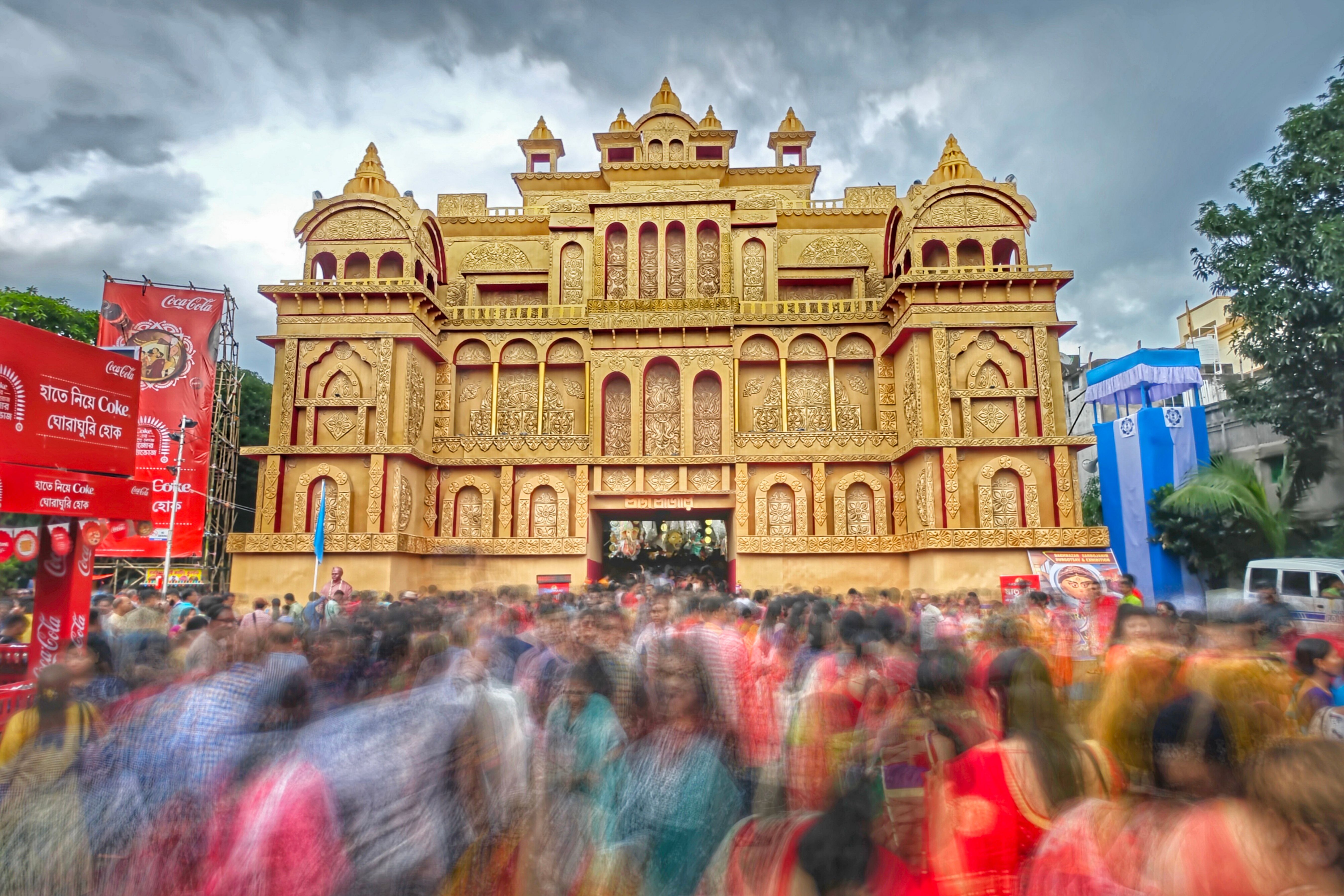

Every October, something extraordinary happens across Bengali neighborhoods in Kolkata and cities worldwide. Streets that were ordinary the week before are suddenly crowned with towering, illuminated structures that stop people mid-step. These are Durga Puja pandals—temporary architectural installations that serve as both sacred space and living artwork. For the Bengali community, both in India and across the United States, the pandal is both worship and celebration.
What Is a Pandal?
A pandal is a temporary structure erected specifically for Durga Puja, housing the idol of Goddess Durga and serving as a gathering place for the entire community. The word comes from the Tamil *pandal*, meaning a makeshift shelter, but in the context of Kolkata Durga Puja, it has evolved into something far grander. These structures range from modest neighborhood canopies to elaborate multi-story installations that replicate famous landmarks, reimagine mythological worlds, or deliver striking social commentary.

Welcome to United Tribes
Where Indian Culture Comes Alive
Join Your Tribe
Connect with your people
Discover Events
Watch parties & festivals
Find Indian Businesses
Restaurants, markets & more
Earn Crown Credits
Get rewarded for engaging
During Durga Puja 2026, which begins October 17, communities across West Bengal and the global Bengali diaspora will once again pour months of creative energy into building these ephemeral masterpieces — only to dismantle them days after the festival ends.
The Artisans Behind the Structures
The creation of a pandal is a serious craft. Teams of skilled artisans, many from traditional families in Kumartuli — Kolkata's legendary sculptor district — begin planning themes months in advance. Architects, sculptors, painters, electricians, and bamboo workers collaborate in a process that mirrors professional large-scale installation art.
The construction process typically unfolds in stages:
1. Theme selection — Community committees, called *puja committees*, choose a concept that is culturally resonant, socially relevant, or visually spectacular.
2. Design and planning — Artists draft blueprints, often incorporating architectural references from around the world.
3. Material sourcing — Bamboo, cloth, thermocol, recycled materials, and increasingly eco-friendly alternatives are gathered.
4. Construction — Crews work around the clock in the weeks leading up to the festival.
5. Lighting and finishing — Elaborate LED installations, traditional lighting, and decorative elements complete the structure.
The diversity of Indian folk art traditions directly informs pandal design — artisans draw from Madhubani painting, Patachitra scrollwork, and terracotta traditions to bring surfaces alive with cultural depth.
Themes That Reflect the Times
One of the most compelling aspects of Kolkata Durga Puja is how pandal themes evolve with the world around them. In past years, pandals have been modeled after the Eiffel Tower, the ruins of Hampi, Syrian refugee camps, and even viral internet phenomena. The themes are never arbitrary — they are deliberate statements.
In recent years, environmental consciousness has driven many committees to build pandals entirely from recycled materials: discarded newspapers, plastic bottles, jute, and bamboo. Others have used their pandals as platforms for social justice messaging, addressing gender equity, climate change, or historical memory.
This creative ambition is why UNESCO recognized Kolkata's Durga Puja as an Intangible Cultural Heritage of Humanity in 2021, and why it stands as an Indian festival of art on a civilizational scale.
Pandal Hopping: A Cultural Ritual
For millions of participants, pandal hopping—moving from one installation to the next across an entire night—is as central to Durga Puja as the prayers themselves. In Kolkata, crowds travel on foot, by metro, and by auto-rickshaw to visit dozens of pandals across the city's neighborhoods, from the storied installations of North Kolkata to the design-forward creations of South Kolkata's puja committees.
Each pandal offers something different: a distinct artistic vision, a unique idol style, a different regional flavor in the accompanying food stalls and performances. The cultural richness extends beyond the visual — classical and folk music, Indian classical dance performances, and cultural programs fill the evenings around major pandals.
Bengali Diaspora Pandals in America
For Bengali-American communities, the pandal tradition carries deep emotional weight. Cities with significant Bengali populations — New York, New Jersey, Atlanta, Houston, Chicago — host their own Durga Puja celebrations complete with pandal setups, often inside community halls or open parks.
While these diaspora pandals may not match the architectural scale of Kolkata's legendary installations, they carry extraordinary cultural intention. Volunteer committees spend months sourcing materials, commissioning idol sculptors — some pieces are shipped directly from Kumartuli — and designing thematic backdrops that honor both heritage and the communities' American lives.
The experience of gathering around a diaspora pandal is inseparable from other aspects of Bengali culture: women in their finest sarees, traditional jewelry worn for ashtami worship, and rituals that echo Indian wedding customs in their ceremonial precision and communal warmth.
Community Participation at the Heart of It All
Communities build pandals and belong to them. Residents contribute funds, labor, food, and time. Young people take on roles in decoration and event coordination. Elders pass down knowledge of ritual sequence and artistic tradition. This participatory structure gives the Durga Puja pandal its soul—it is a collective act of cultural devotion as much as a creative achievement.
Art, Faith, and Community United
The Durga Puja pandal is one of the most remarkable intersections of sacred tradition and contemporary artistic expression found anywhere in the world. From the master artisans of Kumartuli shaping clay goddesses to diaspora volunteers stringing lights inside a New Jersey community hall, the pandal represents something universal: the human need to make beauty out of belief, and to do it together.
For Bengali-Americans and Indian heritage communities across the United States, Durga Puja 2026 — beginning October 17 — is an opportunity to reconnect with that tradition. Whether you attend a local pandal, follow the Kolkata festivities online, or simply learn more about the artisans and communities behind these installations, the festival invites everyone to look more closely at what Bengali culture has always known: art and devotion are not separate.
Connect with the broader Indian cultural community, discover heritage businesses and events near you, and celebrate what keeps these traditions alive — explore the Indian community on United Tribes and find the cultural connections that matter most to you.
Make United Tribes Your Preferred Source
Add United Tribes on Google to get the latest stories, cultural updates, and community events directly in your Google Search and Top Stories.