


A New Year Rooted in Spring
Every year in mid-April, Tamil families across the world pause, gather, and begin again. Puthandu, the Tamil New Year, falls on the first day of the Tamil month of Chithirai, typically on April 14th. In 2026, Puthandu falls on Tuesday, April 14th, continuing a tradition that stretches back thousands of years. Unlike calendar New Year's, celebrated at midnight, Puthandu arrives with the morning sun, the scent of fresh flowers, and the quiet reverence of a household preparing to receive blessings.
For Tamil communities across India, Sri Lanka, and diaspora neighborhoods throughout the United States, Puthandu is a cultural and spiritual reset, a moment when families consciously choose to welcome abundance, health, and togetherness into their lives.
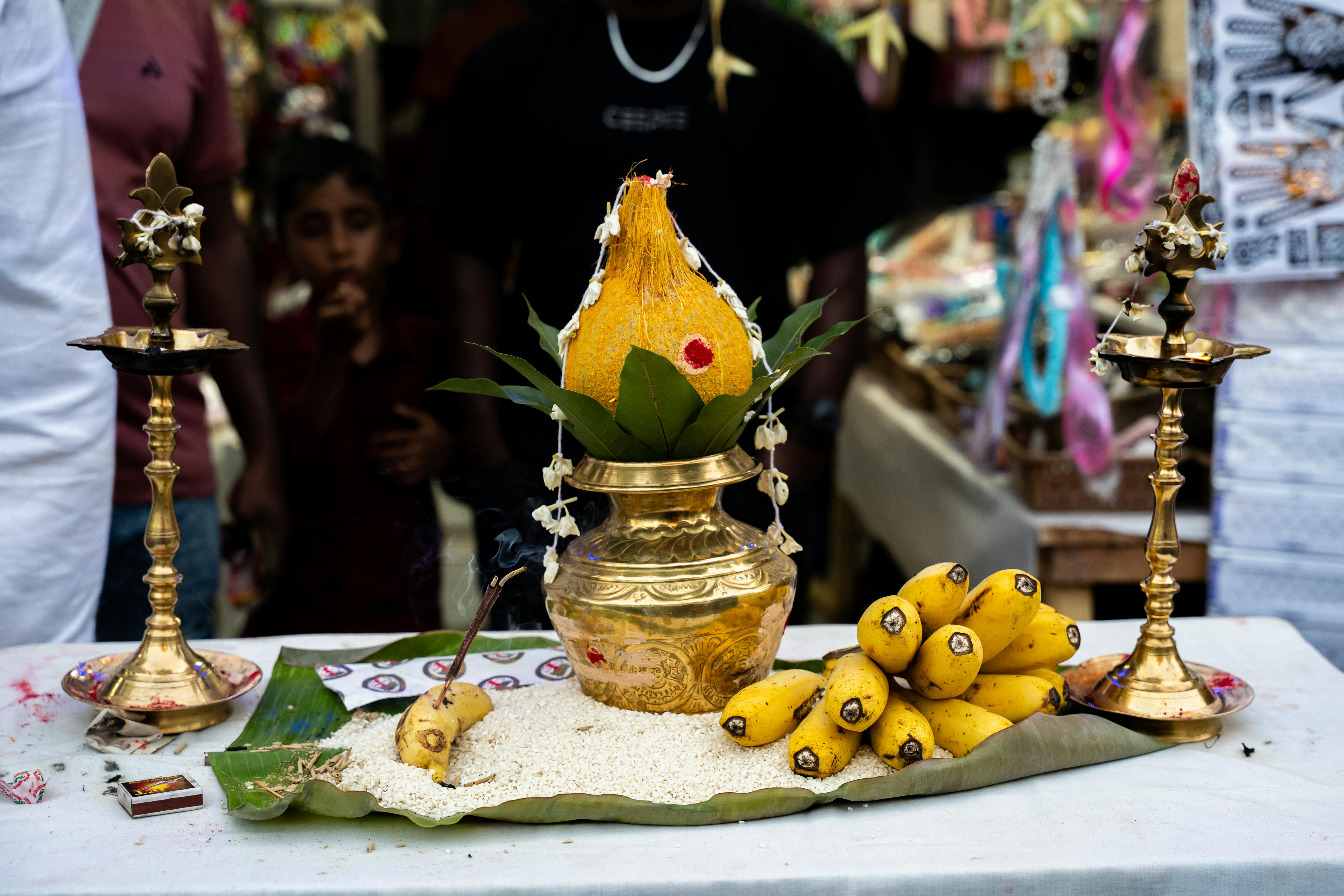
The Kanni: What You See First Matters
One of the most distinctive Tamil New Year traditions is the preparation of the Kanni, a carefully arranged visual display that family members are meant to see the moment they open their eyes on New Year's morning. The belief is simple but profound: what you perceive first on Puthandu sets the tone for the entire year ahead.
A traditional Kanni typically includes:
- Fresh fruits like bananas, mangoes, and jackfruit
- Gold or silver jewelry and coins symbolizing prosperity
- Flowers, especially yellow and white varieties
- A small mirror so the viewer sees their own reflection among the blessings
- Betel leaves and areca nuts
- Raw rice and vegetables
- A lamp or diya burning at the center
The night before Puthandu, elders in the household prepare this arrangement with great care. Children are often led to the Kanni with their eyes closed by a parent or grandparent before being allowed to see it for the first time in the new year.
Rituals That Greet the Day
After the Kanni viewing, Tamil families move through a series of morning rituals that blend devotion with celebration. An oil bath, or "yennai snanam," is a cherished custom where sesame oil is applied to the hair and body before bathing. This practice is believed to purify the body and invite good health for the months ahead.
Temple visits are central to the Indian spring celebrations surrounding Puthandu. Families dress in new clothes, often in vibrant yellows and greens that echo the season's colors, and make offerings at local temples. Prayers are offered to seek blessings for the new year, and priests read the Panchangam, a traditional almanac, aloud to the congregation. The Panchangam outlines astrological forecasts, auspicious dates, and predictions for the coming year, and hearing it read is considered both spiritually significant and culturally grounding.
At home, doorways are decorated with kolam, the intricate rice-flour patterns drawn by Tamil women to welcome prosperity and ward off negative energy. If you want to explore the deeper meaning behind this beautiful art form, the spiritual traditions of Rangoli offer a rich context for how visual blessing art functions across Indian culture.
Festive Foods of Puthandu
No Tamil celebration is complete without food, and Puthandu has its own iconic spread. The day begins with Mango Pachadi, a uniquely symbolic dish because it combines six tastes: sweet, sour, bitter, salty, spicy, and astringent. This blend is intentional. It represents life itself, the full spectrum of experiences the new year may bring.
Other traditional Puthandu dishes include:
- Vada and Payasam (a creamy sweet pudding)
- Puliogare (tamarind rice)
- Kootu (vegetable and lentil curry)
- Appalam (crispy lentil wafers)
- Neer Mor (spiced buttermilk)
Families often prepare a full sadhya-style meal served on banana leaves, especially in homes with roots in Tamil Nadu. The act of cooking and eating together is as important as the food itself. It reaffirms bonds and continues the chain of cultural memory from one generation to the next. This community spirit around harvest and food is also celebrated by Tamil families during Pongal, another major Tamil festival deeply tied to gratitude and abundance.
Family Visits and the Exchange of Blessings
Tamil culture in April comes alive through the movement of families between homes. Visiting elders on Puthandu is a meaningful obligation and a joy. Younger family members bow to touch the feet of grandparents and elder relatives, receiving blessings in return. Gifts of money, sweets, and new clothing are exchanged with warmth.
For Tamil Americans, these visits often span entire weekends around April 14th, with community temples organizing cultural programs, classical music performances, and youth events. Bharatanatyam performances are particularly common during Puthandu celebrations, as the dance form is deeply rooted in Tamil heritage. Indian classical dance forms like Bharatanatyam connect diaspora communities to their cultural identity in profoundly moving ways.
Puthandu in the Tamil Diaspora
Across U.S. cities with significant Tamil populations, including the San Francisco Bay Area, New Jersey, Chicago, and Houston, community organizations host Puthandu events that bring hundreds of families together. Cultural programs, traditional cooking competitions, and children's activities make these gatherings vibrant expressions of identity.
For Tamil families raising children in the United States, Puthandu 2026 represents an opportunity to pass forward rituals that connect generations and geographies.
Celebrate Tamil New Year With Pride
Puthandu is a celebration that holds the entire Tamil worldview within a single morning: the careful arrangement of blessings, the first shared meal, the touch of an elder's feet, and the reading of the year ahead. Whether observed in Chennai or California, these Tamil New Year traditions carry the same weight of meaning and the same invitation to begin again with intention.
For Tamil communities in the U.S., preserving and sharing these Indian spring celebrations is an act of cultural pride and generational continuity. Puthandu 2026 is a chance to honor where you come from while building a sense of belonging in the places you now call home.
Visit United Tribes today to learn more about Indian culture and community, from festivals and food to the stories that keep traditions alive across generations.


