
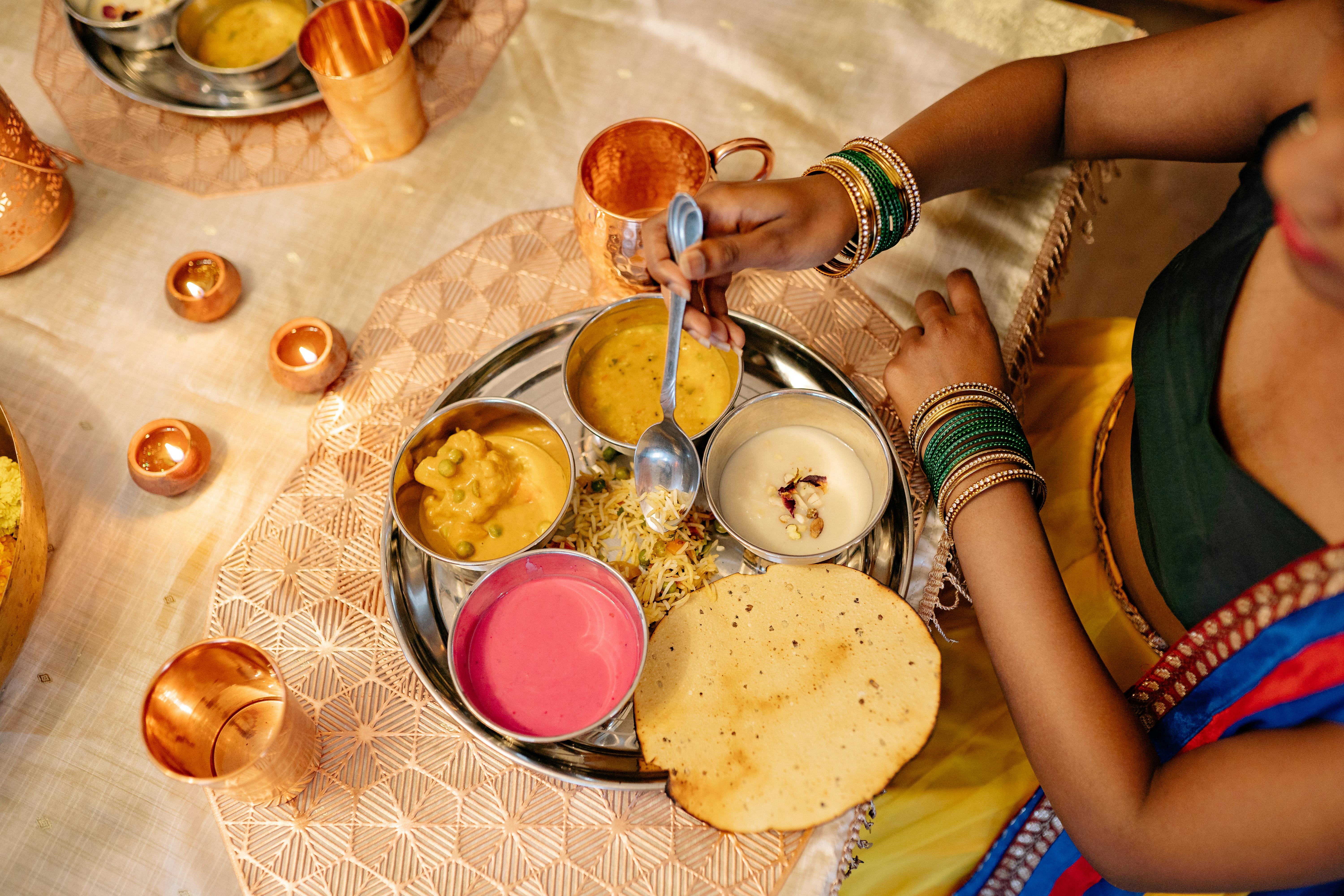


Walk into any Indian home at mealtime, and you'll immediately sense something deeper than hunger being satisfied. The rhythm of a rolling pin against a wooden board, the sizzle of a dosa spreading across a cast-iron pan, the soft steam rising from a pot of freshly cooked rice. Across a country of over a billion people and dozens of distinct regional cultures, staple foods serve as anchors of identity, daily routine, and collective memory.
The Great Divide: Rice vs Roti in India
Perhaps no contrast better illustrates India's regional diversity than the rice-versus-roti divide. South Indian and coastal households rely heavily on rice as their primary carbohydrate — eaten with sambar, rasam, coconut chutney, or a simple drizzle of ghee. In contrast, North Indian households build meals around wheat-based breads: roti, chapati, paratha, and naan.
This geographical divide reflects climate, agriculture, and centuries of food culture. The Indo-Gangetic plains are ideal for wheat farming, while the wetter climates of Kerala, Tamil Nadu, Andhra Pradesh, and West Bengal favor rice cultivation. When Indians migrate abroad, this distinction accompanies them, as reflected in the experiences of Indian immigrants navigating life outside their homeland.
Roti: The Daily Bread of North India
In millions of North Indian kitchens, the day ends with the making of roti. It is perhaps the most democratic of all Indian staple foods — requiring only whole wheat flour, water, and heat. Yet its simplicity masks deep ritual.
A perfectly puffed roti requires:
1. Kneading soft, pliable dough with the right water ratio
2. Resting the dough for at least 15–20 minutes
3. Rolling thin, even circles with a belan (rolling pin)
4. Cooking on a dry tawa over medium heat, flipping once
5. Finishing directly on an open flame to encourage puffing
Parathas take this further — layered, pan-fried flatbreads stuffed with spiced potatoes, paneer, or radish. In Punjabi households, especially, a paratha with butter and pickle is a staple breakfast dish that is a declaration of home.
Rice and Its Many Rituals
For South Indians, an dailymeal ise incomplete without rice. A traditional South Indian thali positions rice at the center, flanked by dal, vegetable dishes, curd, and papad. The act of mixing rice by hand with sambar or rasam is tactile and intimate — a way of connecting physically with the meal.
Rice also appears in ceremonial contexts. Pongal, the harvest festival of Tamil Nadu, centers on the cooking of sweet rice as an offering to the sun. In Bengali culture, rice features prominently in wedding rituals. Even temple prasad frequently involves rice-based preparations.
Beyond plain rice, regional variations multiply: idli and dosa in Karnataka and Tamil Nadu, khichdi across the subcontinent, biryani from Hyderabad to Lucknow, and pakhala (fermented rice) in Odisha.
Dosa, Idli, and the South Indian Morning
The dosa deserves recognition as one of India's most globally recognized staple dishes. Made from a fermented batter of rice and urad dal, dosa is thin, crispy, and endlessly versatile. Its fermentation process alone speaks to generations of food science passed orally through families.
Idli — the soft steamed rice cake — pairs naturally with sambar and chutneys that carry their own deep cultural significance. These accompaniments complete the meal's nutritional and flavor profile.
South Indian breakfast culture is perhaps the most developed of any regional cuisine in India, offering a rotating cast of:
- Dosa (plain, masala, set, rava)
- Idli with sambar and coconut chutney
- Upma, pongal, and vada
- Filter coffee to close the meal
Spices: The Soul Behind Every Staple
No discussion of Indian food traditions is complete without acknowledging the role of spices. Staple dishes may be simple in structure, but their flavor complexity comes from masalas built region by region, home by home. A dal in Gujarat tastes entirely different from one in Rajasthan, even when the base ingredients are identical.
The preservation of regional spice blends is itself a cultural act, as Indian Americans actively maintain their masala traditions even generations removed from the subcontinent. Turmeric, cumin, mustard seeds, curry leaves, and asafoetida — each ingredient carries meaning tied to geography and ancestry.
Street Food as an Extension of Staple Culture
Staple foods also live vibrantly beyond the home kitchen. India's street food scene is a direct extension of Indian daily meals culture, translating home staples into quick, accessible, communal eating. Pav bhaji adapts vegetables and bread. Vada pav is a potato fritter sandwiched between buns. Chole bhature brings spiced chickpeas together with deep-fried bread.
These dishes represent the same core ingredients — wheat, rice, legumes, spice — reimagined for the street. India's street food tradition runs far deeper than the iconic pani puri, offering a window into how staple foods travel from kitchen to community.
Staples That Carry Culture Forward
Indian food culture is about identity, memory, and belonging. From the rice paddies of Tamil Nadu to the wheat fields of Punjab, what people eat every day tells the story of where they come from and who they are. Roti, rice, dosa, and dal are distinct and nutritional expressions of regional pride and familial love.
For the Indian diaspora, maintaining these food traditions across borders is an act of cultural preservation. Whether recreating a grandmother's roti recipe in a Chicago apartment or sourcing the right rice variety in Los Angeles, these daily rituals keep heritage alive in practical, tangible ways.
Visit United Tribes today and find out more about Indian culture and community — from food traditions and regional stories to business spotlights and cultural events happening across the United States.


