
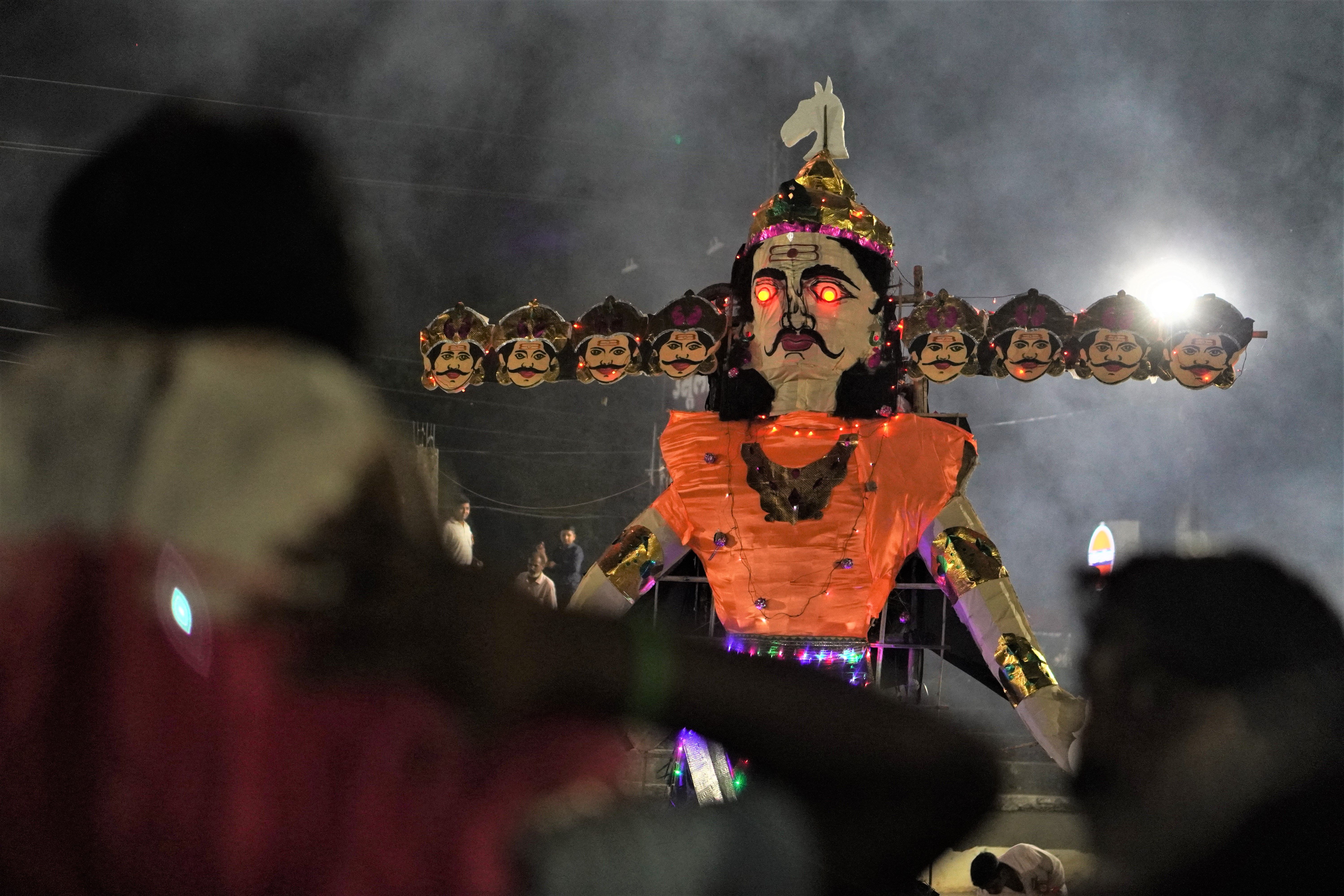

Every year, as autumn settles in, Indian communities worldwide prepare for one of Hinduism's most dramatic and visually stunning celebrations. Towering effigies stuffed with firecrackers are set ablaze before thousands of spectators, lighting the night sky in an explosion of color and sound. This is Ravana Dahan — the ritual burning of the demon king Ravana — and it sits at the heart of Dussehra, one of India's most beloved festivals. In 2026, Dussehra falls on October 20, making it a perfect moment for Indian-Americans to gather, reflect, and celebrate the eternal triumph of good over evil.
The Ramayana Story Behind the Flames
To understand why a giant effigy burns every October, you need the story of the Ramayana. The ancient Sanskrit epic follows Lord Rama, a righteous king and avatar of the god Vishnu, whose wife Sita is abducted by Ravana, the ten-headed demon king of Lanka. Ravana is portrayed not as a simple villain but as a being of immense knowledge and power, yet corrupted by ego and desire.

Welcome to United Tribes
Where Indian Culture Comes Alive
Join Your Tribe
Connect with your people
Discover Events
Watch parties & festivals
Find Indian Businesses
Restaurants, markets & more
Earn Crown Credits
Get rewarded for engaging
Rama, aided by his devoted brother Lakshmana and the monkey god Hanuman, assembles an army and wages war against Lanka. After a fierce battle, Rama slays Ravana with a divine arrow, rescuing Sita and restoring dharma — righteous order — to the world. Dussehra commemorates this victory. The burning of Ravana's effigy is a symbolic destruction of ego, arrogance, and injustice that each devotee is invited to internalize.
Ravana's ten heads often represent ten vices: lust, anger, greed, attachment, pride, jealousy, selfishness, injustice, cruelty, and ego. When the effigy burns, so too — spiritually — do those inner demons.
How Giant Ravana Effigies Are Constructed
Building a Ravana effigy is an art form that takes skilled artisans weeks to complete in cities like Delhi, Varanasi, and Lucknow. Effigy-makers, many from families with generations of this craft, begin construction well before Dussehra 2026.
The process typically follows these steps:
1. Bamboo framing — A tall skeletal structure is built from bamboo poles, forming the body, arms, and all ten heads.
2. Paper layering — Layers of paper and cloth are wrapped around the frame, giving the effigy its shape and volume.
3. Painting and decoration — Artisans paint detailed facial features, ornate crowns, and warrior clothing onto each of the ten heads.
4. Firecracker packing — The interior is loaded with firecrackers and combustible material to create a spectacular, staggered explosion during the burning.
5. Final assembly — Effigies of Ravana's brother Kumbhakarna and son Meghnad are often placed alongside, representing the broader forces of evil defeated by Rama.
The tallest effigies can soar over 100 feet high, particularly at the famous Dussehra celebrations in Delhi's Ramlila Maidan, where record-breaking structures have become a point of civic pride.
Ramlila: The Performance That Precedes the Burning
In the days leading up to Dussehra, communities stage Ramlila—dramatic theatrical performances that retell the Ramayana. These performances run for up to ten nights, coinciding with the Navratri festival period. Actors dressed as Rama, Sita, Lakshmana, Hanuman, and Ravana bring the epic to life through music, dance, and dialogue.
Ramlila traditions vary widely by region and community. Some productions are elaborate professional spectacles drawing thousands of nightly attendees; others are intimate neighborhood events where local volunteers perform for families gathered on rooftops and streets. The Navratri celebrations observed by Indian-Americans across the U.S. often serve as the cultural runway leading directly into Dussehra.
Regional Differences in Dussehra Traditions
While Ravana Dahan is a near-universal feature of Dussehra, India's regional diversity means the festival wears many faces.
- North India (Delhi, Uttar Pradesh, Punjab): Grand Ramlila performances, massive effigies, and public fireworks dominate. Delhi's Ramlila Maidan event is among the world's largest.
- Mysuru, Karnataka: Dussehra here — called *Mysuru Dasara* — is a royal pageant tradition dating back to the Wadiyar dynasty. Elaborately decorated elephants lead a royal procession, and the focus is as much on royal heritage as on the Ramayana.
- West Bengal and the East: Dussehra coincides with the final day of Durga Puja, where the goddess Durga's clay idols are immersed in rivers. Ravana burning plays a smaller role here than worship of the goddess.
- Himachal Pradesh: The Kullu Dussehra is celebrated for seven days after the main date elsewhere, and features local deities carried in processions through mountain valleys.
These regional distinctions reflect the same cultural richness seen in Indian folk art traditions, which vary dramatically from one state to the next.
Dussehra in Indian-American Communities
In the United States, Indian Dussehra traditions have taken root in cities with large South Asian populations—Houston, Chicago, New Jersey, the Bay Area, and beyond. Community organizations and Hindu temples often organize Ramlila performances and Ravana Dahan events scaled to local resources.
These gatherings are as much about community building as religious observance. Families bring children to see the effigy burn, vendors sell traditional sweets and snacks, and the event becomes a living transmission of culture across generations. Much like the Diwali celebrations that follow just weeks later, Dussehra serves as an anchor point in the Indian-American cultural calendar.
The symbolic power of Ravana Dahan also translates across cultures — the image of burning away what no longer serves you resonates with audiences far beyond the Hindu tradition.
The Flame That Carries Meaning Forward
Ravana Dahan is a living retelling of one of humanity's oldest moral narratives — that righteousness, courage, and devotion ultimately overcome pride and cruelty. From the weeks of craftwork that go into building each effigy to the Ramlila performances that precede the burning, every element of Dussehra carries layered meaning rooted in the Ramayana. As Dussehra 2026 approaches on October 20, Indian communities across the U.S. will once again gather to share this tradition with their children, neighbors, and wider communities.
For Indian-Americans, these festivals are powerful acts of cultural preservation. Celebrating Ravana Dahan publicly — in parks, temple grounds, and community centers — keeps ancestral stories alive in a new landscape. The artisans, organizers, performers, and families who make these events happen are the true guardians of the tradition, ensuring that the light of the Ramayana continues to burn brightly, year after year.
The Indian entrepreneurs, cultural organizers, and community leaders who bring Dussehra traditions to life across America deserve to be seen — connect with the Indian community on United Tribes and support the people keeping these celebrations alive.
Make United Tribes Your Preferred Source
Add United Tribes on Google to get the latest stories, cultural updates, and community events directly in your Google Search and Top Stories.