
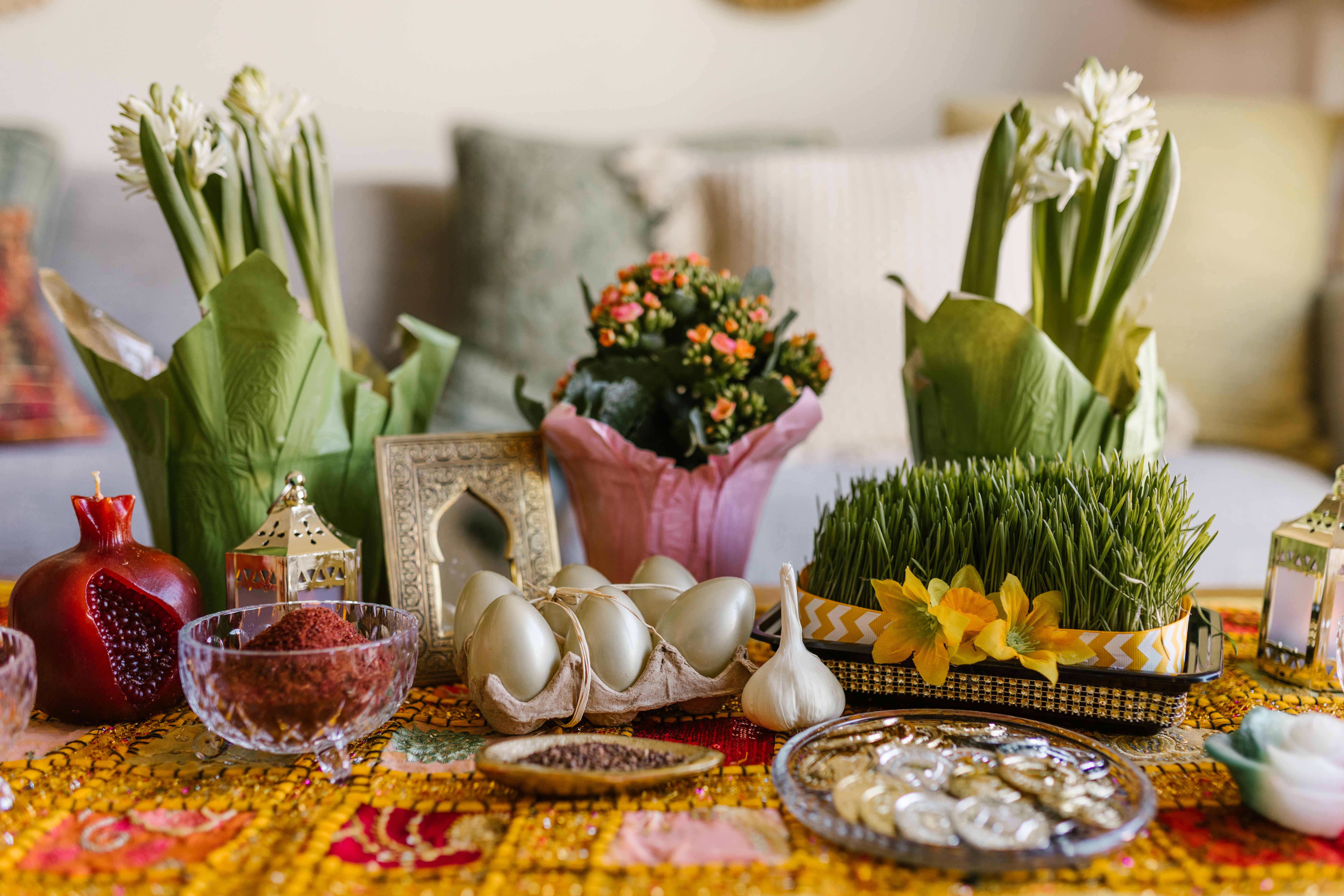

Walk into a Persian home during summer, and one of the first things you'll notice is the flowers. A vase of tuberoses on the entry table. Bundles of fresh herbs resting near the kitchen window. Rose petals floating in a bowl of rosewater on the coffee table. These decors are intentional expressions of a culture that has celebrated the natural world for thousands of years. Understanding why Persian homes fill with blooms during summer means understanding something essential about Iranian identity itself.
The Deep Roots of Nature in Persian Culture
Iranian traditions are inseparable from an almost reverent appreciation for the natural world. Ancient Persian poetry — from Hafez to Rumi — is saturated with imagery of roses, nightingales, and blooming gardens. This wasn't metaphor alone. It reflected a daily reality in which gardens, flowers, and fragrant plants occupied a central place in both private and public life.

Welcome to United Tribes
Where Persian Culture Comes Alive
Join Your Tribe
Connect with your people
Discover Events
Watch parties & festivals
Find Persian Businesses
Restaurants, markets & more
Earn Crown Credits
Get rewarded for engaging
The concept of the garden as paradise has Persian origins. The Old Persian word *pairi-daēza*, meaning an enclosed garden, gave the world its modern word for paradise. This shows how deeply Persians have historically associated beauty, nature, and the home with something approaching the divine. Persian gardens carry profound spiritual and aesthetic symbolism that continues to shape how Iranian families decorate their living spaces today.
Why Summer Amplifies the Tradition
Summer holds particular significance in the Persian floral calendar. The season aligns with the peak blooming of roses, jasmine, tuberose (*maryam*), and sweet basil, all deeply embedded in Iranian culture. Many Persian families, whether living in Iran or as part of the diaspora in the United States, visit flower markets weekly during summer months to refresh their arrangements.
The summer heat, rather than discouraging this practice, intensifies it. Fragrant flowers and herbs cool the spirit if not the air. The scent of fresh basil near a window, or a bunch of white jasmine left in a shaded corner, creates an atmosphere of calm and sensory richness that Iranians associate deeply with home.
Flowers as an Expression of Hospitality
In Persian culture, welcoming guests is among the highest social obligations. Taarof, the elaborate Iranian etiquette system governing generosity and politeness, extends beyond food and words into the physical environment of the home itself. Fresh flowers signal that a host has prepared thoughtfully and cares about the guest's experience. A bare or flowerless home, in this context, can feel incomplete.
Understanding Persian hospitality through the lens of taarof reveals how much of Iranian social life is expressed through these layered gestures of care and abundance. Flowers are part of that language, a silent, beautiful statement that you are welcome here.
The Most Beloved Persian Flowers and Their Meanings
Not all flowers hold equal place in Iranian tradition. Certain blooms carry specific cultural weight:
- Rose (*gol-e-sorkh*): The most iconic flower in Persian poetry and culture, symbolizing love, beauty, and the divine. Rosewater distilled from Persian roses has been used for centuries in cooking, religious rituals, and skincare.
- Tuberose (*maryam*): Deeply fragrant and associated with purity and celebration, often present at weddings and summer gatherings.
- Jasmine (*yasaman*): Beloved for its delicate scent, jasmine garlands and bouquets are a summer staple in Iranian homes.
- Sweet basil (*reyhan*): Used as both a herb and a decorative plant, basil holds spiritual significance and is commonly placed near entryways.
- Narcissus (*narges*): Though most associated with Nowruz in spring, narcissus remains a beloved flower throughout warmer months.
Fragrant Herbs and the Indoor Garden
Persian flowers and herbs are often treated interchangeably in home decoration. Fresh mint, tarragon, fenugreek, and basil aren't confined to the kitchen, as they appear in small pots on windowsills, tucked into decorative arrangements, or placed in glasses of water throughout the home. This blurring of the boundary between garden and interior is characteristic of Iranian design sensibility.
The modern Persian home often incorporates this same philosophy, balancing traditional motifs with living greenery to create spaces that feel both culturally rooted and vibrantly alive. Whether in Tehran or Los Angeles, Iranian families tend to treat plants as essential furniture rather than optional decoration.
The Diaspora Carries the Tradition Forward
For Persian-Americans, maintaining floral traditions at home is one of the more intimate ways of staying connected to Iranian identity. In cities like Los Angeles, home to one of the largest Iranian diaspora communities outside Iran, Persian flower shops, herb vendors at farmers' markets, and specialized grocery stores make it easy to source the specific blooms and plants that evoke home.
The influence of this aesthetic has even reached American landscaping more broadly. The Persian garden tradition has shaped U.S. landscape design in ways that many Americans don't realize, from water feature aesthetics to the intentional mixing of fragrant plants and geometric structure.
Simple Ways to Honor the Tradition
You don't need a sprawling garden to bring this practice into your own home. A few considered choices make a real difference:
1. Place a small vase of fresh roses or jasmine near your front door.
2. Keep a pot of sweet basil on a sunny windowsill — it perfumes the air and serves the kitchen.
3. Float rose petals in a shallow bowl of water as a centerpiece.
4. Combine dried lavender with fresh mint for low-maintenance fragrance throughout the summer.
5. Visit a local Persian or Middle Eastern grocery to find specialty herbs that evoke authentic Iranian tradition.
Bringing Persian Beauty Into Your Home
Fresh flowers in a Persian home are a practice of presence, a daily act of gratitude for beauty, a gesture of welcome toward guests, and a living thread connecting Iranian families to centuries of cultural tradition. From the rose gardens of Shiraz to a jasmine-scented apartment in Los Angeles, this seasonal ritual carries meaning that goes far beyond aesthetics.
For Persian-Americans especially, these small rituals matter. In a diaspora life shaped by translation and adaptation, the scent of tuberose or a bowl of fresh herbs can be the most direct path back to something irreplaceable, the feeling of home carried forward across generations.
Iranian florists, herb growers, and cultural vendors keeping this tradition alive in the U.S. deserve to be found — connect with the Persian community and the businesses sustaining these traditions on United Tribes.


