
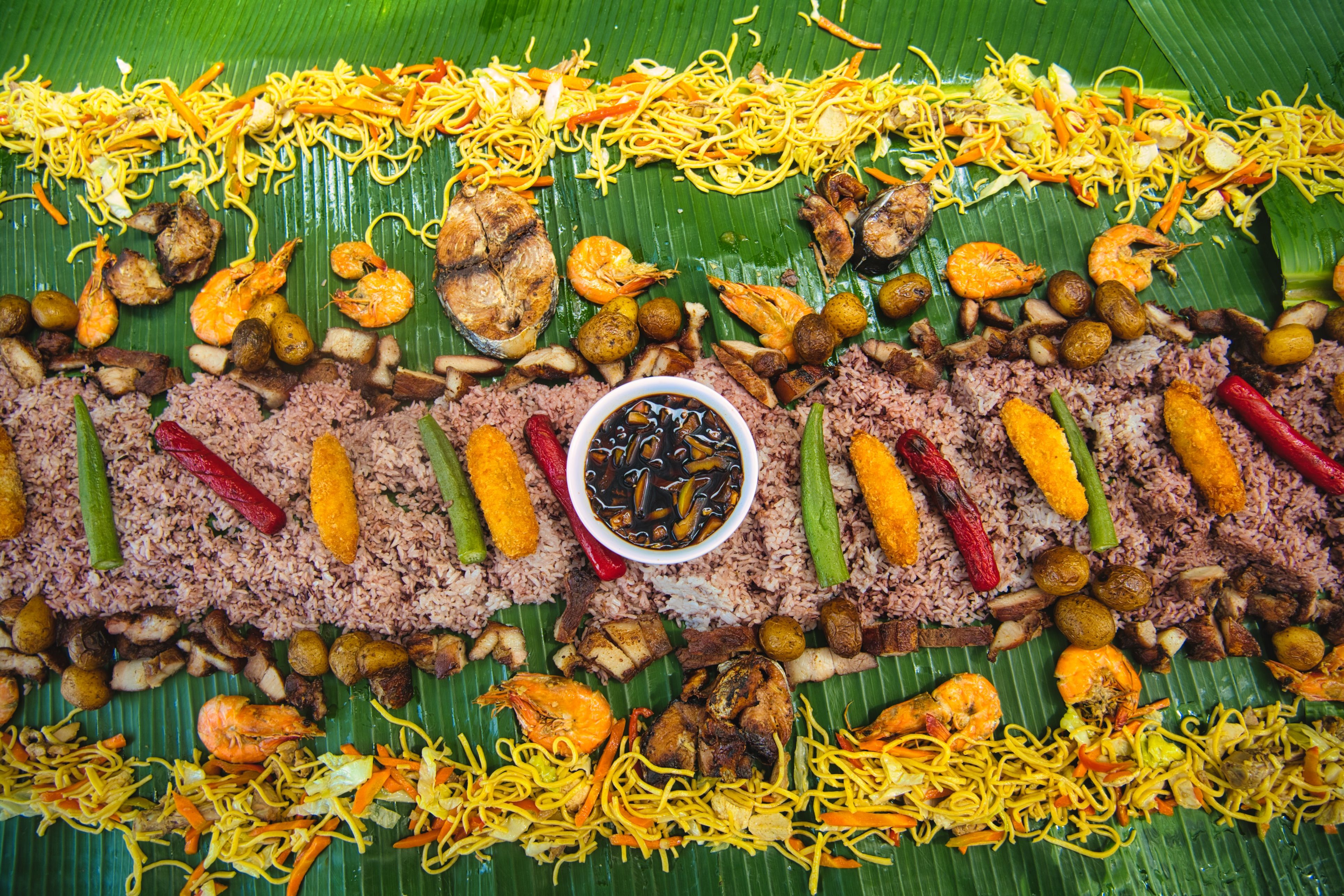

Walk into a Filipino home at any hour of the day, and there is a good chance someone will look up from the kitchen and say it without thinking — *"Kain tayo!"* Translated simply as "Let's eat," these two words carry far more cultural weight than their brevity suggests. They are an open door, an expression of warmth, and a social contract rooted in centuries of Filipino values. Understanding why Filipinos say it, and mean it every single time, is to understand something essential about Filipino culture and traditions.
More Than an Invitation to the Table
In most cultures, a meal invitation requires planning. You schedule a dinner, send a message, confirm attendance. In Filipino culture, the invitation happens in the moment, regardless of preparation. If you arrive while food is being served, you will be invited to sit. If you drop by during a family gathering, a plate will appear in front of you before you can protest.

Welcome to United Tribes
Where Filipino Culture Comes Alive
Join Your Tribe
Connect with your people
Discover Events
Watch parties & festivals
Find Filipino Businesses
Restaurants, markets & more
Earn Crown Credits
Get rewarded for engaging
The phrase "Kain tayo" uses the inclusive *tayo* rather than the exclusive *kayo*, which is a meaningful linguistic distinction. *Tayo* means "we, including you." It is an act of inclusion by definition.
Pakikisama and the Ethics of Sharing
At the heart of this custom is pakikisama, a Filipino value that loosely translates to companionship, solidarity, and getting along with the group. Pakikisama is the social glue of Filipino communities — the reason no one eats alone if it can be helped, and the reason a full table is a sign of something going right.
Bayanihan and pakikisama remain central to how Filipino-American communities operate, shaping everything from neighborhood cooperation to how families gather around food. Sharing a meal is one of the most direct expressions of these values. To eat together is to affirm connection. To eat alone, or worse, to eat without offering — that carries social weight of a different kind.
The Role of Food in Filipino Social Life
Food in Filipino culture is also communication. A spread of *adobo*, *sinigang*, and *lechon* at a gathering signals love, effort, and belonging. The act of cooking for others, and cooking more than enough, is how many Filipinos say things that might otherwise go unspoken.
Filipino dining customs are built around abundance and sharing. Dishes are placed at the center of the table for everyone to reach. There are rarely individual portions plated separately. This *kamayan* spirit, whether eating with hands or simply from communal bowls, reinforces that the meal belongs to everyone present. No one person's plate matters more than the shared experience of eating together.
Lola's Table and the Generational Transmission of Hospitality
Much of this hospitality is passed down through the family's elders. Grandmothers — *lola* — are often the architects of Filipino food culture in the home. It is *lola* who keeps the pot on the stove, who insists no one leaves hungry, and who takes it personally if a guest declines a second helping.
The role of lola and lolo in Filipino-American families extends well beyond childcare. They are the living carriers of tradition, and the dinner table is often their most powerful classroom. Children who grow up watching their grandmother offer food to every visitor without hesitation internalize that behavior as the norm — and carry it forward into their own homes.
Kain Tayo in Filipino-American Homes Today
For Filipino-American families, the "Kain tayo" custom has traveled across the Pacific and settled comfortably into life in the United States. At potlucks, backyard parties, and Sunday gatherings, the same impulse shows up: make more than enough, invite everyone nearby, and keep the table open.
This habit can surprise non-Filipino guests who are not used to being fed the moment they arrive. But it quickly becomes one of the most-loved things about being welcomed into a Filipino home. Finding community and belonging is part of the broader Filipino-American experience, and food is consistently one of its most powerful anchors.
Filipino hospitality also adapts. First-generation immigrants might cook traditional dishes; second-generation Filipino-Americans might mix *pancit* with pasta salad at the same table. What stays constant is the spirit, the reflexive generosity, the discomfort with an empty chair, the belief that a meal shared is always better than a meal eaten alone.
Why This Matters Beyond the Dining Room
The "Kain tayo" philosophy is a window into how Filipinos approach community itself. It reflects the resilience and collective spirit that has helped Filipino-Americans build strong communities across the country, a culture where no one is left outside, whether the door is literal or metaphorical.
In a broader sense, it is a reminder that one of the simplest ways to build belonging is to say: there is room for you here. Come eat.
The Table Is Always Open
"Kain tayo" is three syllables that carry a lifetime of values — generosity, inclusion, pakikisama, and the belief that food is never just about food. It is a phrase that captures Filipino dining customs at their most human: a reflexive, unconditional welcome extended to anyone who happens to be near the table. Whether it is a weeknight dinner in a Manila apartment or a Sunday gathering in a Filipino-American home in California, the phrase means the same thing — you belong here, so sit down and eat.
For Filipino-Americans, this tradition is one of the most tangible ways that Filipino culture and traditions survive the distance of migration. It does not require a special occasion or a formal setting. It requires only that someone is hungry, and that someone else notices.
Curious about which Filipino restaurants, grocers, and cultural businesses are keeping this spirit alive near you? Explore the Filipino community on United Tribes and connect with the businesses and people carrying these traditions forward every day.


