
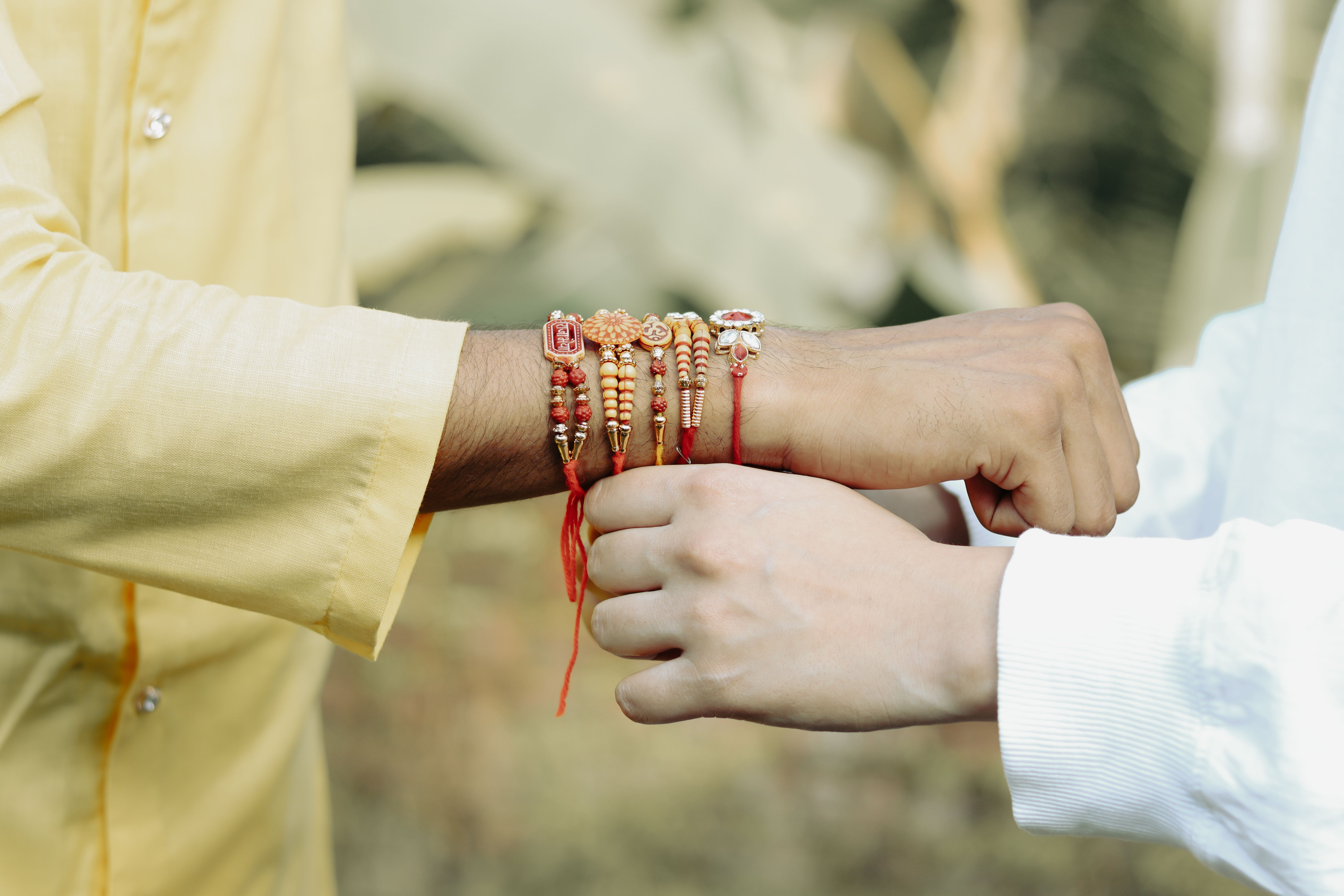

Every year, as monsoon clouds drift across the Indian subcontinent, millions of families pause to honor one of the most emotionally resonant celebrations in Indian culture: Raksha Bandhan. For Indian-American families separated by oceans and time zones, this festival carries an even deeper weight, a thread connecting generations, memories, and an identity being carefully kept alive on foreign soil.
The Ancient Roots of Raksha Bandhan
Raksha Bandhan, literally meaning "the bond of protection," falls on the full moon of the Hindu month of Shravana, typically in late July or August. The ritual is elegantly simple: a sister ties a rakhi, a sacred thread, around her brother's wrist, and in return, the brother pledges his protection and offers a gift. The exchange is as much spiritual as it is symbolic, rooted in stories from Hindu mythology involving gods, kings, and unbreakable vows.

Welcome to United Tribes
Where Indian Culture Comes Alive
Join Your Tribe
Connect with your people
Discover Events
Watch parties & festivals
Find Indian Businesses
Restaurants, markets & more
Earn Crown Credits
Get rewarded for engaging
Historically, the rakhi was not limited to biological siblings. Cousins, close family friends, and even community elders have been drawn into this circle of protection. Indian family traditions around Raksha Bandhan emphasize that the bond being celebrated transcends blood — it is about chosen loyalty and enduring care.
Distance Cannot Break the Thread
For the Indian-American community, geography is the great complicator. A sister in Chicago and a brother in Mumbai cannot simply sit across from each other at the breakfast table on the morning of Raksha Bandhan. Yet rather than letting distance diminish the day, families have turned technology into a bridge.
Video calls using various platforms have become a central feature of modern Raksha Bandhan celebrations. Families coordinate across time zones with military precision, scheduling calls that allow sisters to perform the rakhi ceremony on camera while brothers hold up their wrists to the screen. It may lack the physical touch of tradition, but the emotion is entirely intact. As explored in stories from Indian immigrants navigating life abroad, the push to keep cultural rituals alive is one of the most powerful forces in diaspora life.
Sending Rakhis Across the World
The international rakhi market has exploded in recent decades. Specialized courier services and e-commerce platforms now cater specifically to Indian family traditions, offering rakhi packages that can be shipped worldwide. Sisters living in the U.S. can order handcrafted rakhis from artisans in Rajasthan, Varanasi, or Mumbai, ensuring their brother receives something authentically rooted in Indian culture even when they cannot deliver it themselves.
Gift-giving has also evolved. Traditional sweets like laddoos and barfis are still popular, but Indian-American families increasingly pair them with:
- Personalized photo books capturing shared memories
- Subscription boxes curated around Indian snacks or wellness products
- Digital gift cards that allow siblings to "shop together" virtually
- Handwritten letters — a quietly radical act in the age of text messages
The care put into these packages reflects something deeper than a transaction. It is a deliberate act of cultural preservation, a refusal to let Raksha Bandhan become an afterthought in the rush of American daily life.
Community Celebrations in the U.S.
Beyond family gatherings, Raksha Bandhan has found a growing footprint in Indian-American community spaces. Cultural organizations, temples, and community centers across cities like New Jersey, Houston, Chicago, and the San Francisco Bay Area organize public celebrations that bring together families who may not have siblings nearby.
These events typically feature:
- Rakhi-making workshops where children and adults craft their own threads
- Puja ceremonies led by temple priests
- Cultural performances, including classical dance and devotional music
- Food stalls offering traditional sweets and regional Indian snacks
For Indian-American children growing up in the U.S., these communal celebrations serve a vital function. They make Indian culture visible and participatory rather than something confined to family albums and parents' stories. The parallel is strong with how Indian festivals like Navratri are celebrated across the U.S., as community gatherings turn individual family traditions into shared cultural experiences.
Raising the Next Generation with Raksha Bandhan
One of the most thoughtful conversations happening inside Indian-American households involves how to pass these traditions on meaningfully. Children born and raised in America may not have an instinctive emotional connection to Raksha Bandhan the way their parents do. The celebration requires context, storytelling, and patience.
Many parents approach this by weaving the mythology and meaning of Raksha Bandhan into everyday conversations, not just saving it for the day itself. They explain who tied the first rakhi in Hindu legend, why the promise of protection matters, and how the holiday fits into the larger tapestry of Indian family traditions. This intentional cultural parenting reflects broader conversations in the community around blending Indian values with American upbringing, a balance many families are navigating with creativity and care.
Raksha Bandhan and the Broader Festival Calendar
Raksha Bandhan marks the beginning of a festive stretch in the Indian cultural calendar that builds toward Diwali in autumn. For Indian-American families, this season represents a sustained period of cultural engagement — a time when kitchens fill with specific aromas, WhatsApp groups grow lively, and children ask questions that open into longer conversations about identity. Those who celebrate Raksha Bandhan with intention often carry that energy forward through Diwali celebrations and beyond.
The Thread That Keeps Families Close
Raksha Bandhan is proof that a tradition does not need a fixed location to survive. Across thousands of miles, through package tracking numbers and video calls that stutter at the wrong moment, Indian-American families are finding creative, heartfelt ways to honor a ceremony that has endured for centuries.
For second-generation Indian-Americans especially, celebrations like Raksha Bandhan offer something increasingly precious: a concrete, lived connection to Indian culture that a documentary or a history lesson cannot fully replicate. It is felt in the act of tying the thread, in the sweets shared over a screen, in the community event where a child makes their first rakhi by hand.
Curious about finding Indian cultural events, businesses, and community connections near you? Explore the Indian community on United Tribes and tap into a network built for exactly this kind of cultural discovery.


