
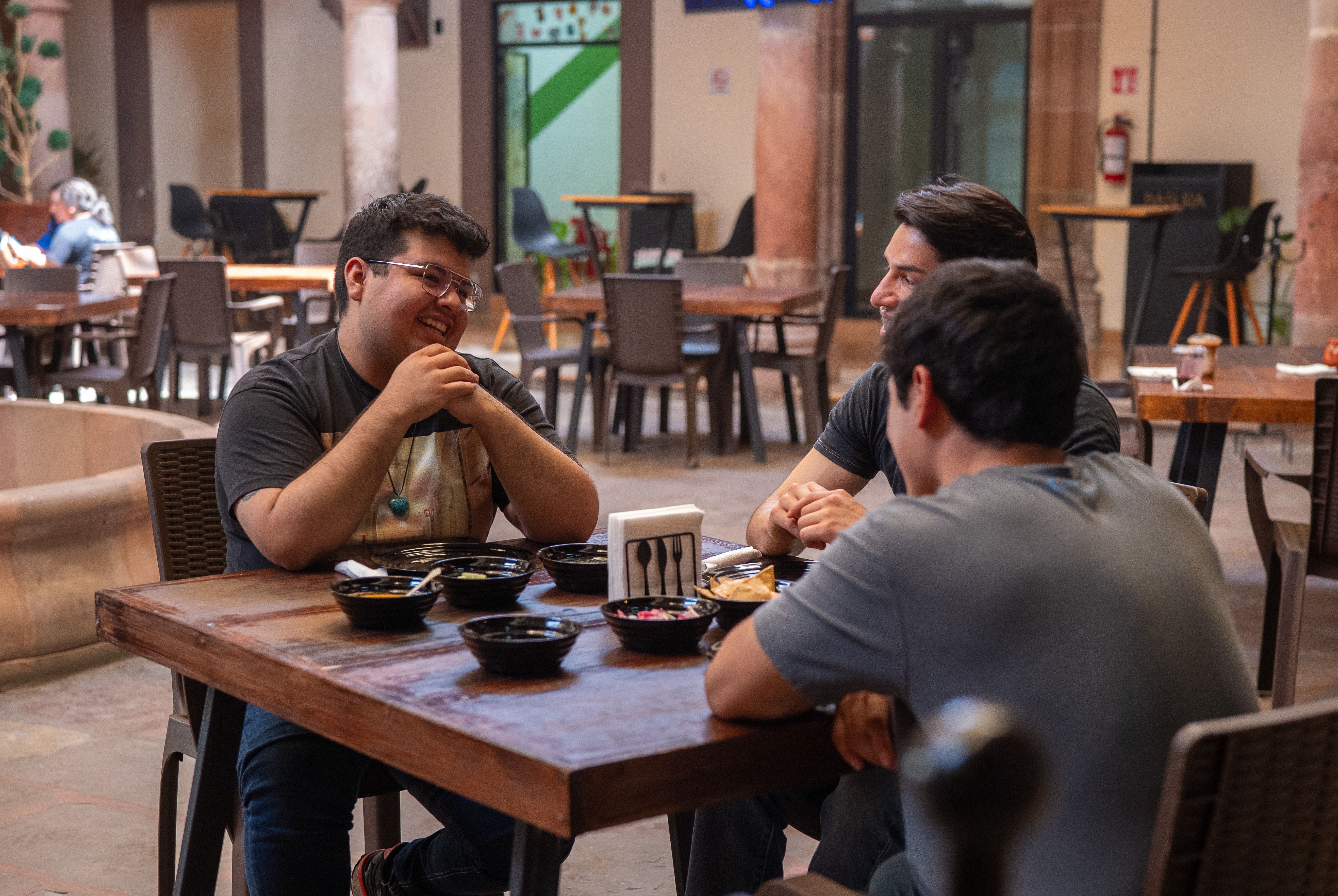

The plates are cleared. The food is gone. But no one moves. In many Latino households, this is the beginning of one of the most cherished moments of the day. This is sobremesa, a word that translates literally to "over the table" but carries a meaning far richer than its translation suggests. It is the time after a meal when conversation flows freely, stories are told, laughter rises and falls, and the table becomes something more than a place to eat.
What Sobremesa Actually Means
Sobremesa does not have a direct English equivalent, and that linguistic gap says something meaningful about cultural priorities. In Spanish, *sobremesa* refers to the time spent sitting and talking after a meal has ended and nourishing various conversations and relationships.

Welcome to United Tribes
Where Mexican Culture Comes Alive
Join Your Tribe
Connect with your people
Discover Events
Watch parties & festivals
Find Mexican Businesses
Restaurants, markets & more
Earn Crown Credits
Get rewarded for engaging
The word itself is deeply embedded in the cultures of Spain and Latin America, though how it is practiced, how long it lasts, and what it looks like varies widely across communities. What remains consistent is the underlying value: the meal is about being together, and being together does not stop when the last bite is taken.
Roots of the Tradition
The practice has deep roots in Spanish culture, where long Sunday lunches stretching into the afternoon are a social institution. In Spain, sobremesa can last hours, accompanied by coffee, digestifs, and animated conversation. The pace of life built around a midday meal made lingering at the table a natural extension of the day rather than an indulgence.
As Spanish colonization spread across Latin America, the tradition traveled with it, but it did not arrive unchanged. Each country, each region, and each family absorbed the spirit of sobremesa and shaped it through their own cultural lens. The result is a constellation of related but distinct practices connected by a shared belief in the social power of shared meals.
How It Varies Across Latino Cultures
It would be a mistake to treat sobremesa as a single, uniform tradition across all Hispanic family traditions. The experience differs meaningfully from community to community.
In Mexican families, the table after a meal can become a stage for storytelling, political debate, and the retelling of family history. Grandparents hold court. Inside jokes resurface. In many homes, a cup of café de olla or a small sweet is passed around as the conversation stretches on. The communal meal itself — whether it involves menudo on a Sunday morning or a large weekend lunch — carries ritual weight, and sobremesa is its natural conclusion.
In Colombian and Ecuadorian households, the post-meal gathering often includes tinto (a small black coffee) and a deliberate slowing down that signals respect for the people at the table. Leaving too quickly can read as dismissive or cold.
Argentine sobremesa is practically legendary — long meals followed by even longer conversations, sometimes stretching past midnight. Mate might be passed around. Topics roam from family news to philosophy to football.
Across these communities, the unifying thread is the intention: staying means you value the people you are with.
Sobremesa and Latino Family Life in the United States
For Latino families living in the U.S., sobremesa takes on additional meaning. In a culture that prizes efficiency and productivity, the act of sitting still after a meal, for no reason other than connection, can feel quietly radical.
Latino dining culture in America often navigates tension between two rhythms: the fast pace of American daily life and the slower, more relational cadence of heritage traditions. Sobremesa becomes a way of holding onto something. It is a pocket of cultural continuity that does not require a special occasion or a formal setting. It happens at kitchen tables in apartments, at backyard gatherings, at Sunday lunches that bleed into early evening.
It is also worth noting that not every Latino family practices sobremesa in a named or conscious way. For some, it is simply what the family does after dinner, no label needed. For others, especially those further removed from immigrant generations, the tradition may have faded or transformed. Latino food culture is not monolithic, and neither are the customs that surround it.
That said, the impulse behind sobremesa, to linger, to talk, to be present, appears across community after community. You see it at Latin American cultural events where people gather not just to observe but to connect. You hear it in the rhythms of communities where music and movement are social acts.
Why Sobremesa Matters Beyond the Table
There is growing evidence that the social behaviors embedded in sobremesa- sustained face-to-face conversation, unhurried presence, communal eating- are associated with stronger family bonds and better mental health outcomes. Researchers studying longevity in Mediterranean and Latin American populations have pointed to meals as social rituals, not just nutritional events.
In this light, sobremesa is a practice with real relational value, one that Latino culinary fusion and evolving food culture in the U.S. are beginning to reflect, as Latino-owned restaurants design spaces meant for lingering.
The Table Is Always Still Set
Sobremesa captures something that resists easy translation: the idea that a meal's purpose extends beyond nourishment. It is a practice rooted in Spanish dining traditions, carried across the Atlantic, adapted across dozens of countries, and kept alive in kitchen tables from Los Angeles to New York.
For Latino communities in the U.S., sobremesa is one of many threads connecting daily life to deeper roots. It does not require perfect replication of how a grandmother did it in Oaxaca or Medellín or Madrid. It just requires the willingness to stay a little longer.
Curious about what else happens after the meal — the businesses, the gatherings, the communities keeping these traditions alive? Explore the Latino community on United Tribes and connect with the people and places that make the table worth sitting at.


