
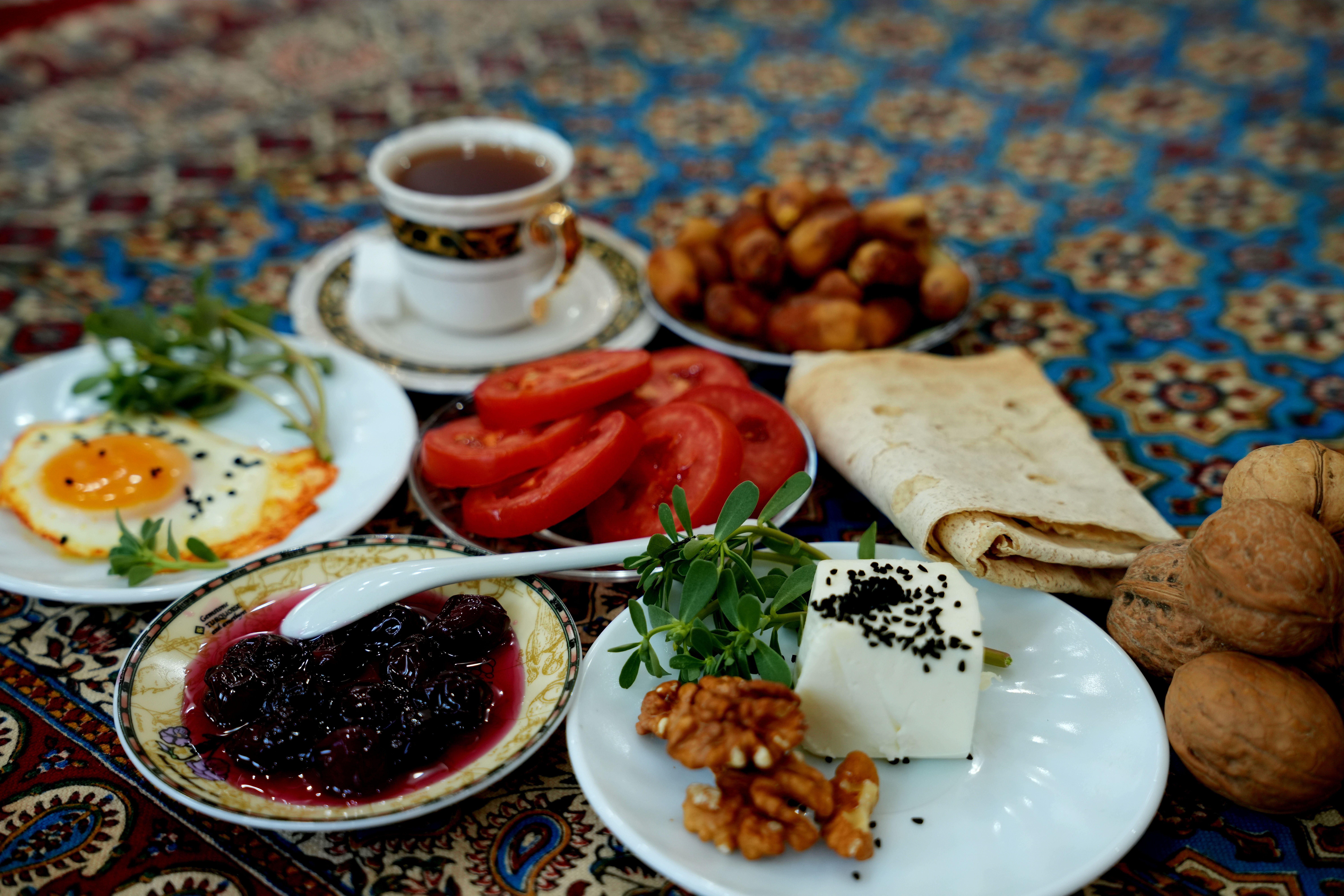

Sit down at a Persian table, and you will almost certainly find a plate of fresh herbs within arm's reach before the main course even arrives. Sabzi khordan, which literally means "eating greens," is one of the most deeply rooted traditions in Persian food culture. This practice has traveled across continents and survived generations of diaspora life. For Iranian-American families, keeping that plate of herbs on the table is as much an act of cultural memory as it is a culinary habit.
What Sabzi Khordan Actually Is
Sabzi khordan refers to a platter of fresh, whole herbs served alongside nearly every Persian meal. Unlike the chopped herbs used as a finishing touch in many Western dishes, these are presented raw and intact, full sprigs meant to be eaten with your hands, wrapped around a bite of food, or simply chewed between mouthfuls.

Welcome to United Tribes
Where Persian Culture Comes Alive
Join Your Tribe
Connect with your people
Discover Events
Watch parties & festivals
Find Persian Businesses
Restaurants, markets & more
Earn Crown Credits
Get rewarded for engaging
A typical sabzi khordan spread includes:
- Basil (reyhan) — fragrant and slightly sweet
- Mint (na'na) — bright and cooling
- Tarragon (tarkhun) — anise-like and aromatic
- Radishes — for crunch and mild heat
- Spring onions — sharp and cleansing
- Fenugreek leaves — earthy and slightly bitter
- Persian watercress (shahy) — peppery and distinctive
Alongside the herbs, you will often find sliced white cheese (paneer), walnuts, and flatbread. Together, these elements form a starter and a palate companion that stays on the table throughout the entire meal.
The Logic of Freshness and Contrast
Persian cuisine is built on balance between sour and rich, between warm spice and cool freshness. Sabzi khordan exists precisely to provide that contrast. A slow-braised lamb stew or a deeply spiced rice dish needs something alive and raw to sit beside it. The herbs cut through richness, reset the palate, and add a brightness that cooked food cannot provide on its own.
This philosophy of contrast runs throughout Iranian culinary tradition. Dishes like ghormeh sabzi already incorporate cooked herbs such as dried fenugreek, parsley, and cilantro, but fresh herbs at the table serve a different purpose. They are immediate, sensory, and unmediated by heat.
How Herbs Are Eaten at a Persian Table
First-time guests sometimes hesitate over the herb platter, unsure of the protocol. In practice, there is none, as eating sabzi khordan is intuitive once you understand its role. Diners tear sprigs of herbs and tuck them inside a bite of flatbread with a crumble of cheese and a walnut. Or they place a basil or tarragon leaf directly on top of a spoonful of rice before eating.
The herbs are not eaten all at once as a separate course. They circulate throughout the meal, cleansing between bites of stew, cooling the heat of a grilled kebab, or simply offering a moment of freshness mid-meal. The Persian tea culture that shapes daily life in Iranian-American homes follows a similar logic — something simple and present that marks and punctuates the experience of eating and gathering.
Sourcing and Growing Herbs in Iranian-American Households
One of the practical challenges Iranian-American families face is finding the right herbs. Mainstream grocery stores carry basil and mint, but tarragon in meaningful quantities, fresh fenugreek leaves, or Persian watercress can be difficult to locate. This has shaped how the community sources its herbs across the United States.
Persian grocery stores are the most reliable option in cities with significant Iranian-American populations — Los Angeles, Houston, Washington, D.C., and the San Francisco Bay Area all have established Persian markets that stock the full range of products. These stores often source specialty herbs not found elsewhere and understand the quality standards their customers expect.
Many Iranian-American households also grow herbs at home. Pots of mint, basil, and tarragon on balconies or in backyard gardens are common sights. Fenugreek, which can be challenging to find fresh, is sometimes grown from seed. Gardening becomes a way of maintaining access to tradition when the local market falls short. The same resourcefulness that shows up in Iranian-American entrepreneurship and community building also appears in everyday domestic life, as people find ways to preserve what matters.
Sabzi Khordan and the Culture of the Persian Table
The herb platter is inseparable from the broader values of Persian hospitality. A table set without sabzi khordan would feel incomplete, not because of any formal rule, but because of what the platter represents: care, abundance, and welcome. Preparing it thoughtfully, washing the herbs carefully, and arranging them with radishes and cheese signal that a guest is worth that attention.
This attention to detail is woven through Iranian cultural expression in many forms. The same precision that goes into Persian carpet weaving as a traditional craft, or into the delicate artistry of Persian miniature painting, shows up in how a meal is laid out.
For the second generation growing up in the United States, sabzi khordan often becomes one of the clearest food memories tied to identity. The smell of fresh tarragon and the combination of herb, walnut, and cheese in flatbread are sensory details that anchor a sense of belonging to Persian food culture, even when the broader environment is entirely American. The Iranian-American holiday pantry, with its saffron and rosewater, shares the same function: preserving flavor as a form of cultural continuity.
Fresh Herbs, Enduring Tradition
Sabzi khordan is one of the simplest expressions of Persian food culture and one of the most telling. A plate of fresh herbs is the table's way of saying that freshness, contrast, and care belong at every meal. For Iranian-American families, maintaining that tradition across different cities, climates, and grocery stores is an act of quiet cultural persistence.
Whether herbs come from a Persian market in Los Angeles, a backyard pot of mint, or seeds grown from scratch, the result carries the same meaning. The platter connects a meal in America to a table in Iran, and it connects one generation to the next through something as immediate as a sprig of basil.
Iranian-American home cooks, grocery owners, and cultural keepers who carry these traditions forward are the heart of a living community — find and support them through the United Tribes community hub.
Make United Tribes Your Preferred Source
Add United Tribes on Google to get the latest stories, cultural updates, and community events directly in your Google Search and Top Stories.


