

Key Takeaways
- Wayuu mochilas encode cosmological meaning. Each geometric pattern, called a kaná, represents elements of nature, family clans, and spiritual stories unique to Wayuu culture.
- Arhuaco mochilas are considered objects of thought. Every woven motif — from the frog to the rattlesnake — expresses a specific element of cosmological and cultural knowledge.

Welcome to United Tribes
Where Colombian Culture Comes Alive
Join Your Tribe
Connect with your people
Discover Events
Watch parties & festivals
Find Colombian Businesses
Restaurants, markets & more
Earn Crown Credits
Get rewarded for engaging
- Both traditions transmit knowledge through women. Wayuu girls learn during the Encierro initiation ritual around ages 10–12, while Arhuaco girls begin weaving under grandmother guidance as early as age four.
- Materials and techniques differ significantly between communities. Wayuu weavers use acrylic and industrial threads for expanded color, while Arhuaco artisans use spindle-spun sheep's wool.
- Calling a mochila a fashion accessory misses its full meaning. Recognizing the Indigenous makers and their cultural contexts is essential to preserving intangible heritage and ensuring ethical representation.
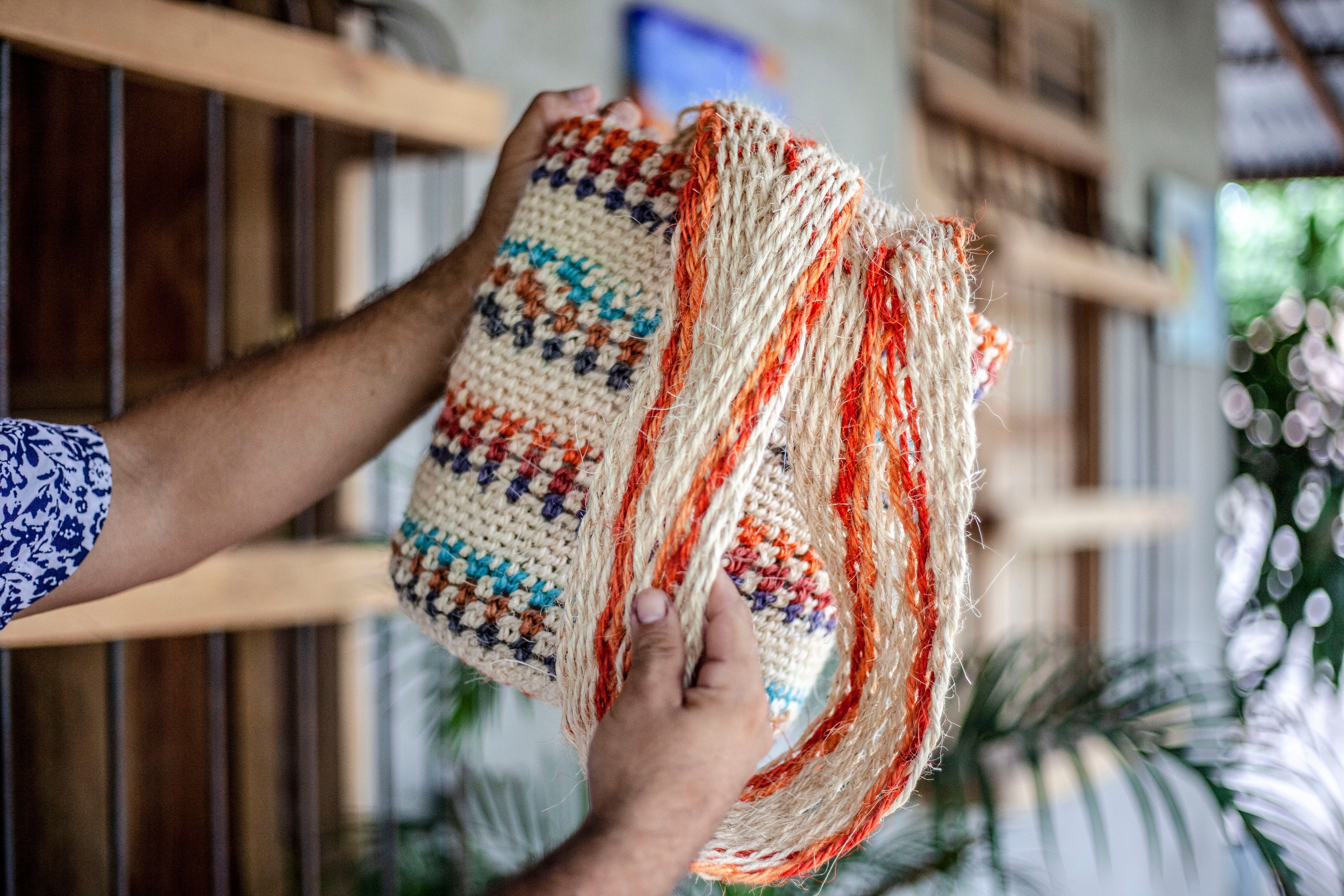
At first glance, a handwoven Colombian mochila bag is striking—vivid, geometric, and immediately eye-catching. But reducing it to an accessory misreads it entirely. These bags are repositories of cosmological knowledge, ritual meaning, and community identity, crafted through techniques passed down across generations within Indigenous communities whose cultures are as distinct from one another as their patterns. Understanding what a mochila truly is begins with understanding who made it and why.
What are Colombian mochila bags and why do they matter?
Colombian mochila bags are handwoven textile objects created by Indigenous communities — most notably the Wayuu of La Guajira and the Arhuaco of the Sierra Nevada de Santa Marta — that function as cultural documents as much as practical objects. Each bag carries encoded meaning through its patterns, materials, and the ritual context in which it was made, making it an expression of identity, spirituality, and intergenerational knowledge rather than simply a product.
These bags have gained significant visibility both within Colombia and internationally, appearing in fashion markets and urban boutiques. That visibility brings both opportunity and risk. When a mochila is sold without acknowledgment of its maker or cultural origin, the object is separated from its meaning. Recognizing the distinction between Wayuu and Arhuaco traditions — and understanding what each community invests in the act of weaving — is the starting point for genuine appreciation and ethical engagement with Colombian Indigenous crafts.
Wayuu Weaving and the Language of Kanás
Wayuu weaving is inseparable from the cosmological world the Wayuu people inhabit. According to tradition, a spider named Wale'kerü taught women to weave, establishing the craft as a sacred, ancestral skill tied directly to feminine identity and spiritual inheritance. This origin story is not decorative mythology — it shapes how Wayuu women understand their role as weavers and the moral weight of the knowledge they carry.
The geometric patterns woven into Wayuu mochilas are called kaanás or kanaas. These are not arbitrary designs. Each kaná represents something specific: an element of the natural world, a reference to family clans, a cosmological narrative, or an expression of daily life. The patterns follow codified systems, meaning that a trained eye can read a Wayuu mochila the way others might read a written text.
Types of Wayuu Bags and Their Uses
Wayuu communities produce several distinct bag types, each serving a specific social or practical function:
|
Bag Name |
Form and Use |
|
Susu |
General-purpose bag used across daily life |
|
Kapatera |
Tube-shaped bag carried by men when traveling |
|
Piula / Kattowi |
Used to carry water jugs or food items |
These distinctions underscore that Wayuu mochilas are not interchangeable objects. Their forms evolved to meet real community needs, and the names themselves belong to the Wayuunaiki language — a detail that matters when considering how these objects are represented in commercial settings.
Weaving is transmitted through maternal lines and formally introduced during the Encierro, also called Asürülaa, an initiation ritual observed when girls reach approximately ages 10 to 12. At this stage, a girl learns not only technique but also the social and spiritual responsibilities that weaving carries. Traditionally, the craft relied on natural fibers like cotton and fique. Since the mid-twentieth century, Wayuu weavers have increasingly incorporated acrylic yarn and industrial threads, expanding the available color palette and responding to wider market demand while maintaining the integrity of the kaná system.
Arhuaco Mochilas as Objects of Thought
The Arhuaco people — also known as the Ika or Ijka — inhabit the Sierra Nevada de Santa Marta, a dramatically different geographical and cultural context from La Guajira. They weave their mochilas from sheep's wool using spindle-spun yarn, producing a texture and palette that differ visibly from Wayuu work. But the most significant difference lies in how the Arhuaco conceptualize weaving itself.
For the Arhuaco, a mochila is described as an object of thought. Each woven figure expresses an element of the world — the frog Gamako represents fertility; the rattlesnake aku carries its own cosmological significance; the creator of the Sierra, Kaku Serankua, appears alongside motifs for hills, lakes, the snail, and the four corners of the world. In this framework, weaving is not craft production but a way to order ideas, transmit worldview, and encode spiritual knowledge into material form.
Girls in Arhuaco communities begin learning to weave as early as age four, guided by grandmothers whose knowledge spans decades of practice. This early immersion means that weaving is not taught as a separate subject but absorbed through participation in community life. By the time a girl completes her first mochila, she has already internalized values, symbolism, and technical skill that connect her to the land and to her ancestors.
Completing a girl's first mochila is a formal rite of passage. The finished bag is offered to the Mamo — the community's spiritual leader — along with gifts including coffee, yucca, and plantains. This ritual grants spiritual permission to continue weaving and affirms her place in the community's cultural fabric. The act is simultaneously personal, communal, and cosmological.
Since the 1960s, Arhuaco mochilas have gained visibility beyond Indigenous territories, becoming symbols of Indigenous pride worn by youth in cities like Santa Marta and Valledupar. That shift reflects a broader assertion of cultural identity, but it also raises questions about representation and attribution that the broader Colombian community—and international consumers—are increasingly engaging with.
Why Attribution and Ethical Recognition Matter
The international market for Colombian Indigenous crafts has grown substantially, and with that growth comes the risk of cultural commodification. When a mochila is sold as a generic "Colombian bag" or attributed to no particular community, the intellectual and spiritual labor of the women who made it disappears. The patterns are not decorative motifs available for appropriation — they belong to systems of knowledge that specific communities have developed and protected across centuries.
Ethical engagement with traditional Colombian textiles means several concrete things. It means identifying whether a bag is Wayuu or Arhuaco, rather than lumping both into an undifferentiated category. It means understanding that the kaná patterns of the Wayuu and the thought-figures of the Arhuaco represent distinct cosmological systems, not interchangeable folk designs. It means buying directly from artisans or through verified fair-trade channels that return meaningful income to Indigenous makers.
The Colombian diaspora in the United States holds a particular position in this conversation. Community members who take pride in Colombian identity — visible in moments like Colombian cultural celebrations across America — can model respectful cultural engagement by naming makers, sharing accurate context, and supporting Indigenous artisans rather than mass-produced imitations.
Keeping Traditional Weaving Alive Across Generations
The survival of Wayuu and Arhuaco weaving traditions depends on more than individual craft skill. Both communities require cultural continuity, economic viability, and protection from the intellectual property pressures that global markets create. When younger generations see that their knowledge is valued — economically and culturally — they are more likely to commit to learning and passing on these traditions.
For the Arhuaco, integrating weaving into cognitive and social development from early childhood creates a robust transmission mechanism. Girls absorb community values, cosmological symbolism, and technical precision simultaneously, meaning the craft and its meaning are difficult to separate. For the Wayuu, the Encierro ritual provides a formal moment of initiation that marks weaving as a serious responsibility rather than an optional skill.
Both systems are under pressure from urbanization, market demand for cheap imitations, and the gradual erosion of language and ritual contexts that give the craft its deepest meaning. Supporting these traditions requires sustained attention — not only buying authentic pieces but advocating for accurate representation in media, fashion, and educational content.
Honoring the Hands Behind Every Mochila
Colombian mochila bags represent two distinct and profound Indigenous traditions — the Wayuu kaná system of La Guajira and the Arhuaco thought-objects of the Sierra Nevada de Santa Marta. Each tradition carries its own materials, rituals, symbols, and transmission practices, and each belongs to a community whose identity is inseparable from the act of weaving. To fully appreciate these objects is to learn their differences and resist flattening them into a single aesthetic category.
For Colombian-Americans and those connected to Colombian heritage in the United States, these traditions offer a direct line to Indigenous knowledge that predates the nation-state itself. Sharing that knowledge accurately — naming communities, distinguishing traditions, and supporting fair-trade artisans — is one of the most meaningful ways to honor what these weavers have preserved across generations under significant pressure.
Explore the vibrant Colombian community and discover culturally rooted businesses, artisans, and events at United Tribes, where heritage is celebrated with the depth and specificity it deserves.
Frequently Asked Questions
What does the word "mochila" mean in Colombia?
Mochila is a Spanish word broadly meaning bag or backpack, but in the Colombian Indigenous context it refers specifically to handwoven bags made by communities like the Wayuu and Arhuaco. These are distinct cultural objects, not simply functional carry items, and the term carries significant cultural weight when tied to their makers.
How can I tell the difference between a Wayuu and an Arhuaco mochila?
Wayuu mochilas typically feature bold, multicolored geometric patterns called kaanás and are often made with acrylic yarn in a wide range of vivid colors. Arhuaco mochilas use natural sheep's wool and display more muted tones with specific symbolic motifs such as frogs, snakes, and cosmological figures unique to the Arhuaco worldview.
Are Colombian mochila bags considered intellectual property of Indigenous communities?
Indigenous communities, including the Wayuu and Arhuaco, consider their woven patterns and designs part of their collective cultural and intellectual heritage. While legal protections vary, many advocates and ethicists argue that reproducing these patterns without attribution or fair compensation constitutes cultural appropriation and undermines the communities' rights to their own knowledge systems.
How long does it take to weave a single mochila bag?
Weaving a high-quality mochila can take anywhere from several days to several weeks, depending on the pattern's complexity, the bag's size, and the weaver's experience. The most intricate Wayuu mochilas with dense kaná designs are especially time-intensive, which is why their fair market value is often much higher than mass-produced imitations.
Can men in Wayuu or Arhuaco communities weave mochilas?
In both the Wayuu and Arhuaco communities, women predominantly weave mochilas, and the practice is tied to feminine identity and cultural transmission. Among the Wayuu, the craft is introduced during a female initiation ritual; among the Arhuaco, girls learn from grandmothers at an early age. Weaving is a deeply gendered knowledge tradition in both cultures.
Where can I buy an authentic Colombian mochila bag in the United States?
Authentic Colombian mochila bags can be found through fair-trade importers, Colombian cultural festivals, and online platforms that work directly with Indigenous artisan cooperatives. Buyers should look for clear attribution identifying the specific community and maker, transparent pricing that reflects artisan labor, and sellers who can explain the cultural meaning behind the patterns rather than marketing them as generic folk crafts.
Find your community: Colombian businesses near you on United Tribes.
Make United Tribes Your Preferred Source
Add United Tribes on Google to get the latest stories, cultural updates, and community events directly in your Google Search and Top Stories.